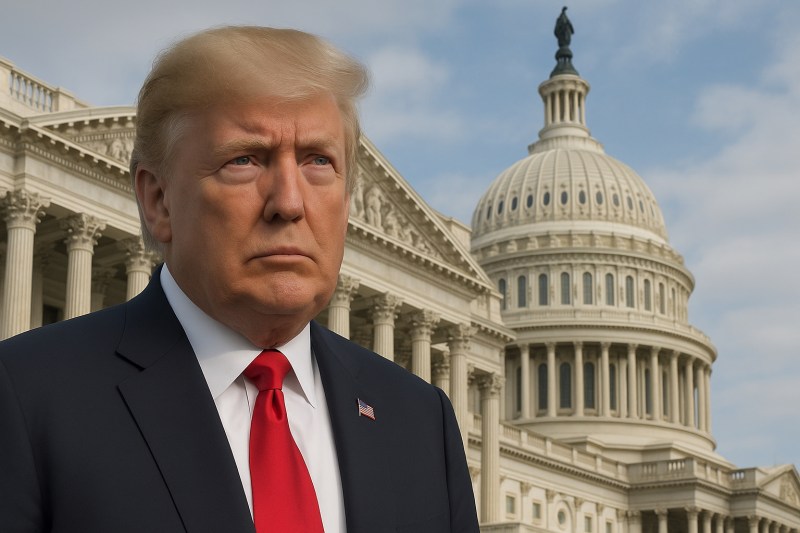
So now we will have classical architecture again. Our public building, starting with the overblown palace on Pennsylvania Avenue, will be supposedly festooned inside and out with columns and pediments. They will be set off from the common people by broad steps (no ramps, please) and will shine with gold glittering on top of white that reflects the color of the skins of the people in power. So sayeth Imperator Trump.
Luckily, it will not work out that way. However much some people, especially the members of the so-called National Civic Art Society (an advocacy group with the kind of patriotic and abstract name typical of propaganda outfits) dream of housing what will be left of our post-DOGE bureaucracy in projets straight off the Ecole des Beaux-Arts drawing boards of the early 19th century, this is the reality: there is no money for that. Good architecture, which is to say design that is true to its whatever its principles might be, costs an awful lot, and this regime is all for cutting, rather than expanding the budget. The result will not be temples of democracy, but more barracks perhaps fronted with a few hollow pilasters and topped with fake sloping roofs. Those will be easy to remove once we come to our senses.
Such monetary restrictions will not apply to Caesarian projects, of course. Whether it is spending hundreds of millions of dollars on what looks from the renderings like a badly designed hotel ballroom on top of the former Rose Garden or even more gilding the inside of the “gifted” (dumped) Qatari 747, there will be enough funding to festoon these spaces with all the signs of historic wealth and power. Moreover, the kind of interior decoration favored by the Curliquer-in-Chief is cheap. If social media is to be believed, some of the bizarre grotesques adorning the Oval Office are dime store appliques you can buy at Walmart, covered up with some gold paint. These too can be easily removed when the second Thousand Year Reich reaches its inevitably premature end.
So why should we care? The signals the new “mandate” for classical architecture give off are, in my opinion, completely wrong, but relatively harmless for the reasons I outlined above. Quite frankly, if any architect can stick to the mandate and produce a good building, I will be among the first to cheer them on. Classicism has, as the Society has often pointed out, proven to be a very malleable approach to classicism that went from representing the centralized reign of the Bourbons, for instance, to an expression of radical and egalitarian democracy in the blink of the French Revolution’s eye –and then went back to signing Napoleon’s imperial aspirations.

A recent book on Vitruvius and his influence in Renaissance Italy should be required reading for all those who care about the uses of the style for the exercise of power –and its limits.
Similarly, the styles that the new directives will supposedly replace have histories that are just as troubled.
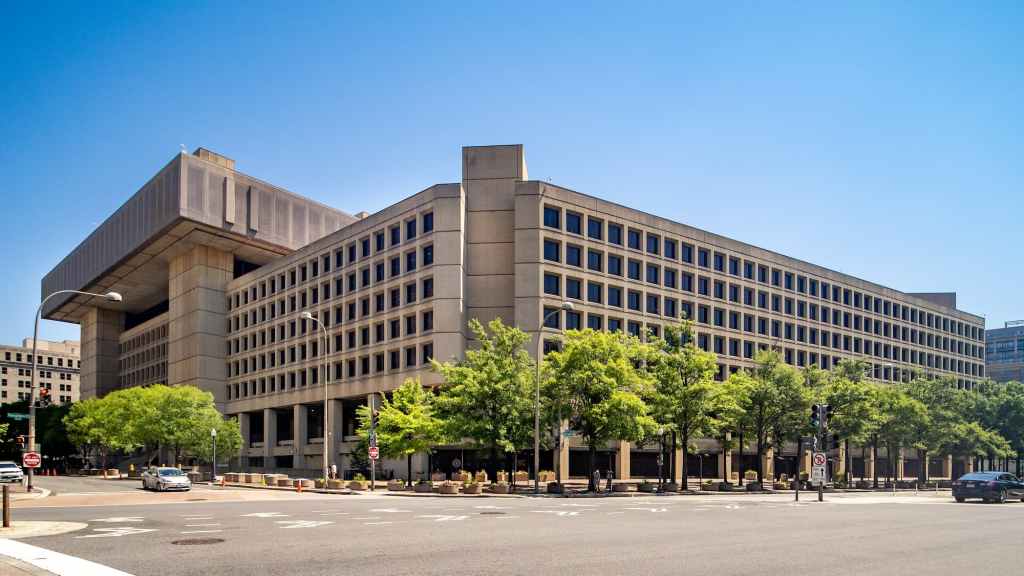
Brutalism was meant to represent social democracy and the power of a government giving happiness to all, but it would up also picturing the reign of the unaccountable bureaucrats sitting in the Herbert Hoover Building surveilling their subjects from bunker-like interiors. Slick glass and steel can signal openness, but also an alignment with corporate concerns. It is so difficult, in fact, to think of a good federal building constructed in the last half century, other than embassies we constructed in other countries with decent budgets, that I struggle to think of any.
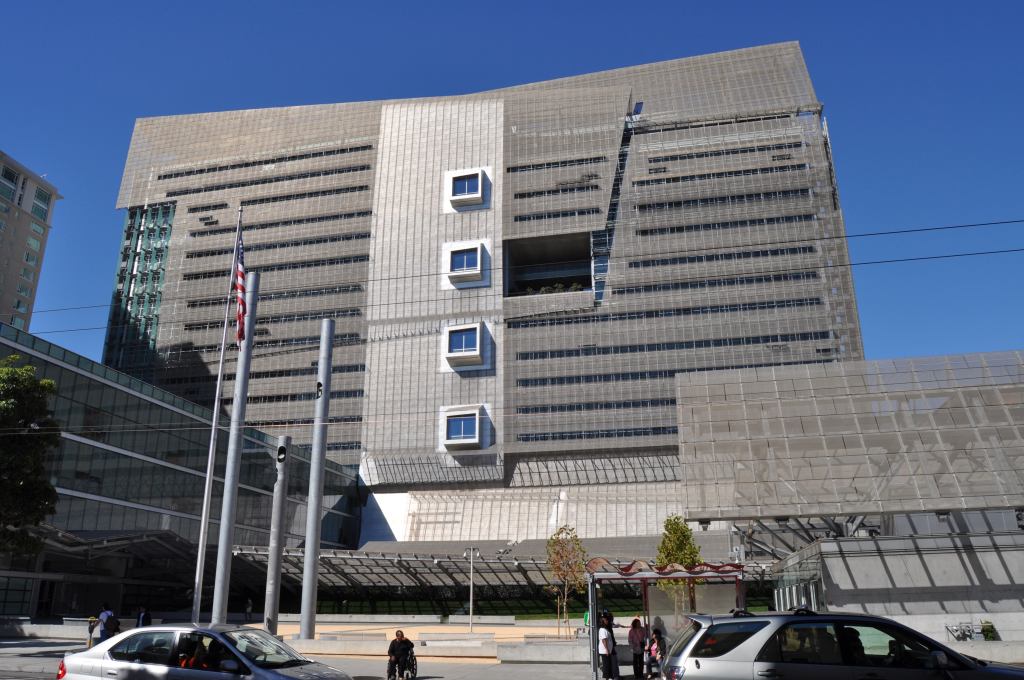
Perhaps Thom Mayne’s Federal Building in San Francisco, or his and Richard Meier’s Federal courthouses might count, but even those are deeply flawed buildings.
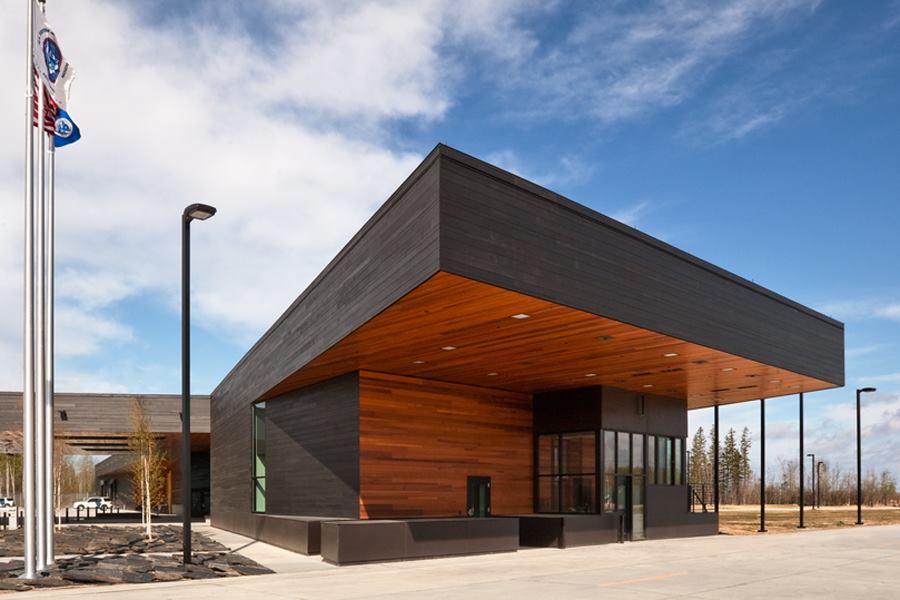
Ironically, I think our best recent buildings have been border stations designed by the likes of Eddie Jones, Smith-Miller+Hawkinson, and Julie Snow. that are in equal part emblems of security and welcoming havens.
What is more concerning to me is Trump draping one of the more mediocre such Brutalist buildings, the home of the Labor Department he has gutted (although not physically), with a giant portrait of himself. It suggests what dictators do to put their image on power and is much more direct and effective than the abstractions inherent in architecture. What is even more troubling is the use of government power as propaganda, whether by cutting a billion dollars in support for Washington, D.C. and replacing that with National Guardsmen picking up trash on our Mall –a void that is a truly great, but overly large emblem of democracy– while taking credit for crime figures that were already falling. Or directing funds away from those who need it to stay alive and healthy to build incarceration complexes for those who were and can be again productive members of our society and economy.
There is a warning inherent in the use of architecture by Trump and his lackies. Reagan, Nixon, and the second Bush had terrible taste. Kennedy, Obama, and even the first Bush had good taste –and look where it got them. In our society, good design is associated with elitism and the exercise, ironically, of unelected power. That is partially because, as I noted above, doing architecture and design well takes money. It is also, however, because the notion that experts know better is something that we have been rebelling against for a long time. The backlash started in culture and has now spread to science, affecting to a critical degree our health and the very survival of humans in an increasingly unsustainable environment. If architecture is going to be part of the resistance to nascent (or is it already in its adolescence?) fascism, then it will have to figure out how to make sense, be sensible, and seduce, as well as being right. For all their flaws, we need more Disney Halls and High Lines, more social housing of the kind they produce in Northern Europe, and just more good design that looks better on TikTok. I look forward to a next administration’s –if we are granted that blessing— mandate for that.
The views and conclusions from this author are not necessarily those of ARCHITECT magazine.
Read more: The latest from columnist Aaron Betsky includes reviews of: Louis Kahn’s Esherick House | Ma Yansong’s Fenix Museum | The Cult of Emptiness | An Icon in Waiting | Osaka Expo | Teamlab | the Venice Biennale of Architecture | On Michael Graves | On Censorship or Caution? | Uniformity in Architecture | Book on Frank Israel | Legacy of Ric Scofidio| Fredrik Jonsson and Liam Young | DSR’s New Book | the Stupinigi Palace | Living in a Diagram | Bruce Goff | Biopartners 5 |Handshake Urbanism | the MONA | Elon Musk’s Space X | AMAA | DIGSAU | Art Biennales | B+ | William Morris’s Red House | Dhaka | Marlon Blackwell’s new mixed-use development | Eric Höweler’s social media posts,| Peter Braithwaite’s architecture in Nova Scotia,| Powerhouse Arts, | the Mercer Museum, | and MoMA’s Ed Ruscha exhibition.
Keep the conversation going—sign up to our newsletter for exclusive content and updates. Sign up for free.