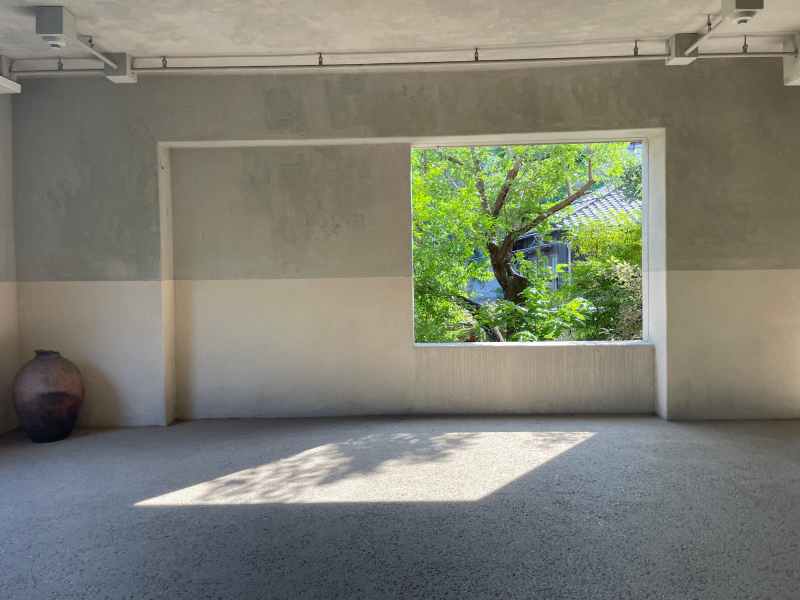
The port town of Onomichi on Japan’s Inland Seas is a pilgrimage site. Dotted along the slopes of the grandly named Mount Senkoji (more of a hill at less than five hundred feet height) are hundreds of temples and shrines tucked away among houses, stores, and gardens. Now there is a pilgrimage site for architecture aficionados there as well: LOG, a former apartment building converted into a hotel by Studio Mumbai.
Craft, Restraint, and Studio Mumbai’s Vision
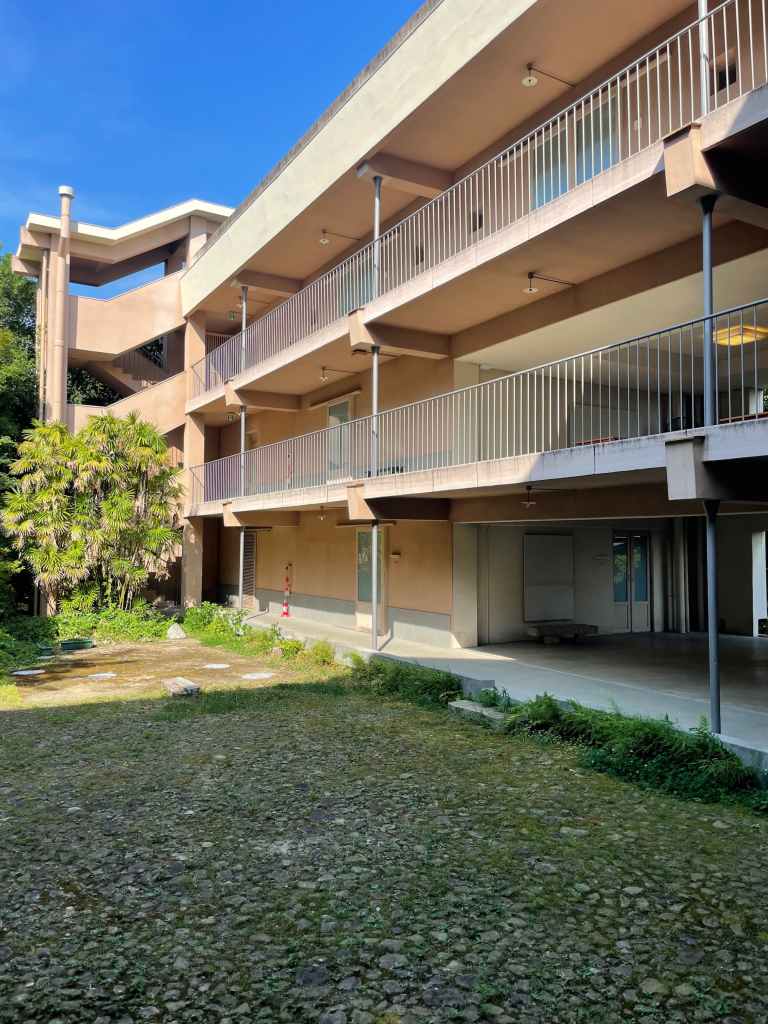
What makes the former row of dwelling unites worth schlepping up a hundred irregular steps from Onomichi’s main street and train station is the concentration on craft and restraint that gives LOG the sense of being a traditional ryokan or inn made comfortable and sensual enough for more bourgeois travelers as myself.
You just have to want its offerings enough to make the effort both to get there (there is no vehicle access) and to take a deep breath upon arrival. Once you enter its precincts, the clutter and confusion of the Japanese urban scene falls away to give you the sort of serenity that this culture has carved out of its intensity for centuries, but without you having to unroll a thin futon over a tatami mat when you want to go to sleep.
Studio Mumbai, based in the eponymous city and headed by Bijoy Jain, had, until they received the LOG (which stands for Lantern Onomichi Garden) commission seven years ago, never worked outside of India. Instead of bringing their craftspeople and native aesthetic with them, they sourced local workers and materials.
Designing Emptiness: The Aesthetic of LOG
They also took the existing and thoroughly undistinguished apartment building that was their site at face value, keeping all its major elements and concentrating on simplifying them while cleaning up the interiors. The result is a combination of deadpan modernist vernacular with an almost eerie emptiness.
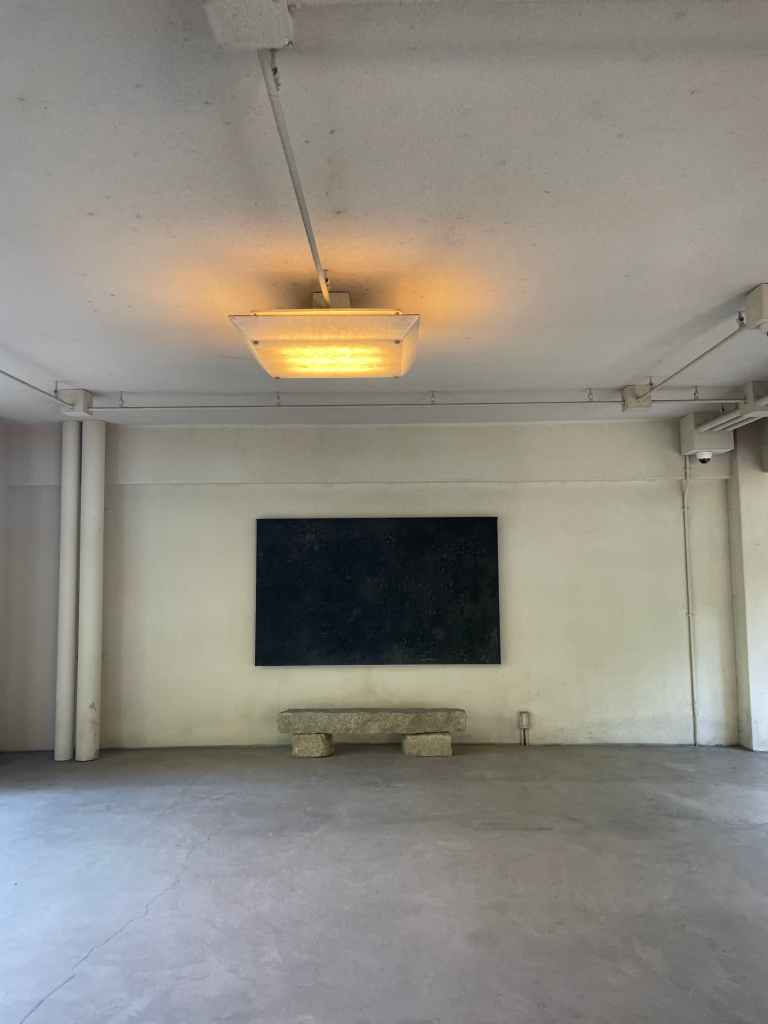
Because of tricks such as leaving the existing windows in the rooms but frosting them, giving you only a blurred version of the city around you; preserving outdoor terraces as empty environments with two or three abstract art works hanging without either climate conditioning or labels; dividing the walls of many of the outdoor corridors and terraces into two bands of off-white stucco; and generally leaving the building as they found it, but stripped down, LOG is to the current desire to reveal and honor even the most unremarkable structures of default modern building as a Zen temple is to the wood vernacular out of which it is made. Everything is refined and simplified so that you notice what is there even more.
Furniture, Finishes, and the Allure of the Incomplete
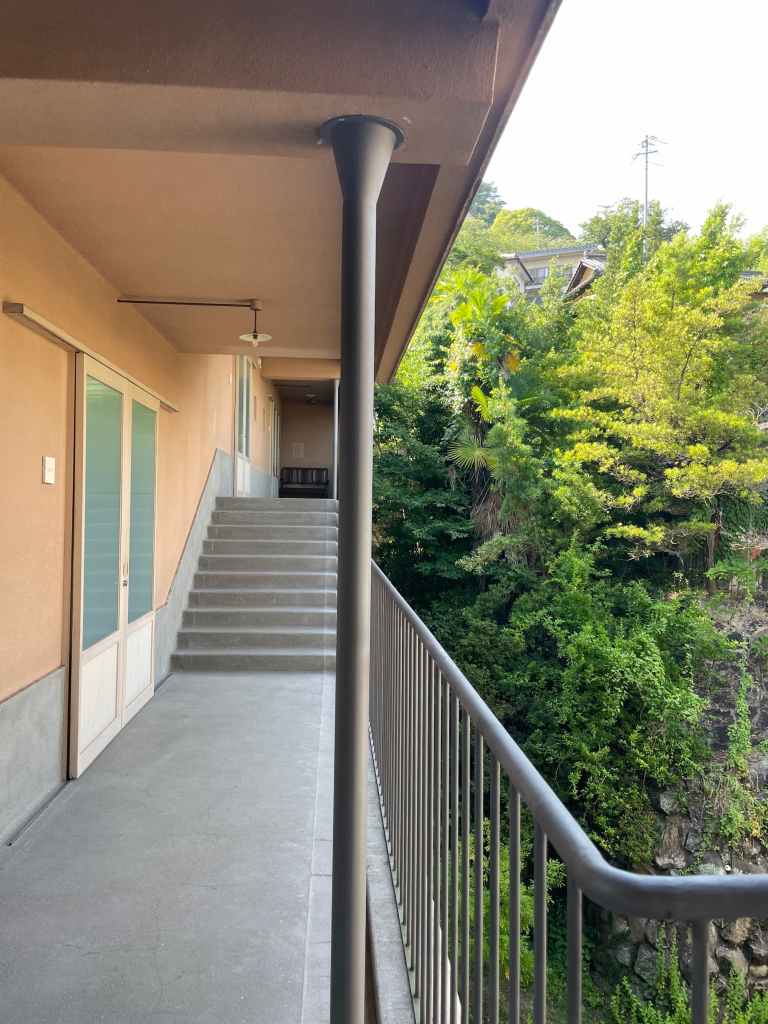
To wander through and stay in LOG is to find almost nothing, but what is there is both completely normal and studied with great extent. In one room you can find the paint samples Jain reviewed as he was choosing the beiges, light pinks, and grays that seem almost –but not quite—what was there when this was an affordable multiunit dwelling.
The furniture, all of which was designed by Studio Mumbai and built by local carpenters and metal workers, is somewhere between a collection of midcentury modern objects, what an untrained craftsperson might make, and the kind of neo-primitive pieces so popular in hip hotels and restaurants these days.
Modern Ryokan: Merging Tradition with Contemporary Comfort
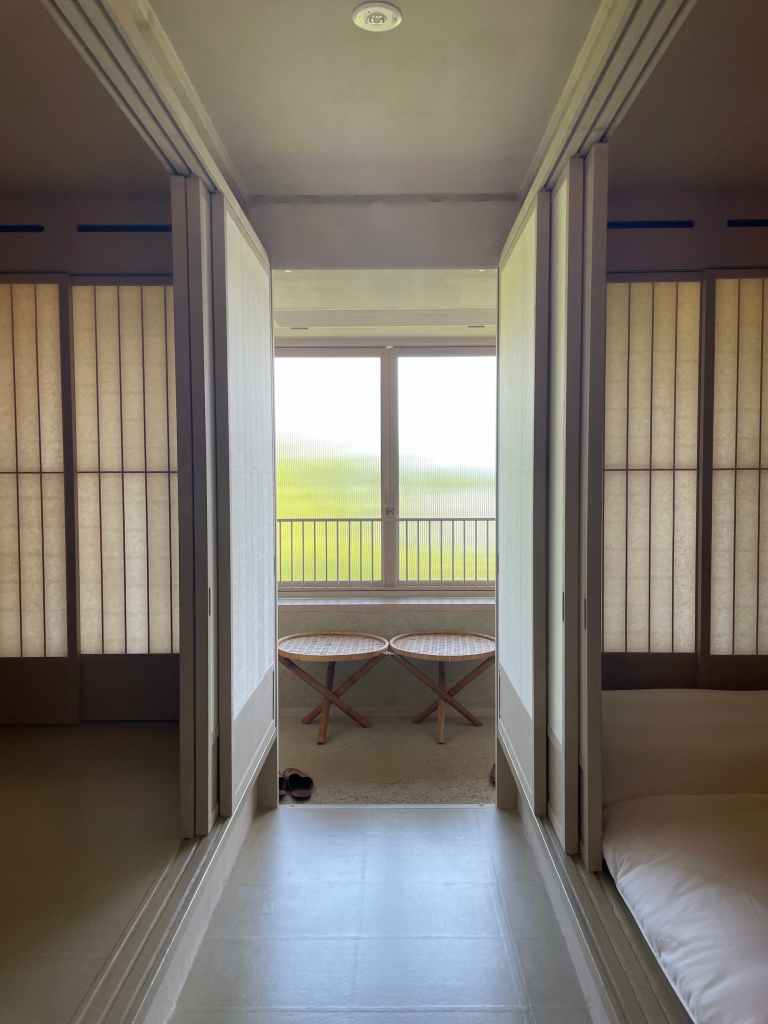
In the bedrooms, sliding doors, tatami mats, and only slightly raised beds provide a clearer reference to a modernist version of traditional Japanese interiors, with both the comfort and the roughness dialed up.
The rooms are cocoons with accoutrements such as all-gray paintings and a lack of technological implements. Between the frosted glass and the sliding screens, which even divide different beds from each other in the doubles, you feel forced to turn in on yourself.
LOG vs U2: Two Faces of Onomichi Hospitality
If all of this is too much for you, you can run down the hill to the first hotel the Setouchi Cruise company, a local shipbuilder trying to extend its economic base into hospitality, built right on the port.
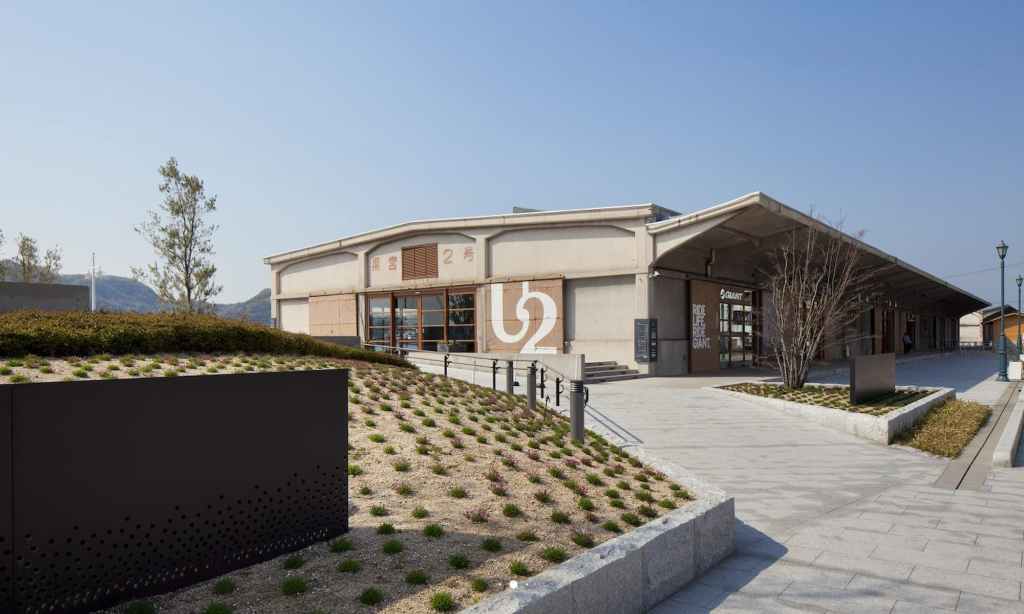
In contrast to LOG’s appeal to travelers looking for a respite, U2 Hotel (no relation to the band) is a collection of shipping containers stacked into an old warehouse that caters to bicyclers.
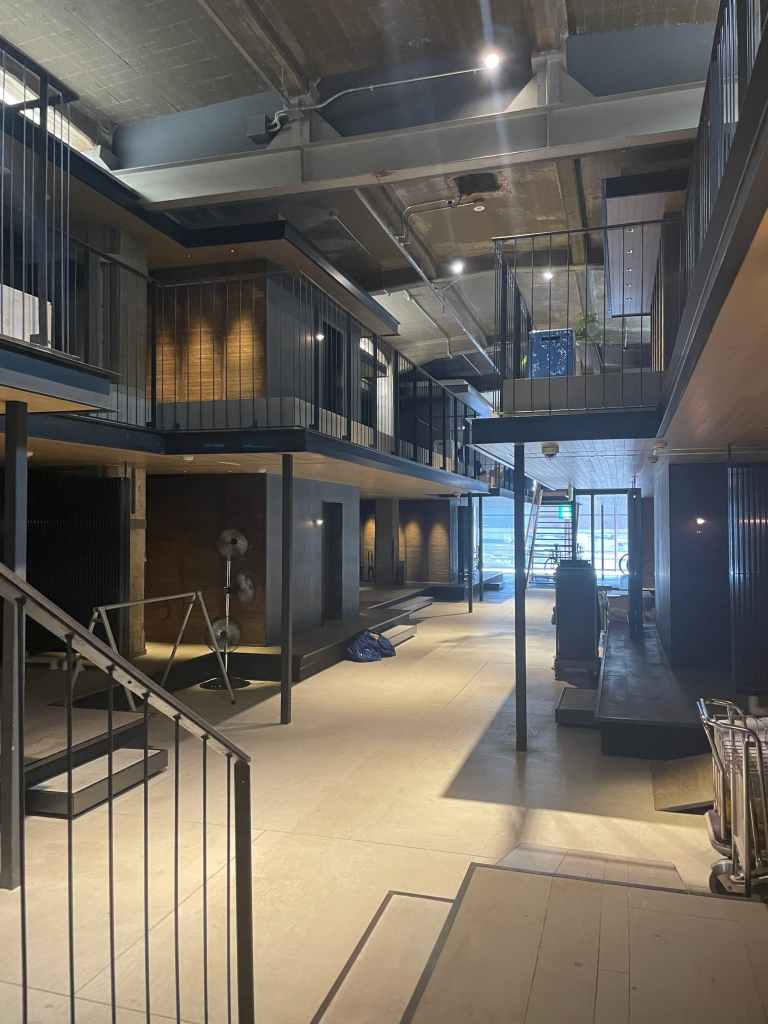
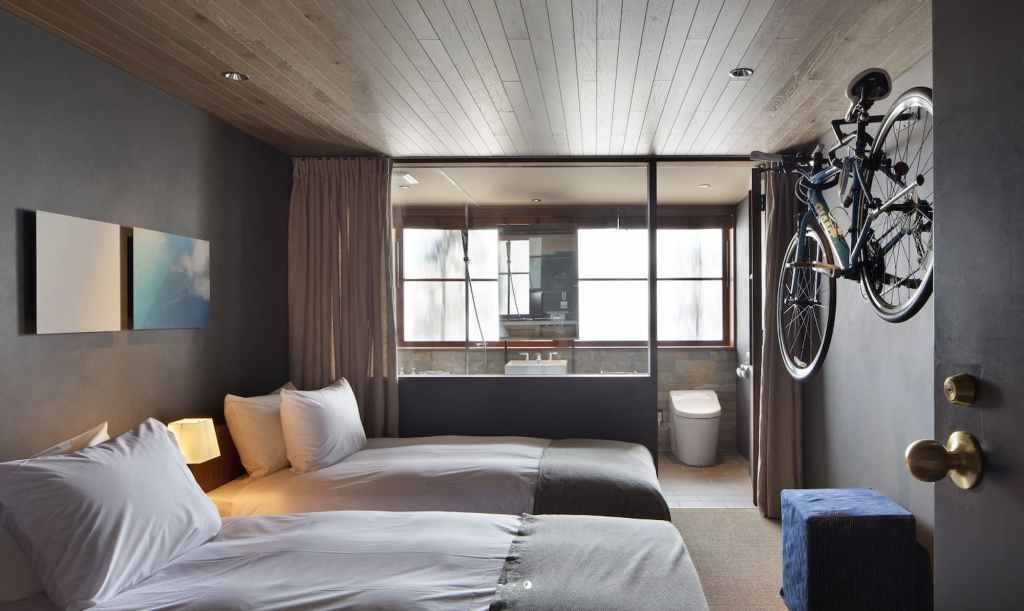
Setouchi and Onomichi have been promoting their city, which sprawls across several adjacent islands connected by bridges, as a site for touring on two wheels, and U2, designed by the Hiroshima-based firm Suppose Design Office, houses a bike store and repair shop along with various other purveyors of food and gift objects in the halls around the rooms. Inside those, the tiny spaces are intended just to sleep while your bike hangs from hooks on the wall. U2 is as minimalist and cocooning as LOG, but here you are surrounded by dead tech rather than abstracted apartment elements.
Post-Vernacular Minimalism and Its Cultural Resonance
Taken together, the two hotels are excellent examples of a trend not only in hospitality, but in architecture in general. A revaluation of the undervalued, the banal, the neglected, and the standardized and mass-produced spaces and structures we produced at the end of the last century, when the state of general design seemed to many of us at a low ebb, combines with a desire to unclutter, reduce, and tune out from both physical and digital confusion. This is a revival of a vernacular that was itself a destruction of centuries of ways of designing and making buildings.
The result is a kind of recognizable minimalism with all modern conveniences, produced with craft that shies away from showing its signature. You can call it a late century modernist revival, or post-vernacular minimalism.
It might even be the equivalent of what are doing with AI, as we collect not just highlights or greatest hits, but everything ever written, said, or made into ever larger machinic assemblies out of which we then choose the generic compaction.
Of course, it takes money to have this experience of refined normality, even if the prices at both LOG and U2 are generally well below what you would pay in fancier hotels. As this kind of work finds itself in the mainstream, it will lose the kind of almost obsessive design focus that the room rates and restaurant prices reflect.
That will no doubt include foregoing all the hard work that goes into seeming to accept what is there and do almost no design work, while doing a lot, and perhaps merge with the kind of generic modernism that is now the hallmark of Starbucks, McDonalds, and most of the motels you find on the highway. As a result, I think that someday we will make a pilgrimage to the slopes of Mount Senkoji to find one of the places where it all started and was still truly beautiful.
The views and conclusions from this author are not necessarily those of ARCHITECT magazine.
Read more: The latest from columnist Aaron Betsky includes reviews of: An Icon in Waiting | Osaka Expo | Teamlab | the Venice Biennale of Architecture | On Michael Graves | On Censorship or Caution? | Uniformity in Architecture | Book on Frank Israel | Legacy of Ric Scofidio| Fredrik Jonsson and Liam Young | DSR’s New Book | the Stupinigi Palace | Living in a Diagram | Bruce Goff | Biopartners 5 |Handshake Urbanism | the MONA | Elon Musk’s Space X | AMAA | DIGSAU | Art Biennales | B+ | William Morris’s Red House | Dhaka | Marlon Blackwell’s new mixed-use development | Eric Höweler’s social media posts,| Peter Braithwaite’s architecture in Nova Scotia,| Powerhouse Arts, | the Mercer Museum, | and MoMA’s Ed Ruscha exhibition.
Keep the conversation going—sign up to our newsletter for exclusive content and updates. Sign up for free.