


Gregory Hiesler
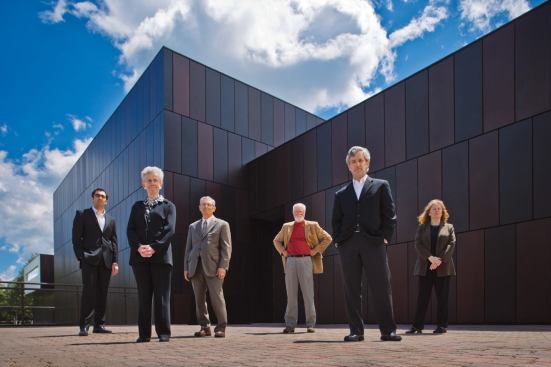
Expanding the Benedicta Arts Center was a team effort. Pictured …
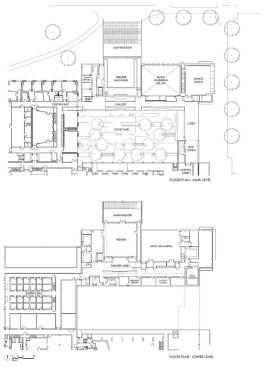
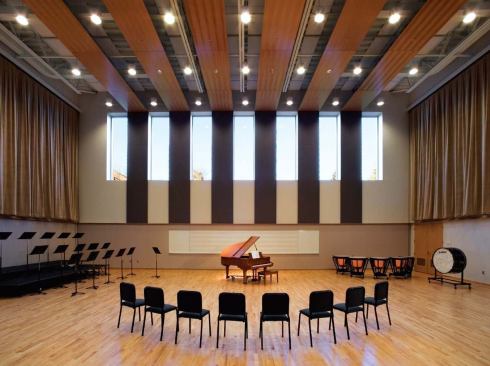
No issue vied for attention as much as acoustics. Given the intensive use of the building, the client groups were concerned that sound from one space would distract people in another. At one critical committee meeting, Carl and Milne-Rojek used drawings and renderings to explain how the spaces would be isolated acoustically. It was important, Fredricks says, that the faculty had an opportunity to voice their concerns and that administrators and the contractor could hear them. “It was a real turning point, where people went from being skeptical to being totally behind the project.”
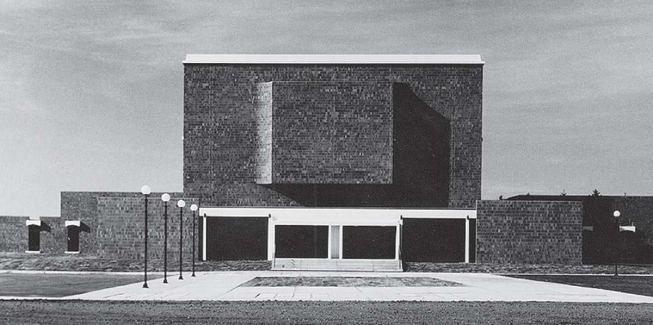
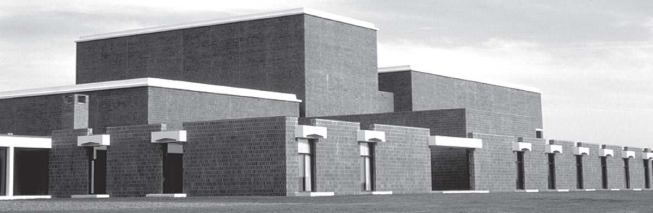
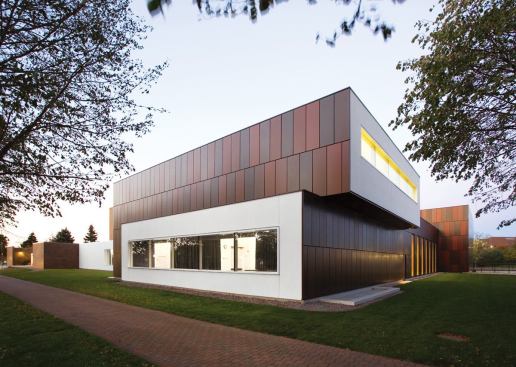
Resolving the building exterior also required serious effort. Initially, HGA tried to match the color of the brick on the original center, but could not do it exactly. At that point, they began to explore other options ranging from metal to wood to concrete.
A spark went off when Carl met with a metal manufacturer and installer. “They were very high on the durability of aluminum plate when used in a rainscreen system for this climate,” he says. The manufacturer presented a range of color samples in addition to clear, bronze, and black anodized finishes. But the standard colors were deemed to be too gaudy.
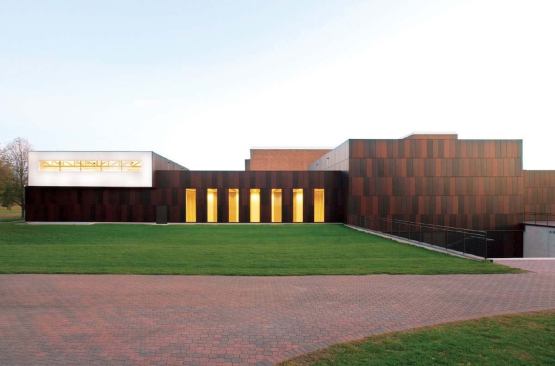
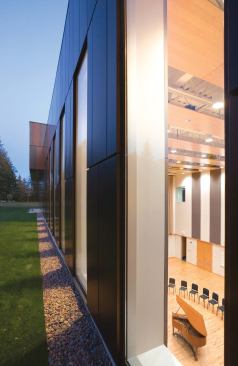
Instead, the architects asked if available finishes could be blended to produce new colors—and that question opened the right door. In the end, a palette of four complementary finishes was produced by double-dipping a red finish on top of the manufacturer’s standard bronze colors. “And we liked the fact that the panels would play a game with the scale of the building and complement the original,” notes Carl. HGA fine-tuned the color choices by examining a full-scale mockup on site with the building committee, selecting finishes that fit well with the darker shades in the original center’s brick façade.
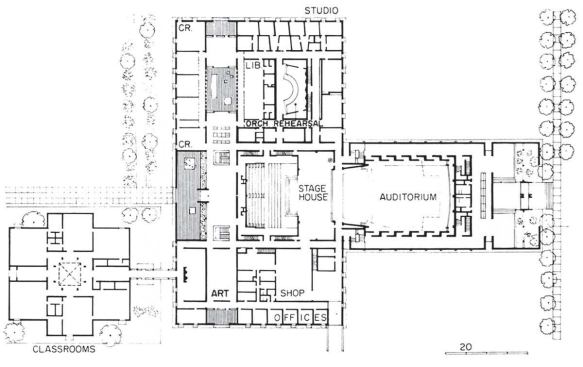
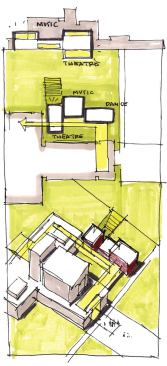
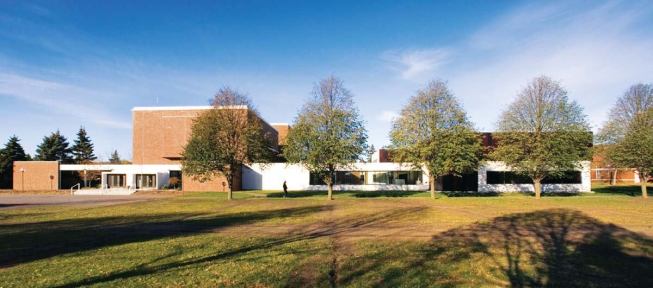
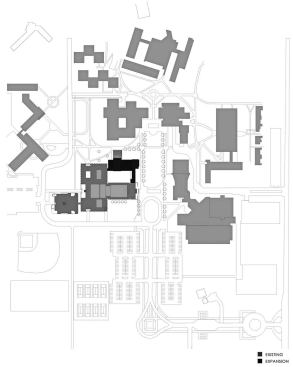
Dedicated last September, the 28,500-square-foot, $5.8 million expansion of the Benedicta Arts Center provides the rehearsal and performance spaces needed to support the college’s active fine-arts program. Its exterior is subdued and elegant, content to play second fiddle to the monumental main theater. Dark metallic panels on its front façade contrast with horizontal bands of white stucco that wrap around large ribbon windows.
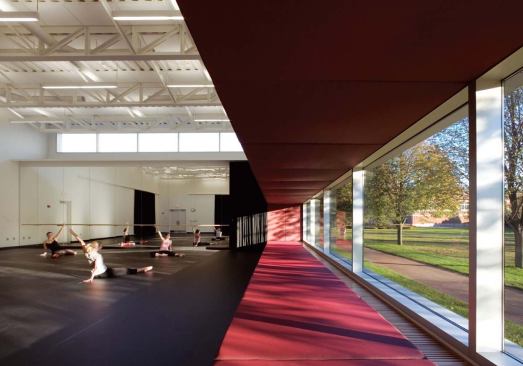
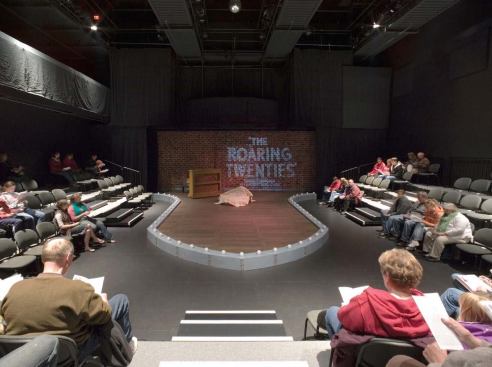
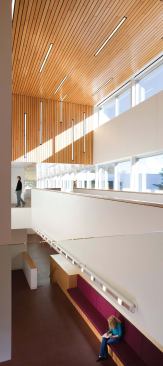
Inside, the new corridor dissolves into a bridge penetrating a bright circulation space that doubles as a lobby for the new, 120-seat Colman Theater. Access to the large music rehearsal room is also from the lower level, beside a row of faculty offices that double as one-on-one lesson rooms. The dance studio, located on the ground floor, often draws viewers from the campus mall.
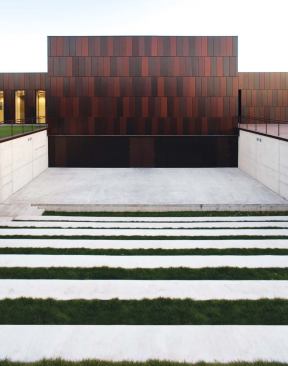
This was an important aspect of the project, says Fredricks, whose agenda includes making the liberal arts more visible on campus. Likewise, the construction of an amphitheater carved from the site on the north side of the addition is intended to make impromptu practices and small performances readily accessible.
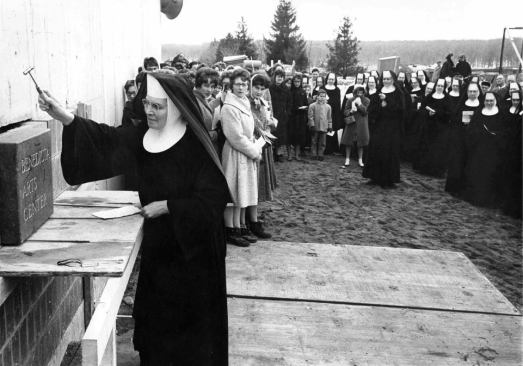
Today the Benedicta Arts Center hosts 200 public events a year, in addition to academic classes, lessons, and student performances. College representatives say it is the only venue outside of Minneapolis–St. Paul that offers an annual series by the Minnesota Orchestra.
“So now this really does everything we dreamed of,” says Sister Colman. “They can have dance here, and music there, and we can have high-school kids on stage all day. Or the dance company can come for a week and it doesn’t interfere with anybody. It’s perfect. And besides that, it looks good.”
PROJECT Benedicta Arts Center expansion
CLIENT College of Saint Benedict, St. Joseph, Minn.
ARCHITECT Hammel, Green & Abrahamson (HGA), Minneapolis (Gary Reetz, principal in charge; Jamie Milne-Rojek, project manager; E. Tim Carl, project lead designer; Andrew Weyenberg, project architect; Rich Bonnin, Kari Hahn, Erik Hansen, Chris Hartnett, Matthew Kreilich, Mary Opila, Heather Sexton, and Markian Yereniuk, project team)
GENERAL CONTRACTOR Donlar Construction Co.
LANDSCAPE ARCHITECT HGA/Close Landscape Architecture
MECHANICAL ENGINEERING Hallberg Engineering
ELECTRICAL ENGINEERING Wunderlich-Malec
THEATER CONSULTANT Schuler & Shook
ACOUSTIC CONSULTANT Acoustic Dimensions
COST $5.8 million