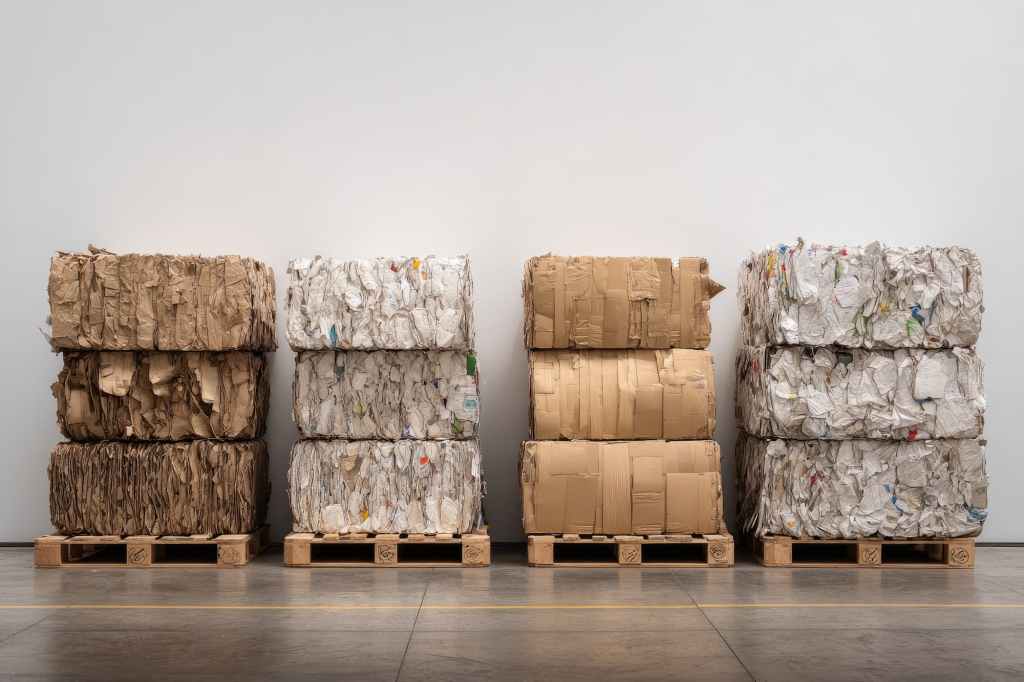
Waste reduction is a common theme in environmental building guidelines, and circular economy thinking encourages architects and contractors to minimize construction and demolition waste (CDW). However, cast-off building materials are obviously not the only source of rubbish that can be converted into new uses. Post-industrial and post-consumer waste remain advantageous sources of raw materials for construction, and the architectural aftermarket for these forms of refuse continues to grow.
Why Non-Building Waste is Gaining Traction
One reason that non-building-related rubbish is flowing into construction is that there are limited applications for the waste. Examples include post-industrial slag, fly ash, and other byproducts of steel and coal production, which have minimal marketability beyond reuse in alternative construction materials.
Another reason for the trend is the built environment’s physical size, which can easily accommodate large quantities of materials in ways other arenas cannot. An example is post-consumer packaging materials, such as recycled paper and plastics, which collectively represent sizable volumes of material that may not be reused in new consumer goods.
Yet another motivation is creative substitution. Increased knowledge of technology transfer has raised awareness of the building construction needs that repurposed non-building materials can successfully meet.
Repurposing Waste into Equivalents for Traditional Materials
This scenario is ideal because it represents a purposeful replacement of a more wasteful or problematic product with a functionally equivalent material that lightens a non-construction waste stream. Several recent developments illustrate these trends, revealing how the built environment—and particularly earthen construction—is incrementally becoming a new kind of repository for non-construction byproducts.
Cardboard Tubes Reinvented as Structural Elements
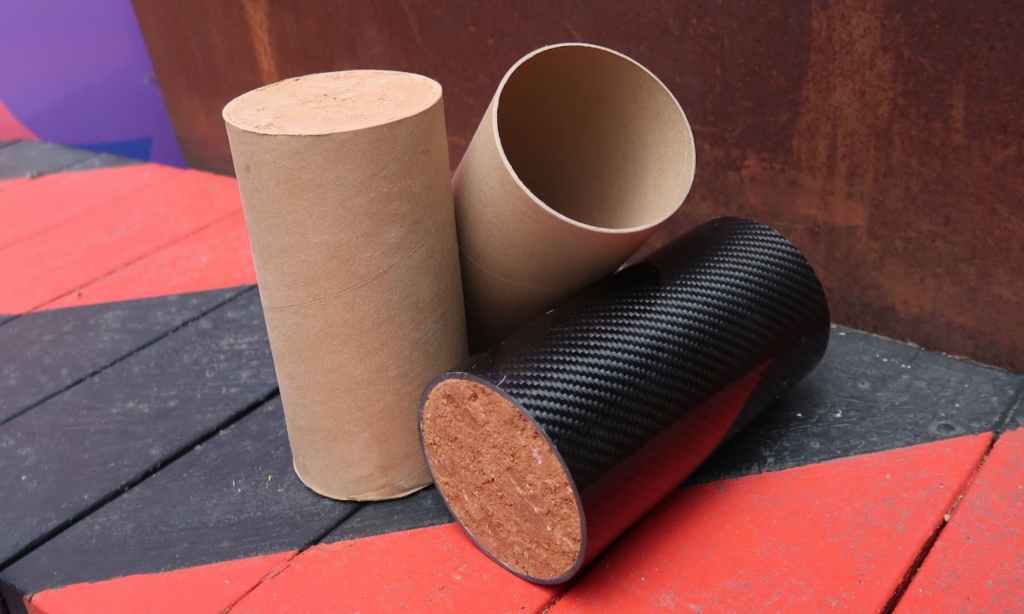
One of the most common consumer-related waste materials is cardboard. An engineering team at Australia’s RMIT has devised a new structural application for some of the 2.2 million metric tons of cardboard and paper discarded in the country annually.
Taking a cue from Shigeru Ban’s paper tube construction, the team has developed a composite structural component that consists of a recycled paper tube filled with rammed earth. The compacted soil infill material provides additional compression strength to the tube without the addition of cement required in typical rammed earth construction. The cardboard-encapsulated rammed earth tube represents a mere 25% of the carbon footprint and 33% of the cost of traditional concrete, the closest equivalent building material.
Fly Ash as a Cement Replacement in Rammed Earth

Another team is working with rammed earth using post-industrial byproducts. UBC Okanagan researchers have developed an earthen construction technique that replaces cement with supplementary cementitious materials (SCMs), such as wood fly ash, the residue from burning wood in pulp mills and other industries. This material typically ends up in landfills unless diverted for use as a cement alternative. Not only does wood fly ash provide the bonding function of cement, but it also reduces the amount of sand needed in the rammed earth mix—a benefit in a time of increasing global sand shortages.
The new earthen construction technique is being used to build new rammed-earth residences in British Columbia. “There is an increasing demand for sustainable building products here in Canada and around the world, and materials like fly ash are just the start of a new and important trend,” says UBC Civil Engineering professor Sumi Siddiqua.
Silica from Geothermal Waste for Ground Stabilization

Yet another breakthrough focuses on earthen construction below-grade. Scientists at the Shibaura Institute of Technology identified a novel industrial waste material for safe and effective ground improvement. Earth reinforcing via grouting, typically involving the stabilization of soil with chemical grouts made from silica, has a high embodied energy. Shibaura engineering professor Shinto Inazumi and his team recognized the opportunity to substitute the high-carbon footprint ingredient with silica recovered from geothermal energy generation.
This net-zero-carbon grout, called Colloidal Silica Recovered from Geothermal Fluids (CSRGF), is functionally equivalent to traditional stabilizing silica but has a significantly lower environmental impact. “Geothermal energy production generates large amounts of silica-rich waste fluids, which traditionally pose maintenance and disposal challenges,” says Inazumi, “By repurposing this waste into a high-performance CSRGF grout, we aimed to establish a circular economy approach, transforming an industrial byproduct into a valuable construction material.”
Ensuring Biosafety in Recycled Building Materials
As new building applications of post-industrial and consumer waste continue to proliferate, safety should remain a priority. Landfill should be transformed into buildingfill only after ensuring that repurposed feedstocks are biosafe and will not leach harmful chemicals into walls, foundations, and the surrounding site. With careful resource stewardship, the creative solutions described above hint at a circular economic future in which industrial and consumer processes are intentionally developed with the built environment as their ultimate destination.
Toward a Circular Future for the Built Environment
This possible future brings multiple advantages, including establishing valuable secondary markets for these byproducts, diminishing the quantities of virgin building materials needed for new construction, reducing overall waste, and utilizing the largest physical product of human society—the built environment—as the primary repository for second-life materials.