












Ian Allen
As Prchal drove me through the city center, she lamented that with all the growth, there has been little interest in rehabbing downtown buildings, including a vacant six-story, 1950s hotel. “I look at this as a person who grew up here,” she says. “It’s near and dear to my heart, and I believe in respecting the past. I get upset when people put all the new development ahead of things that will be lost forever.”
She was, it was clear, speaking of more than buildings. She talked about her parents, who now hardly dare to drive through much of the town because of the traffic. She talked about the relentless pace of the development and how it has taxed Dickinson physically. “I feel like our town is being broken,” she says. “It’s like your 600-pound uncle sat on your couch, and it’s going ‘crack.’ We weren’t built for this.”
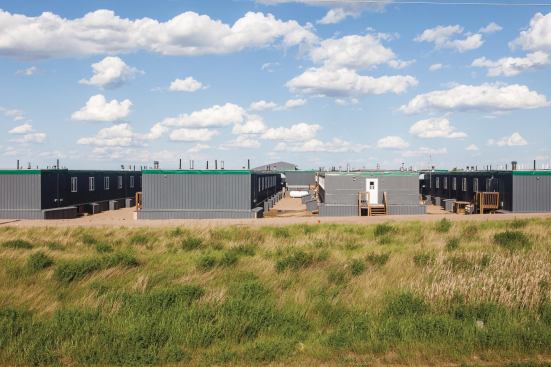
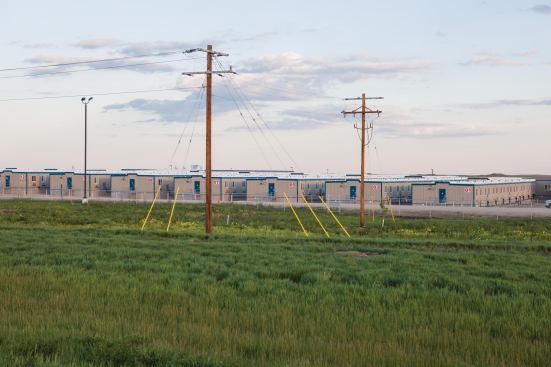
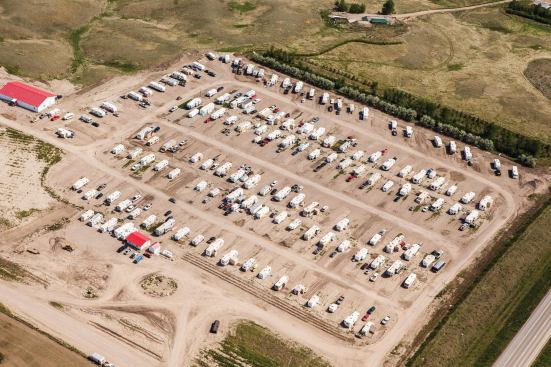
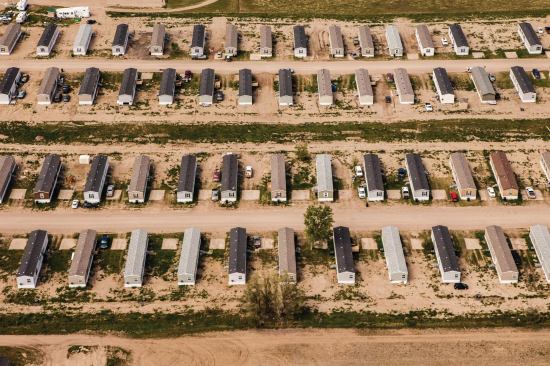
But Mayor Dennis Johnson says he is determined that Dickinson retain its character as it grows. “We think we began with a community that has fairly decent curb appeal,” he says. “We want to maintain that. We want to grow in an orderly fashion.” To that end, the city is trying to protect the corridors around the main roads into the city from industrial development. Dickinson also rejected plans for a 3,000-person man camp that was to be built right on the edge of town. It will now be constructed farther out.
The boom arrived later around Dickinson, giving the city more time to prepare, and it, too, is fashioning a plan for growth. “We’re looking at land use, looking at transportation, water, recreation, everything,” Johnson says. The city has already commissioned Hulsing & Associates to design a new elementary school in a fast-growing part of town.
Before the boom, Prchal says, new construction was scarce in western North Dakota, and architects mostly did restoration or addition projects. Her firm, known for an eclectic and pragmatic approach, designed its studio by transforming what was essentially a metal industrial building that had been a clay plant, a modular housing factory, and a hockey rink.
For the new school, Prchal wanted to update the vernacular brick designs found in most North Dakota towns by incorporating a modern, largely glass atrium. But the reality of oil-boom construction helped define her choices. The building, for example, is made of precast concrete with a brick veneer. “It all has to do with the labor force,” she says. “I can’t find masons.” Or other workers, for that matter. The structure had to be built in Grand Forks on the eastern side of the state and hauled in, because, Prchal explains, “we don’t have enough people available here to do this project.”
Despite the challenges, government and local institutions are investing in other significant buildings. Almost all of the area hospitals and clinics are expanding. Dickinson is also planning a new public-works building and a law-enforcement center. Johnson emphasizes that they will be built to last. “Public government should make architecture interesting,” he says, “because it sets the tone for the rest of your community.”