1
of 3


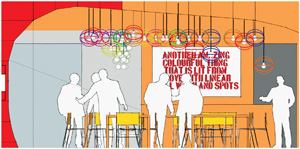
The 2012 iteration of the tent featured three areas: a large, colorful gathering space festooned with custom pendants, and two smaller spaces with a wide array of luminaires using Xicato products. A perimeter display wall—internally lit folded boxes inspired by origami—showcased the consistent color-rendering of the Xicato LED modules. The other workshop-like space gave lighting designers an opportunity to experiment with the modules and various OEM luminaires.
Given the temporary nature of lighting trade shows, the other key design feature of the stand was its ability to be recycled. “So much waste is generated over the course of these week-long events,” Lupton says. “Every year, we see piles of MDF in the bins, so we wanted to do something more environmentally responsible.” All of the ceilings, walls, and surfaces—including furniture designed by Luke Smith-Wightman—were designed and fabricated out of cardboard for ease of post-show recycling. Lupton notes that “Germany has recycling facilities everywhere,” so there was little chance of waste ending up in a landfill.
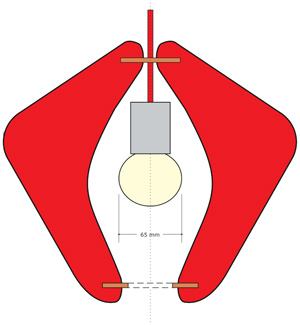
Light Collective also collaborated with Mike Stoane Lighting to create the custom pendants that illuminated the stand, all of which featured Xicato’s LED modules. Lupton wanted these fixtures to be consistent with the rest of the atmosphere, so these, too, were designed out of cardboard. “Why not make them out of the same material and make a three-dimensional form?” he says. Given the positive response by fairgoers during Light+Building, Xicato now has plans to sell the pendant.
Another one of the issues that Lupton wanted to address via the stand’s design was that of the on-site staff’s involvement. In his view, companies often enlist the help of additional personnel to answer general questions, but they are not necessarily directly familiar with the products. So Light Collective proposed an interactive space in which designers could disassemble and reassemble luminaires from a variety of manufacturers who use Xicato’s products. This ability to play around with, and understand the capabilities of, the modules allowed lighting designers to experience the products in a more hands-on way.
“One of the things we wanted to do was create a space for people to hang out in,” Lupton says. Judging by the immense popularity of the tent, and the constant crowding of the workshop area, it seems they succeeded beyond their brightest hopes.

No recommended contents to display.