1
of 9
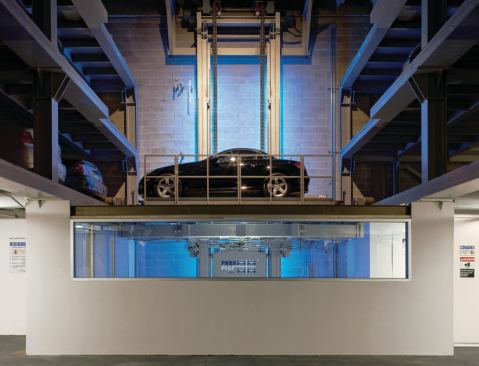
John Edward Linden
In Santa Monica, Calif., Brooks + Scarpa renovated eight parking…

John Edward Linden
In Santa Monica, Calif., Brooks + Scarpa renovated eight parking…
Logistically, parking structure designs must fulfill several requirements. Parking geometries are based on the sizes, heights, and turning radii of contemporary automobiles, which in turn determine the road and individual parking space dimensions as well as the structure’s floor-to-ceiling heights. Zoning dictates the number of spaces, and traffic flow on the surrounding streets determines entrance and exit placements. Many structures also incorporate spaces to accommodate staff and maintenance facilities, offices, and tollbooths. Ventilation systems to exhaust vehicular emissions are also critical, and even more so for underground or semi-enclosed garages.
A parking garage design team—typically comprising an architect, civil engineer, and structural engineer—has a fairly standardized kit of parts at its disposal. The kit includes basic ramp configurations, such as dedicated spiral “up” and “down” ramps, or the more common interior two-way cutback ramps.
The de facto structural systems include steel, poured-in-place concrete, and pre-cast concrete, all with standardized bay dimensions. In short, a team can design and construct a cost-effective, self-sustaining, efficient, long-lasting, and low-maintenance facility without reinventing the wheel—and without exploring new ways that the facility can benefit its environment.
In this conventional—albeit simplified—design process, the architect does little more than stamp the engineer’s drawings. And by and large, the parking garage construction industry remains content with the status quo.
A Better Neighbor
“Parking garages lost the magic—the potential to be better civic buildings—and became blight in our cities,” Scarpa says. He notes exceptions such as Paul Rudolph’s Temple Street Parking Garage in New Haven, Conn., which “is better architecturally, [but] even that [structure] didn’t house any uses that contributed to the urban fabric,” he says. “Today, there’s an effort to make garages that are part of the urban fabric.”
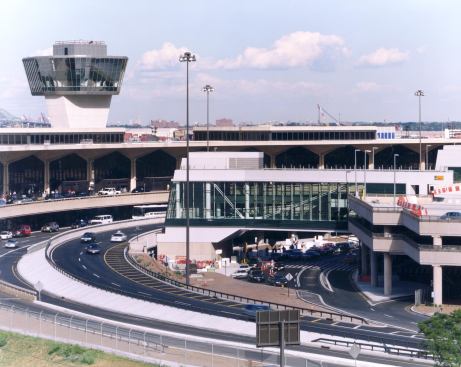
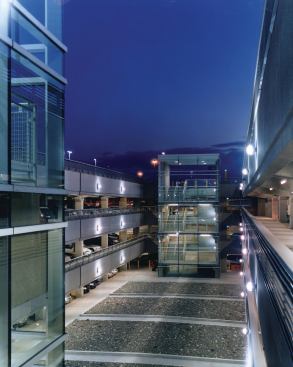
While the basic functional requirements of parking structures cannot be ignored, architects can design neighborhood-friendly facilities by adding programming that goes beyond housing cars. Commercial or institutional space on the structure’s ground floor perimeter can minimize pedestrian dead zones. Including other modes of transit in the facility, such as bus or light rail links, increases pedestrian activity throughout the day, as do visitor amenities such as public restrooms and local information stations.
These additions to building programs work both in new construction as well as in renovations. Brooks + Scarpa recently retrofitted eight parking garages surrounding the popular Third Street Promenade in Santa Monica, Calif. “The garages were typical of the 1970s,” Scarpa says. “Just there to house cars.”
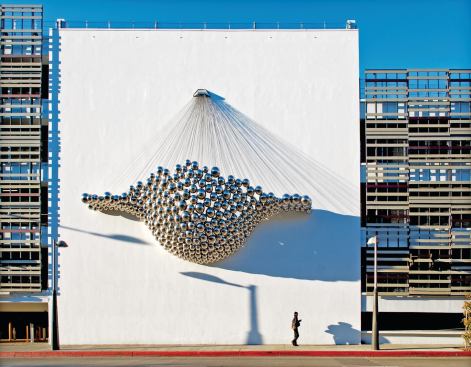
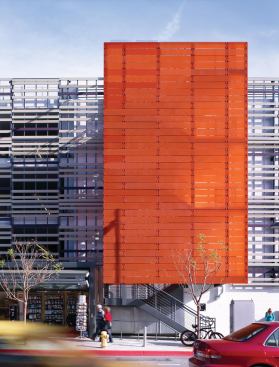
These concrete behemoths total more than 2 million square feet, so to transform them into pedestrian-friendly destinations in the downtown region, the firm worked with the city to replace some ground-floor, perimeter parking spaces with 8-foot-deep, kiosk-style retail shops. They also implemented a bicycle rental program alongside the retail space at the garages’ northeast and southwest corners and improved pedestrian access by adding new exterior stair towers that open the structures’ five levels to the street. Venice, Calif.–based Cliff Garten Studio designed a system of color coding on the structures’ ceilings and sculptural signage to improve wayfinding.
The garages also received an exterior makeover. New façades comprising patterned, textured screens of cement board panels maintain the required 50-percent openness for natural ventilation while breaking up the mass of the structures. LED lighting on the garages’ interiors and exteriors increases safety at night. The architects also left large portions of the façade open for a public art program, which turns the structures into giant canvases for art and cultural installations. A future phase of the project will add 1,000 solar panel–outfitted canopies to the roof, providing both electricity and shade for vehicles.
No recommended contents to display.