
Project Description
Global architecture and design firm, Perkins and Will signed the project for Willis Towers Watson’s new office in Brazil. The design for the leading global advisory, broking and solutions company’s new office features various references to São Paulo’s indentity and most iconic spots.
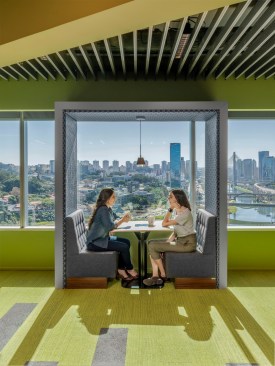
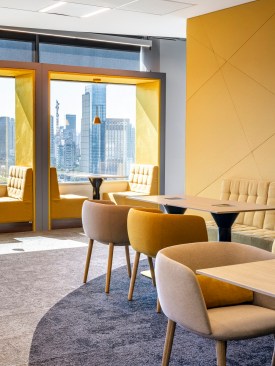
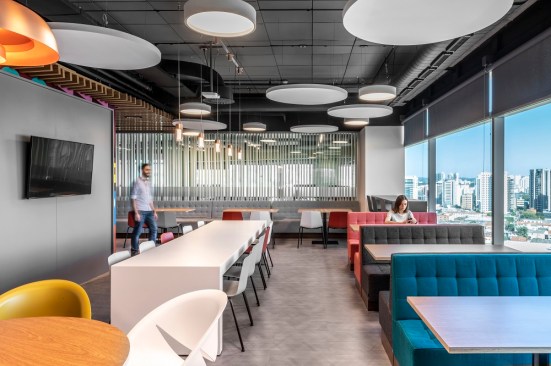
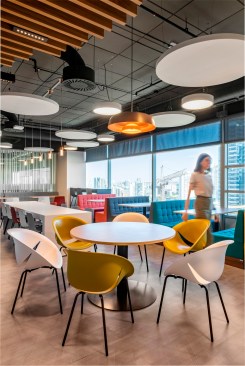
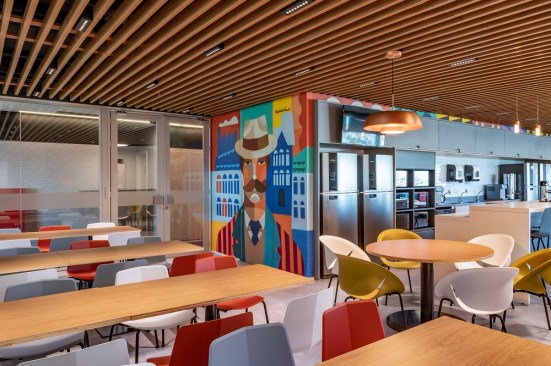
In order to meet Willis Towers Watson’s corporate culture – which places a strong emphasis on connecting office design to the local community, landscape and culture – vibrant colours were used in all of the areas in reference to São Paulo’s iconic grafitti walls. The cafeteria even has two grafitti-like murals, created by Rogério Pedro, and a breathtaking view from the city’s skyline.
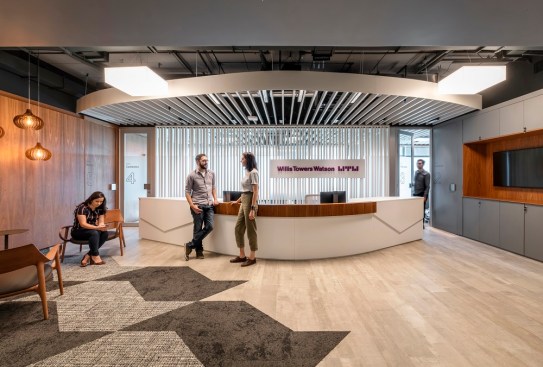
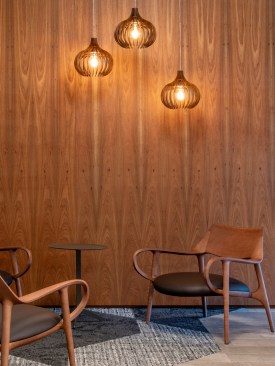
Another reference to São Paulo’s identity is the city’s sidewalk design reproducted in the main reception’s carpet. The mix of materials such as wood and concrete is another mention to the city’s encounter of nature and urbanity.
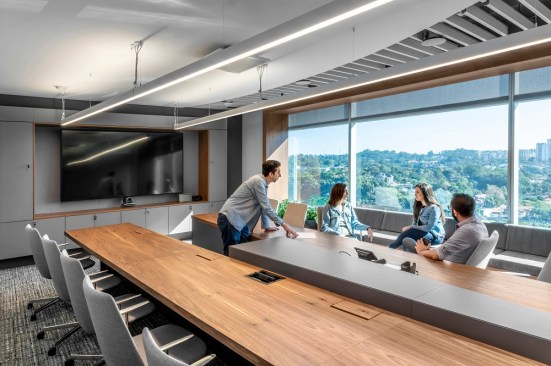
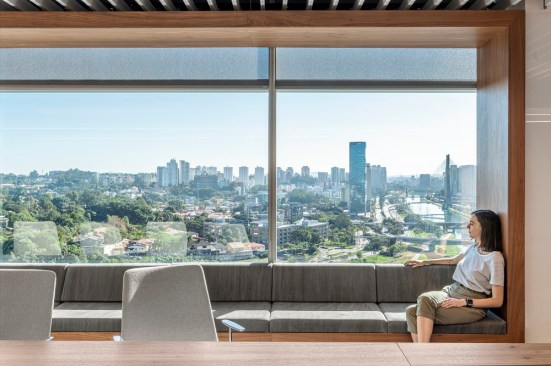
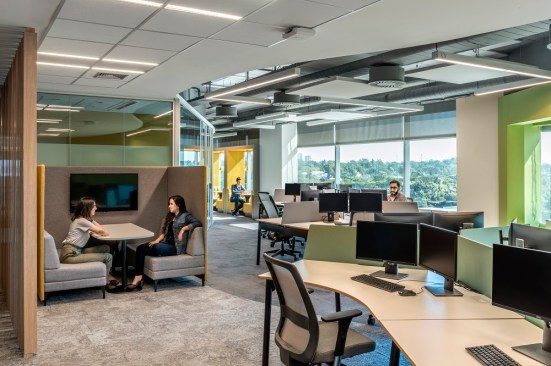
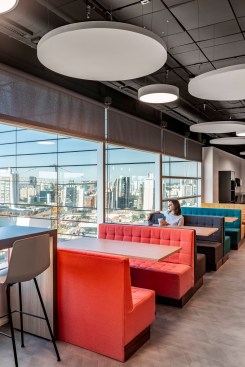
Parque Ibirapuera’s organic lines guided the project’s occupancy concept, developed in an open place layout. Distributed along the floorplan’s extremities, the work stations have access to an astonishing view to Marginal Pinheiros, one of São Paulo’s main road ways, and its cable-stayed bridge.
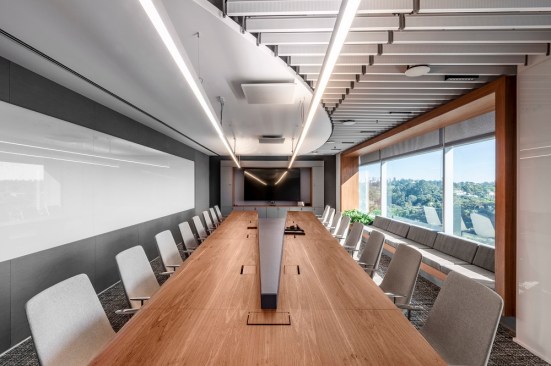
A green coloured portico makes reference to Ibirapuera’s lush forests and also subtly delimits the meeting rooms area.
“We prioritized free spaces and concentrated closed rooms in the floorplan’s center to improve circulation and democratize acess to the windows, where the employees can seize the view and the natural lightning”, explains Fernando Vidal, Corporate Interiors Leader and Managing Director in Perkins and Will’s São Paulo Studio.
Since Willis Towers Watson has an advanced Agile Working program, they’ve engaged Perkins and Will to help create a free adress, flexible office specifically designed to meet the needs of the company’s new ways of working.
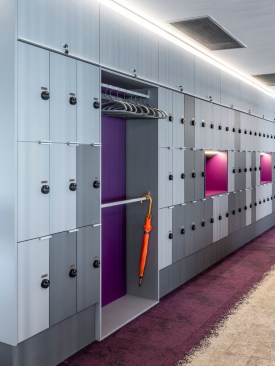
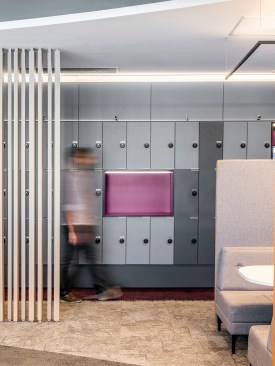
Through unadressed workstations connected to sensors that inform wether they are being used, employees now have the choice of different work settings to support the activity they wish to do with a special focus on collaboration and interaction.
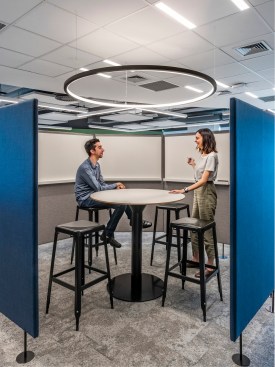
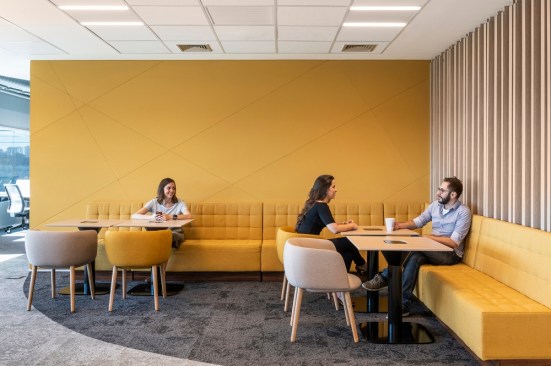
Small tables, stations and niches were distributed along the office for quick and informal meetings, bringing more flexibility to the office and incentivating integration and collaborative work.
Common areas were also designed to be versatile. “The cafeteria, for instance, can also be used as a training room or for internal events”, states Vidal.
In 2018, Perkins and Will have also designed Willis Towers Watson’s office in Rio de Janeiro.