

Project Description
FROM THE ARCHITECTS:
Vision
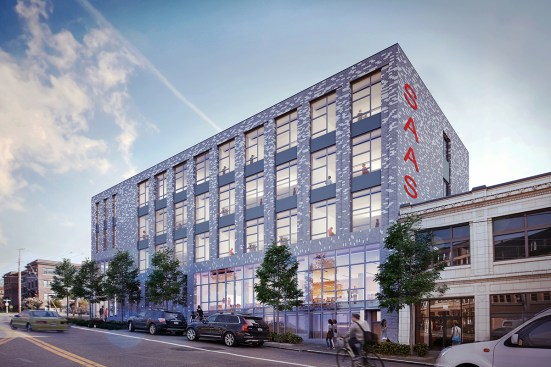
Located in Seattle’s dynamic Capitol Hill neighborhood, the new building for the Seattle Academy’s urban campus will be the first mid-rise middle school classroom building in Seattle. Through careful utilization of the dense site and strategically focused visual and physical connections, the school’s learning environment will extend into the community and fully knit the institution into the fabric of its surrounding neighborhood. The addition of the Cardinal Union will establish a new front door for SAAS, an independent secondary school, and create an enhanced presence for the middle school.
Program and Site
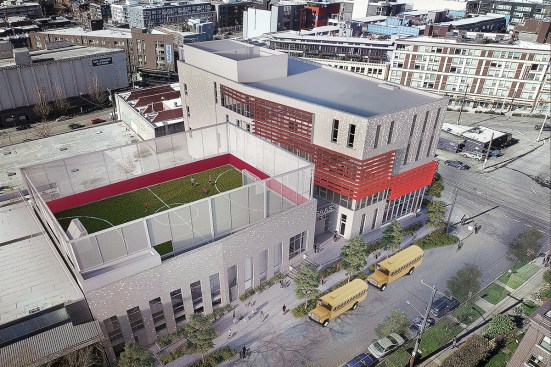
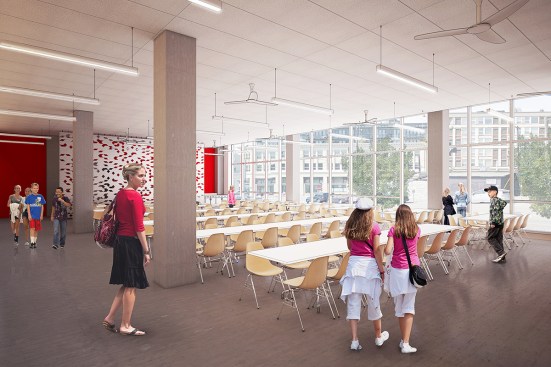
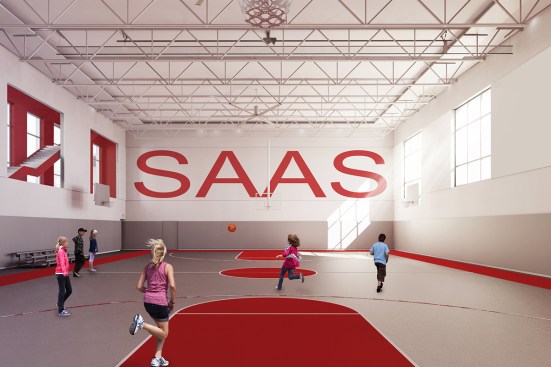
Currently located in leased space from the Temple De Hirsch Sinai, the new middle school will provide much needed spatial flexibility, contemporary classrooms, and purpose-built science labs – fostering mentorship across grades and enhancing connectivity to shared programs. The learning commons, maker space, instrumental music classrooms, second gym, and rooftop playfield, will accommodate changes to the curriculum while enhancing existing SAAS programs. Through a series of internal connections to existing SAAS buildings, the new 74,289-square-foot Cardinal Union will be a critical link in creating a cohesive institution for SAAS students.
Design
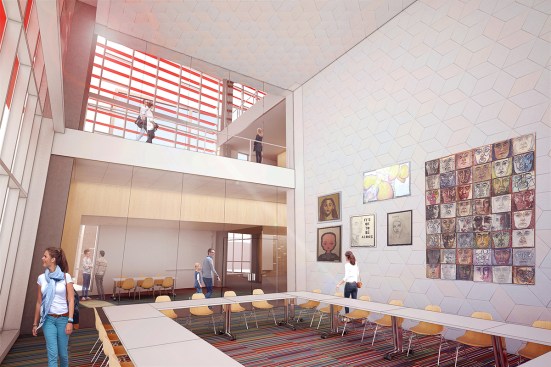
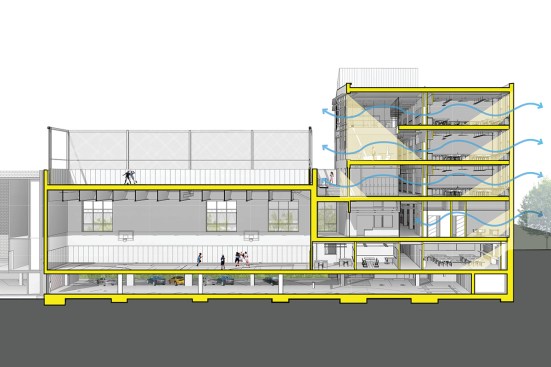
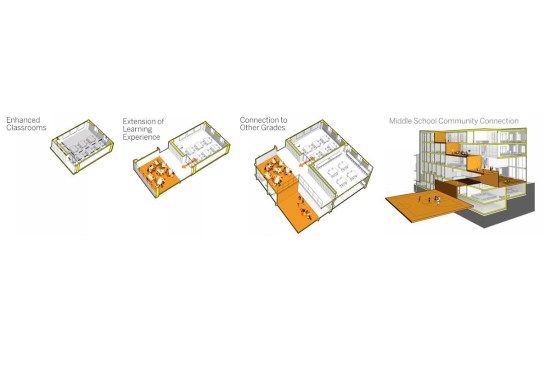
The new middle school is composed of a five-story classroom bar relating in scale to the mixed-use commercial and residential core along the Union and Madison Street arterials, and a gymnasium building that mirrors the smaller neighborhood context found along 13th Avenue. An outdoor rooftop playfield will sit atop the gymnasium and provide much needed activity space, while an outdoor area located at the building’s main entry provides a welcoming place for students to gather and collaborate. Each grade will occupy a floor within the classroom building, with classrooms organized around flexible, community learning spaces to accommodate project-based learning and cross-discipline discovery. The community learning spaces are designed as a series of double-height, stepped interior volumes, enhancing visual and physical connectivity within the stacked program and creating opportunities for students to observe, cross paths, interact, and engage beyond the four walls of the classroom.
The building will be clad in a mix of grey- and cream-colored bricks, which will fade from dark to light vertically along the façade. Bricks will wrap the building and transition to expanses of glass at the community learning spaces revealing the student activity within. Exterior red metal sunshades will provide colorful relief against the brick backdrop. Inside, the community learning spaces are tied together by a ribbon of faceted panels on feature walls and ceilings of each space as they weave through the building, providing visual continuity from the upper floors, through the building, and out into the neighborhood.
Sustainability
Sustainable features are a key factor in the design, and have been thoughtfully incorporated to enhance the student experience. Building analysis modeling was incorporated early in the design process to optimize daylight, solar exposure, and natural ventilation, while balancing the project budget against carbon reduction and water conservation goals. Natural ventilation strategies coupled with a highly-efficient mechanical system and a high performance envelope result in a projected 45% reduction in annual carbon emissions over similar buildings, which is equivalent to 8.8 acres of conifer forest that would be needed to sequester the carbon on an annual basis. A solar panel array is incorporated on the main building roof, while living roofs adjacent to classrooms illustrate ecological concepts and water quality. A future-compatible rainwater collection system is incorporated into the building design, intended to tie in with future Seattle Academy development and eventually provide non-potable water use for the campus. Web-based dashboards will provide instantaneous feedback to students and faculty on solar production, building performance, and water conservation, increasing awareness and integrating results into classroom activities.