Project Description
An abridged version of the below paragraph appeared in the May/June 2021 issue of ARCHITECT as part of expanded coverage of the 2021 AIA Regional & Urban Design Awards.
Equal parts visionary and pragmatic, the University of Arkansas Community Design Center’s proposal for a novel food distribution center in Hawaii represents socially responsible design at its best. Rebuilding a Local Food Economy: Oahu, Hawai’i is an attempt to rectify the state’s chronic dependence on outside produce to feed its large and growing population. On the more rural northern side of the state’s most populous landmass, new structures—including wholesale facilities, a marketplace, and a domelike grow house that doubles as an eye-catching recreational destination—would create accessible opportunities to foster local agriculture. But the plan would do more than build new buildings. The center also suggests a new and comprehensive approach to logistics and pattern for land ownership and management, which could help Hawaiian farmers establish more ecologically and financially sustainable business models.
This project was named a winner in the AIA 2021 Regional & Urban Design Awards. From the firm's AIA Award submission:
Despite being the most inhabited remote landmass in the world, Hawaii imports more than 93% of its food. This plan aims to rebuild the local food systems on Oahu, the third largest of the Hawaiian Islands and home to nearly one million people. Working closely with the state's department of agriculture, a diverse team of architects, urban designers, farmers, landscape architects, and food scientists embraced the idea of "thinking like an island" to create an innovative platform for developing value-added short food supply chains on Oahu.
While food planning is often viewed as a rural issue and is conspicuously absent in American planning and policy, food access is intrinsically linked to problems and health issues found in urban settings. Before the rise of industrial agriculture, local food processing and distribution centers were plentiful in American cities, ensuring both essential nutrition and farm prosperity. With food hubs, markets, and processors now absent, our cities have become less resilient and prone to significant nutritional deficits.
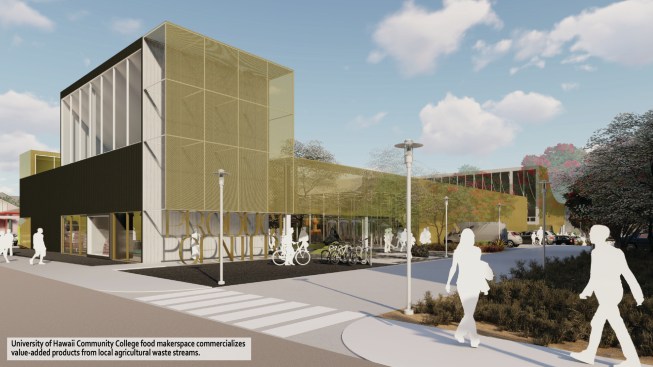
To address these challenges, the team developed a new regional food production system, conducted foodshed analyses, and shaped a portfolio of production facilities for the island. The plan's key components include a regional hub that can handle the wholesale processing of products from small growers, a food makerspace at the University of Hawaii, and post-harvest processing prototypes on remote farms.
The average age of a Hawaiian farmer is 61, so to incentivize younger, small-grower startup operations, the state is providing land and irrigation infrastructure reclaimed from corporate plantations. The plan also seeks to address relevant food business incubation issues, ecotourism, equitable distribution, and neighborhood redevelopment to demonstrate that urban agriculture can support a wide range of community needs.
The team’s vision for Oahu's food production landscape is expressed in several fundamental principles that support a healthy and resilient island. The primary aim is to reduce food insecurity by boosting the availability of local products in place of those shipped from more than 3,000 miles away. By incubating the island's legacy food ecosystem—coffee, tropical juices, kimchee, taro, and breadfruit—economic development would be nurtured and a workforce once responsible for Hawaiian prosperity would be rekindled.
Much more than just a plan, this model for rebuilding short food supply chains demonstrates concrete methods for reclaiming the middle agricultural infrastructure that has disappeared in America. Even more importantly, it clearly articulates how such chains can provide vital support to our communities.
Project Credits
Project Lead: University of Arkansas Community Design Center (UACDC)
Project Team: Stephen Luoni, Assoc. AIA, (director), Francisco Mejias Villatoro, PhD, Michela Cupello, AIA, Claude M. Terral III, AIA (project architect), Garrett Grelle, Colby Leding (project designers), Raheel Ahmad, Assoc. AIA, Jonathan Martinez, Assoc. AIA, Kay Curry, ASLA, LEED AP (landscape designer), Kenneth C. Hiley, Ethan G. Kaplan, Victor Lorenzo, RA, Maranda Gerga, Brian Hernandez-Dimas (student interns), Linda Komlos (administrative analyst)
UACDC Students: Austin Autrey, Caitlin Caum, Chelsea Garrison, Derek Hukill, William Pendleton, Joshua Powell, Rafael Segura
Collaborator: Fay Jones School of Architecture and Design Department of Landscape Architecture (LARCH), Ken McCown, Assoc. AIA, ASLA, IFLI, professor and head
LARCH students: Anna Gwaltney, Alexander Holyfield, Alexis Pacheco, Addison Warren
Collaborator: University of Arkansas Resiliency Center, Marty Matlock, PhD, PE, BCEE (professor and executive director), Eric Cummings (program associate), Eric Boles (director, Office for Sustainability)
OFS students: Deanna Mantooth-Hendrix, Kristina Ala-Kokko, Brittany Jurgens Gothard, Brandon Wayerski, Olivia Morgan, Sam Lahodny
Associate architect: Urban Works Architecture. Lorrin Matsunaga, AIA (principal), Vu Le, (project architect), James Noh (project designer)
Collaborator: University of Arkansas Food Innovation Center. John Swenson (manager), Jean Francois-Meullenet, (director, Division of Agriculture Arkansas Agricultural Experiment Station)
Collaborator: Brightwater: A Center for the Study of Food. Glenn Mack (executive director)
Collaborator: High Technology and Development Corporation, Robbie Melton (executive director and CEO)
Collaborator: Hawaii Housing Finance Development Corporation. Craig Hirai (executive director), Janice Takahashi (chief planner)
Collaborator: Mari’s Gardens. Fred Lau (owner)
Collaborator: University of Hawaii Community Colleges. Mike Unebasami (associate vice president for administrative affairs), Denise Yoshimori-Yamamoto (director of facilities and environmental health)
Collaborator: University of Hawaii Maui College. David Tamanaha (vice chancellor for administrative services)
Consultant: University of Hawaii at Manoa, School of Architecture. Daniel Friedman, FAIA (dean and professor)
Consultant: University of Hawaii Community Design Center. Cathi Ho Schar, AIA (director)