

Project Description
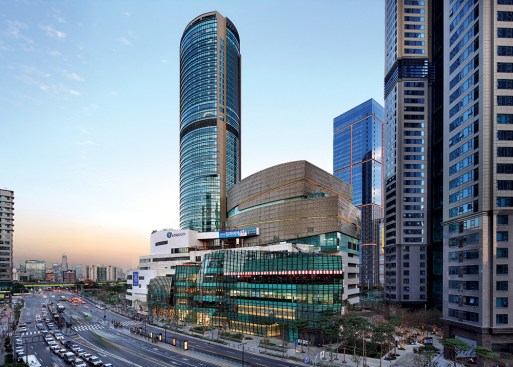
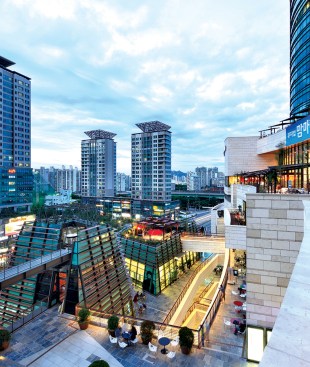
Transforming a 320,000 m2 industrial coal processing plant into a mixed-use public district, D-Cube City represents a major accomplishment for land redevelopment in Korea. Located in the dense capital of Seoul, connected to the Sindorim Station, D-Cube City sets a new standard in sustainable, transit-oriented development. It is one of Seoul’s first fully integrated destinations, composed of a six-level 80,000 m2 commercial/cultural complex with a major performance hall as its rooftop, a 42-story landmark office and hotel tower, and over six acres of public landscape, parks and plazas. Two adjacent 50-story residential towers designed by SAMOO complete the new urban complex.
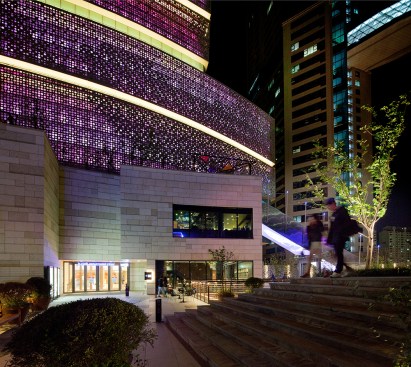
Envisioning a high-density destination incorporating heritage through holistic ‘cultural threads’ within programming and public spaces, Daesung, the client, wanted to address market demands for a new department store model. As a major regional energy company and adherents of green practices, Daesung suggested extending nature through the project. A series of mountains, trees, and water would weave together architecture, landscape and programming through a collective concept of 5 Nature & Cultural-Scapes: Edu-tainment (performance and cultural venues); Ecology (living gardens); Emotion (event spaces); Energy (pocket park, children’s art park); and Exhilaration (learning, energy museum, tower identity).
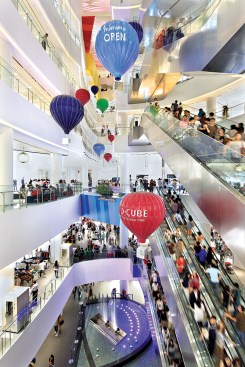
The cultural components’ integration with retail were critical due to the lack of high-level cultural offerings in the predominantly industrial area. The new theater district caps the six-level retail, seamlessly connecting to the larger department store plan and F&B network. Higher-end restaurants are below the cultural/theater level, while a one-of-a-kind market/food street is on the lower level. Collaborations with famous local restaurateurs from all over the country created an F&B collection previously unavailable in Seoul.
The project namesake D-Cube: Daily (offerings & livability); Dream (desires & culture); and Discovery (nature & experience), reflects its roots in public culture: a synthesis of natural amenities and public offerings enhancing urban livability.