
“This project is rigorously researched toward a specific end—to deliver capable buildings on the ground. It’s a localized and elegant solution.” — juror Phillip Bernstein, FAIA
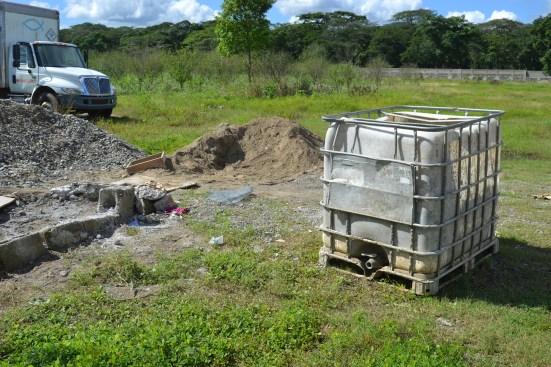
Architect Anthony Costello, FAIA, has been traveling to Haiti for almost 20 years to help build in the desperately poor country, but it was only after the 2010 earthquake that he realized how structurally unsound Haitian construction can be. Many bricks used in multistory buildings aren’t even kiln dried—as a result, they are so soft that they crumble in your hand. And most buildings are not laterally braced, so that strong horizontal movement—like an earthquake—knocks them over like matchstick towers.
Tony Costello, FAIA
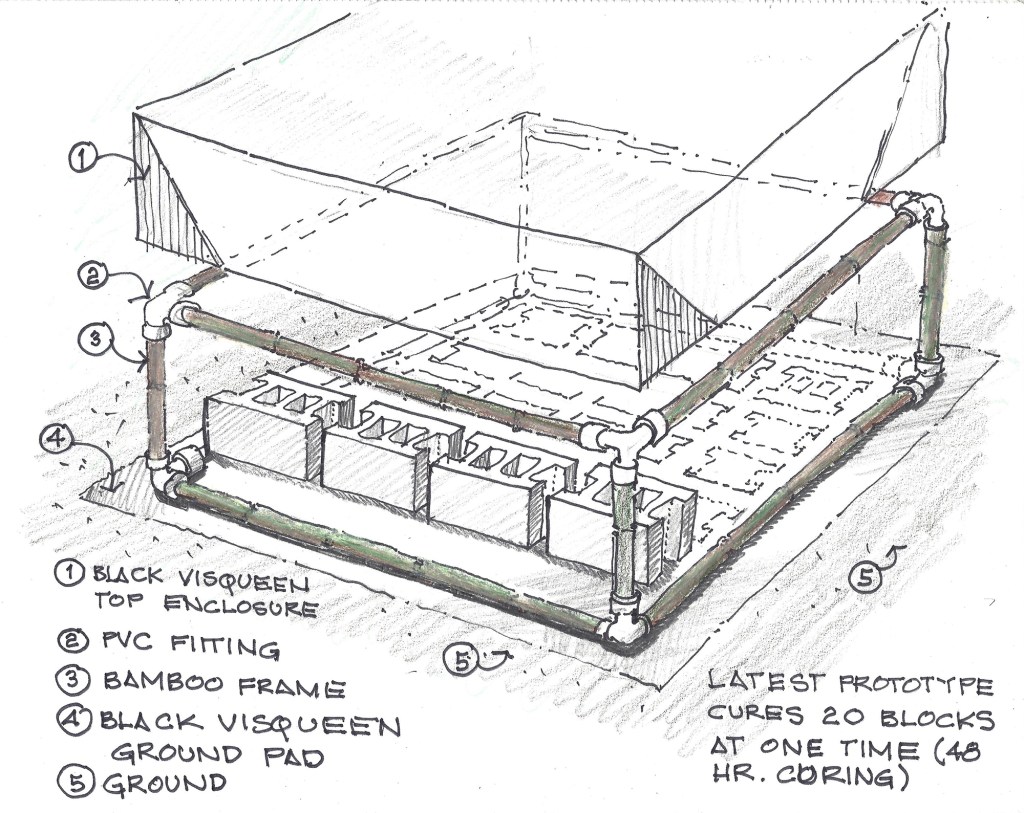
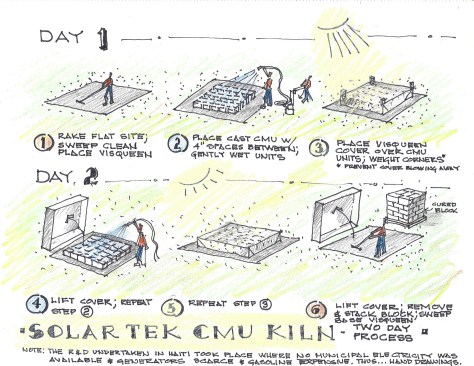
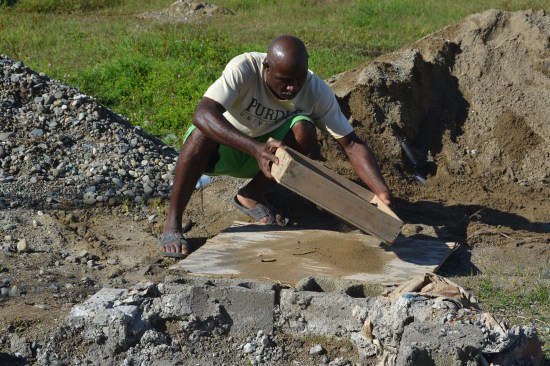
Costello’s solution to these structural issues is two-fold: First, he invented an easy-to-build kiln—powered by passive solar energy—to dry concrete masonry units made from a lightweight frame with a black polyethylene cover. Temperatures inside the kiln can reach 140 F, enough to cure the concrete bricks inside. He plans to build a full-scale version in Haiti this summer, and then begin training local artisans to use it.
Tony Costello, FAIA
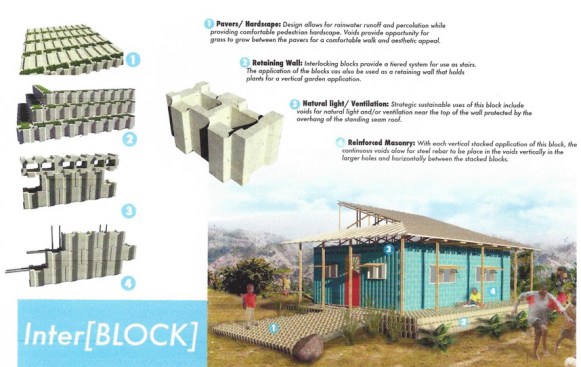
The other half of the project—a design for an interlocking CMU—came from a team of students at Indiana’s Ball State University, where Costello teaches. One of the students, Reva Derhammer, says the idea came out of one of Costello’s studios, in which he asked students to examine how brick structures in Haiti failed. “The failure is always on the horizontal, because they never use horizontal rebar,” she says.
Tony Costello, FAIA
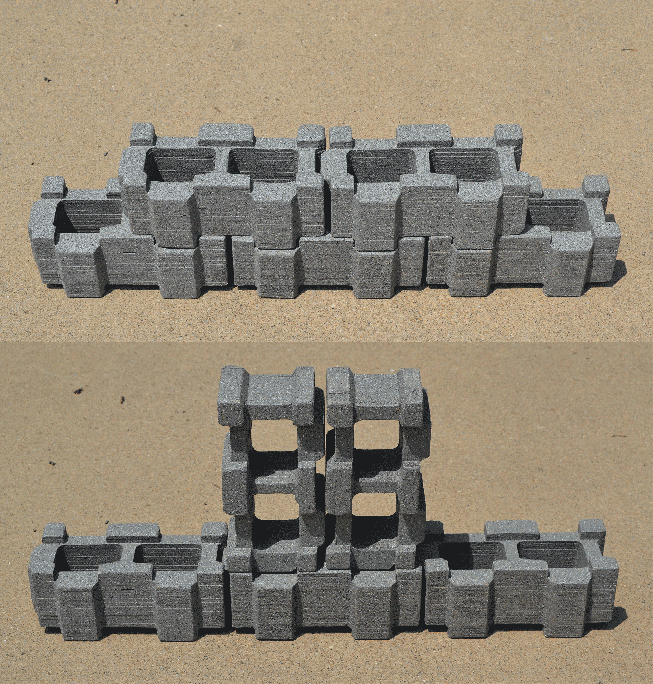
The team’s response, Inter-Block, works like an oversize Lego brick: each side has multiple facets so that when stacked together, regardless of orientation, they interlock, providing inherent lateral support. Internal voids and spaces on the sides allow for the typical vertical steel rebar, but Costello and team say the bricks are stable with or without mortar—a necessity in a country where construction resources can be scarce.
“It’s so low-tech,” he says, “but in Haiti, low-tech is an absolute necessity.”
Tony Costello, FAIA; Reva Ogle
Tony Costello, FAIA
Project Credits
Project: Improving the Strength of Concrete Masonry Construction in Haiti and the Third World
Client: National Concrete Masonry Association; Midwest Masonry Council
Design Firm/Fabricator: Costello + Associates, Muncie, Ind. . Anthony Costello, FAIA (project adviser and primary investigator) Student Research Assistants: Ball State University, Muncie, Ind. . Bryce Derhammer, Reva Derhammer, Alex Thomas, Reed Thompson Funding: National Concrete Masonry Association; Midwest Masonry Council
Special Thanks: National Concrete Masonry Association; Midwest Masonry Council; Ball State University; Father Andre Sylvestre


