In 2016, Los Angeles voters passed a $1.2 billion bond to provide temporary or permanent shelter for up to 20 percent of the city’s 50,000 homeless people. But virtually nothing has been done, thanks to the city’s restrictive zoning laws and burdensome paperwork.
“One of the biggest problems is not just building additional housing, but getting it to market,” says Lawrence Scarpa, FAIA, whose local firm, Brooks + Scarpa, has been nationally recognized for its innovative designs of affordable housing. “There is a schism between what voters say they want, and what is actually happening.”
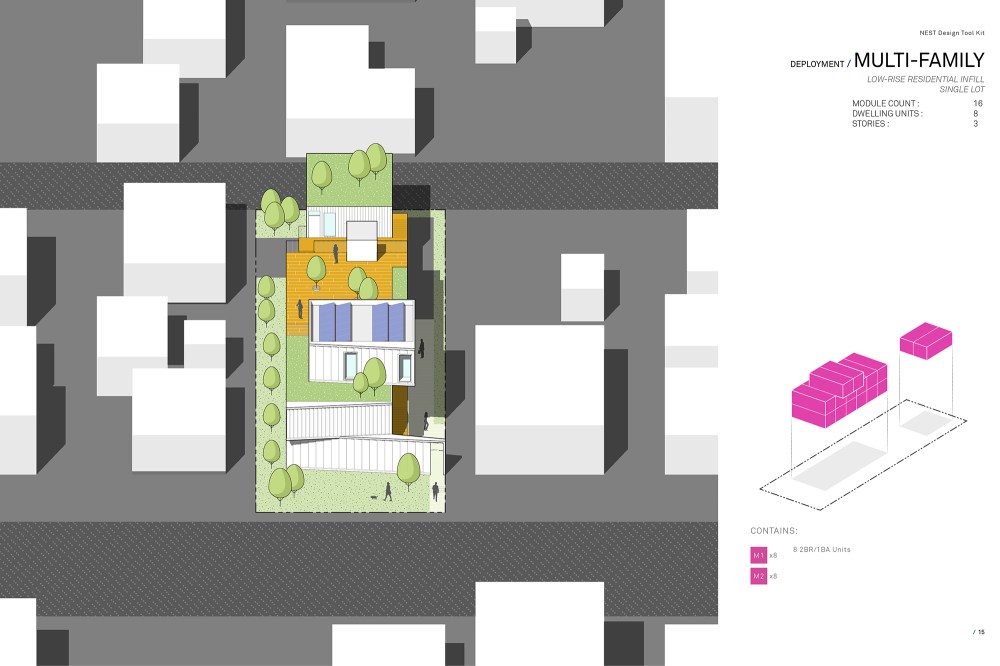
Rather than rail against red tape, Brooks + Scarpa and the Rialto, Calif.–based prefabricated housing manufacturer Plant Prefab developed Nest, a kit of mix-and-match affordable housing components that satisfy the city’s zoning rules.
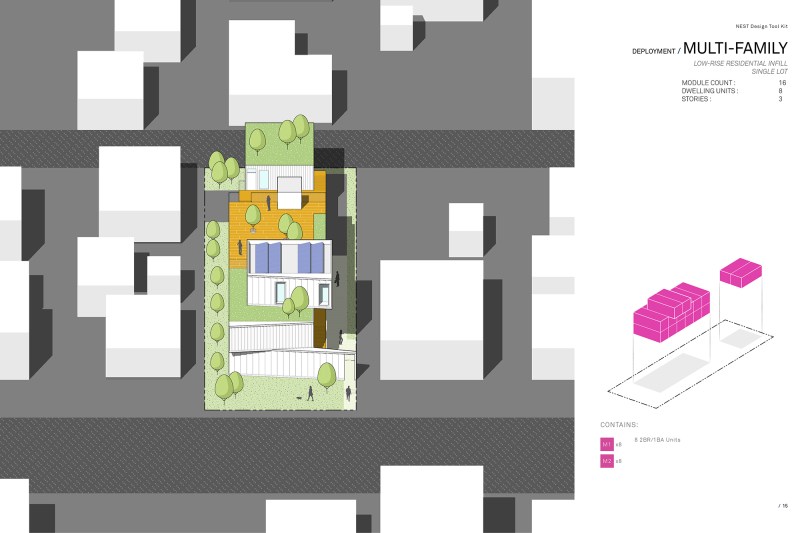
Housing for the homeless is typically designed and built as one-off projects, often at a scale virtually guaranteed to draw opposition from neighbors, Scarpa says. With Nest, units can be built in large volume, but dispersed in small numbers across a wider swath of land, minimizing the risk for NIMBY backlash.
courtesy Brooks + Scarpa
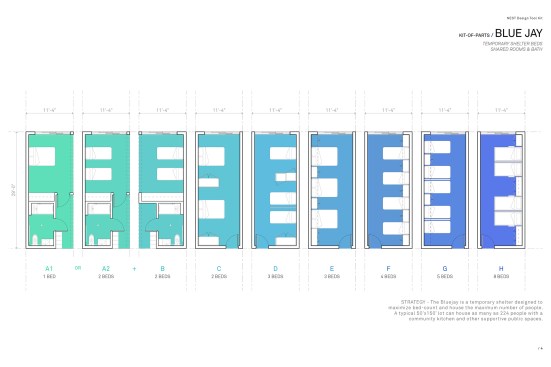
Nest’s scalable and adaptable kit of parts can be combined to create three housing types, including Blue Jay for high-density shelters for temporary accommodation.
courtesy Brooks + Scarpa
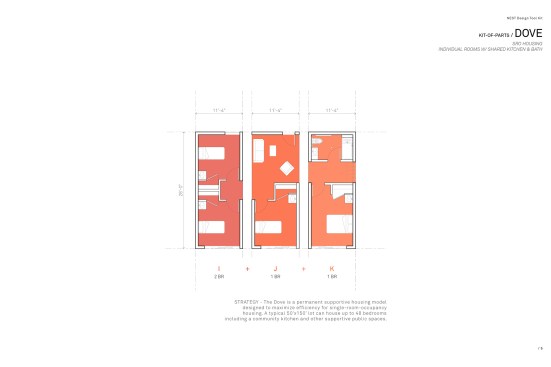
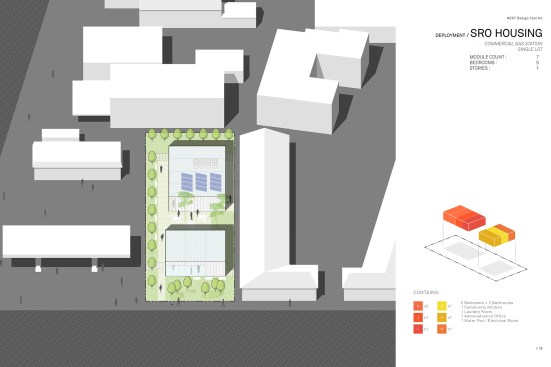
Dove provides permanent single-room-occupancy units with shared support spaces.
courtesy Brooks + Scarpa
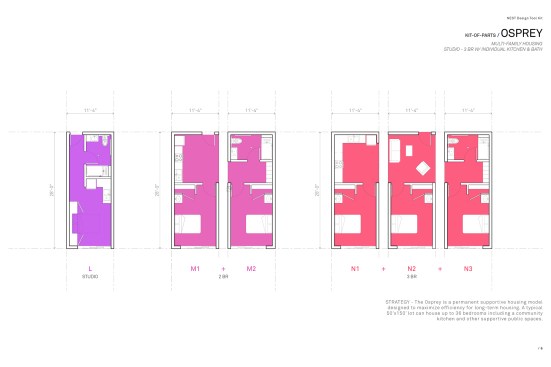
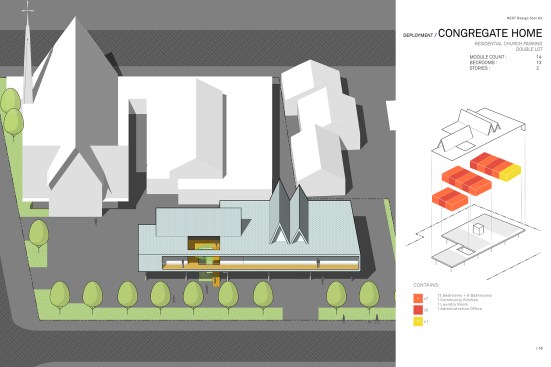
Osprey modules are designed for long-term multifamily housing.
courtesy Brooks + Scarpa
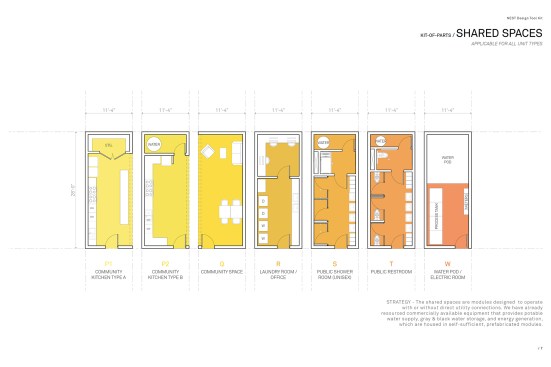
Nest's shared-spaces modules can slot into any housing type, and operate with or without direct connection to public utilities.
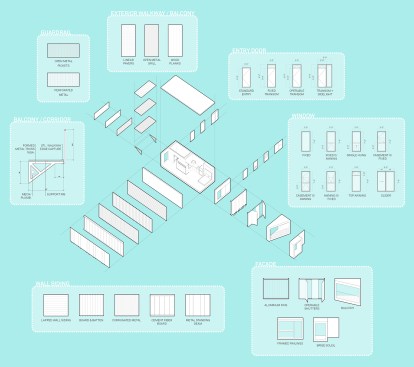
Nest’s basic units include residential modules such as dorm-style rooms, studio apartments, and single-family units, as well as service modules such as kitchens, shared bath and shower rooms, and common areas. Combined, the modules offer a variety of configurations suitable for different project types: a homeless shelter, a community center, an apartment building. The modules are sized to fit on the 50-foot-by-150-foot lots typical to L.A., and they are stackable up to five stories, with a variety of prefab exterior finishes to create a unified aesthetic.
courtesy Brooks + Scarpa
Building envelope and exterior finish options

Courtesy Brooks + Scarpa
Components of Nest by Brooks + Scarpa, a winner of the Los Angeles County Housing Innovation Challenge.
Each module can be outfitted off-site with its own power generation and water collection systems, so the facilities can be self-sufficient and independent of many city utilities. As a result, a Nest project requires minimal paperwork, Scarpa says. “We took all the codes and worked between them.”
That level of deep analysis impressed the jurors. James Garrett Jr., AIA, found Nest to be “well thought out and something that could be the start of the next thing.”
Earlier this year, Brooks + Scarpa won a $1 million grant from Los Angeles County to develop a Nest prototype on an empty lot. If it meets expectations, expect to see more construction using Nest kits, says Plant Prefab founder and CEO Steve Glenn: “With Nest, we can actually get stuff out there.”
courtesy Brooks + Scarpa
courtesy Brooks + Scarpa
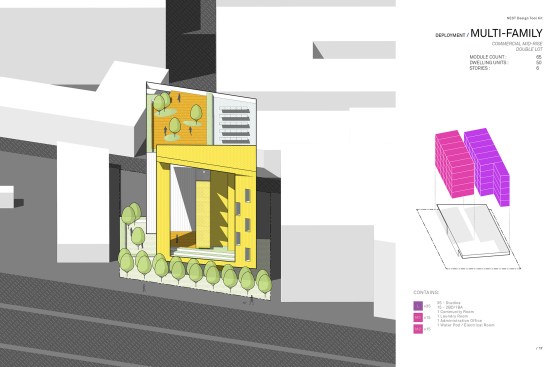
courtesy Brooks + Scarpa
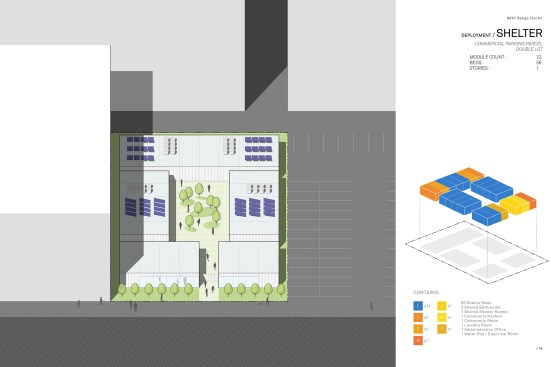
courtesy Brooks + Scarpa
Project Credits
Project: Nest Tool Kit
Architect: Brooks + Scarpa, Hawthorne, Calif.
Project Team: Brooks + Scarpa . Angela Brooks, FAIA, Lawrence Scarpa, FAIA, Arty Vartanyan, Assoc. AIA, Heather Akers, AIA, Pieter Conradie, Assoc. AIA, Micaela Danko, Jennifer Doublet, George Faber, Jeffrey Huber, AIA, Dionicio Ichillumpa, Iliya Muzychuk, Calder Scarpa, Eleftheria Stavridi, Fui Srivikorn, Yimin Wu; Plant Prefab . Amy Sims, Steve Glenn; Community Corp. . Tara Barauskas, Jesus Hernandez
Architect of Record: Brooks + Scarpa with Living Homes
Technical Production and Fabrication: Living Homes, Plant Prefab
Interior Designer: Brooks + Scarpa
Structural Engineer: John Labib + Associates . Fabio Zangoli
M/E/P Engineer: Breen Engineering
Construction Manager: Plant Prefab
General Contractor/Fabricator: Plant Prefab
Lighting Designer: Brooks + Scarpa
-
13th Annual R+D Awards
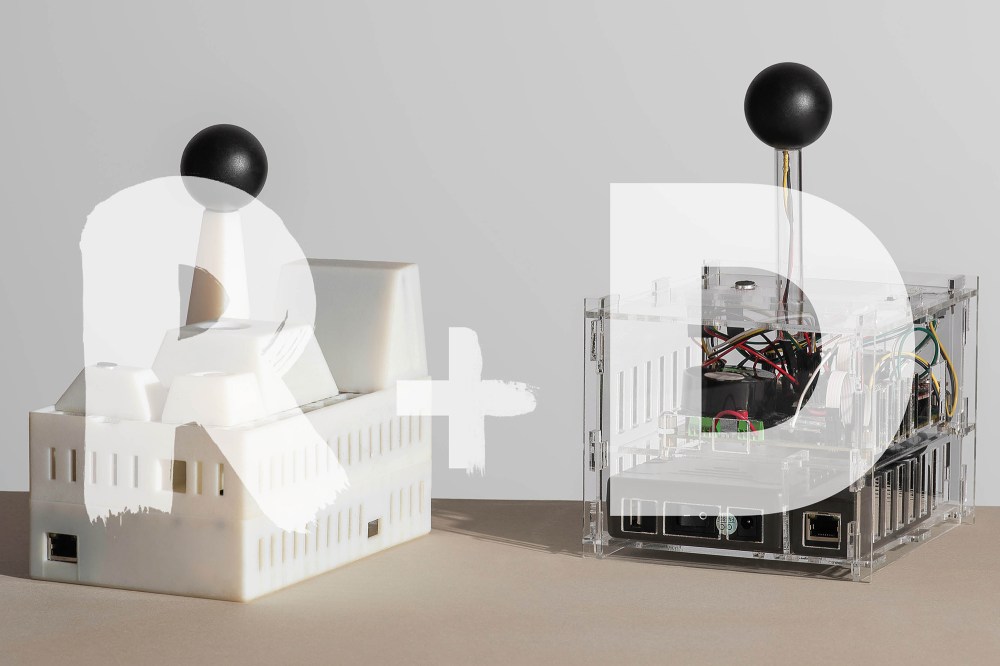
From 89 submissions, the jury picked eight entries that prove architects can be at the helm of innovation, technology, and craft.
-
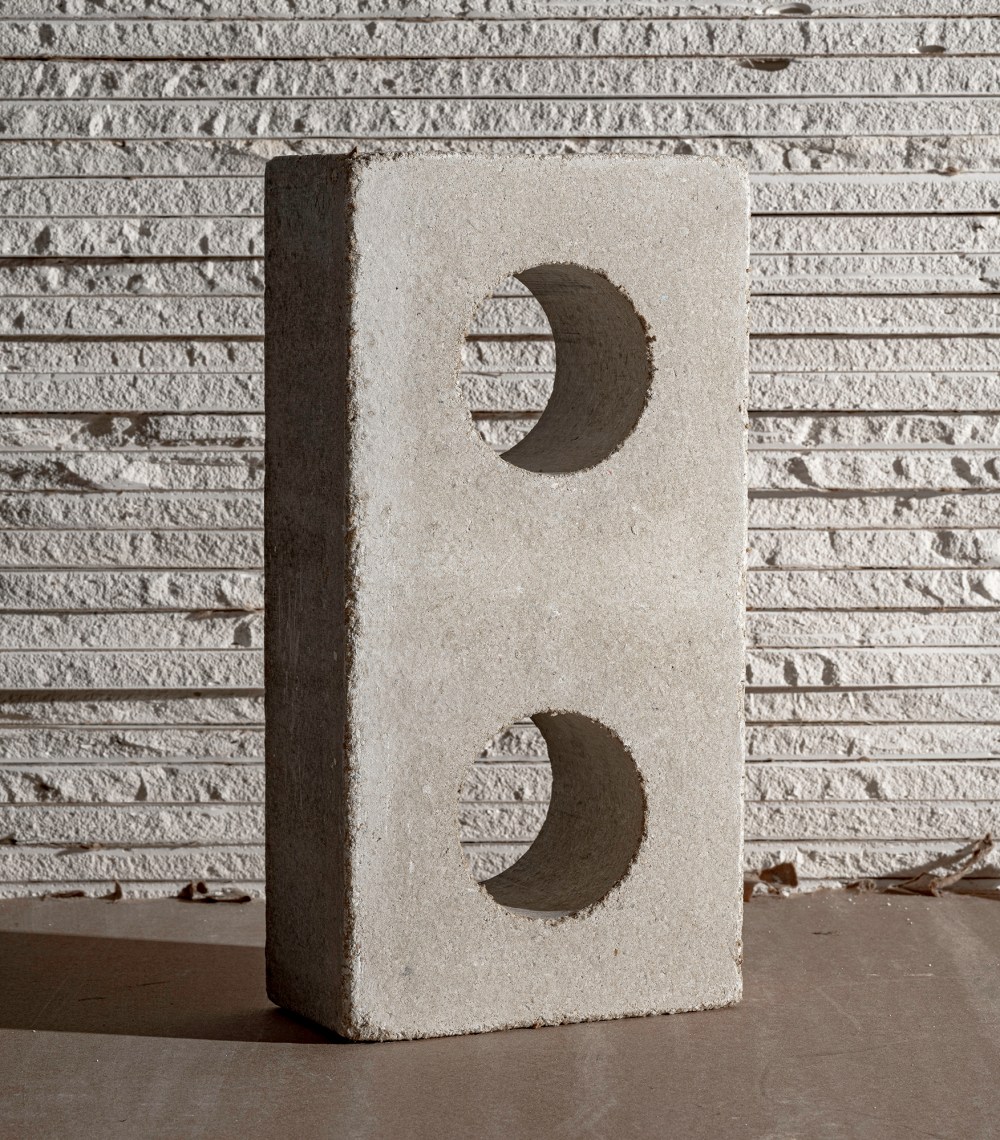
Award: Drywall Waste Block, a Green CMU
Washington State University's Taiji Miyasaka and David Drake develop a simple way to recycle and reuse a major source of waste from buildings.
-
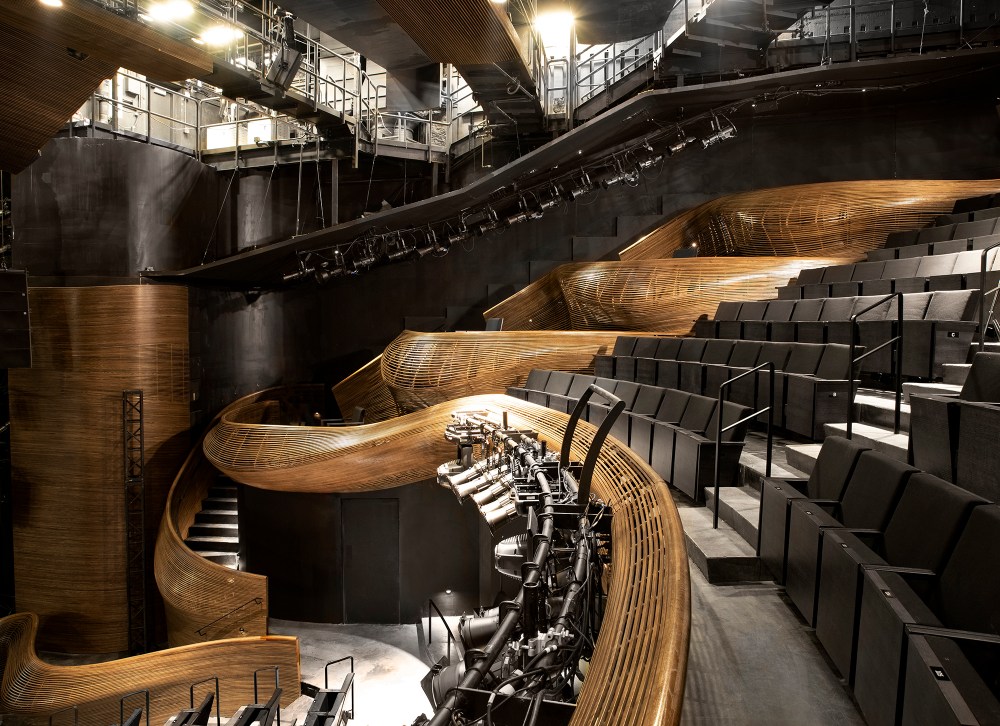
Award: Performative Millwork at Alliance Theatre, Realized Through Handcraft and Augmented Reality
Trahan Architects transforms a historic venue into an interactive destination made possible through the combination of artistry, design, and lasers.
-
Citation: Nest Tool Kit, a Modular Take on Affordable Housing
To tackle the homeless epidemic in Los Angeles, Brooks + Scarpa and Plant Prefab develop a customizable system that also meets code.
-
Citation: Uber Sky Tower Reimagines the Future of Air Transport
Creativity and attention to detail define this Pickard Chilton and Arup entry to an invited competition.

-
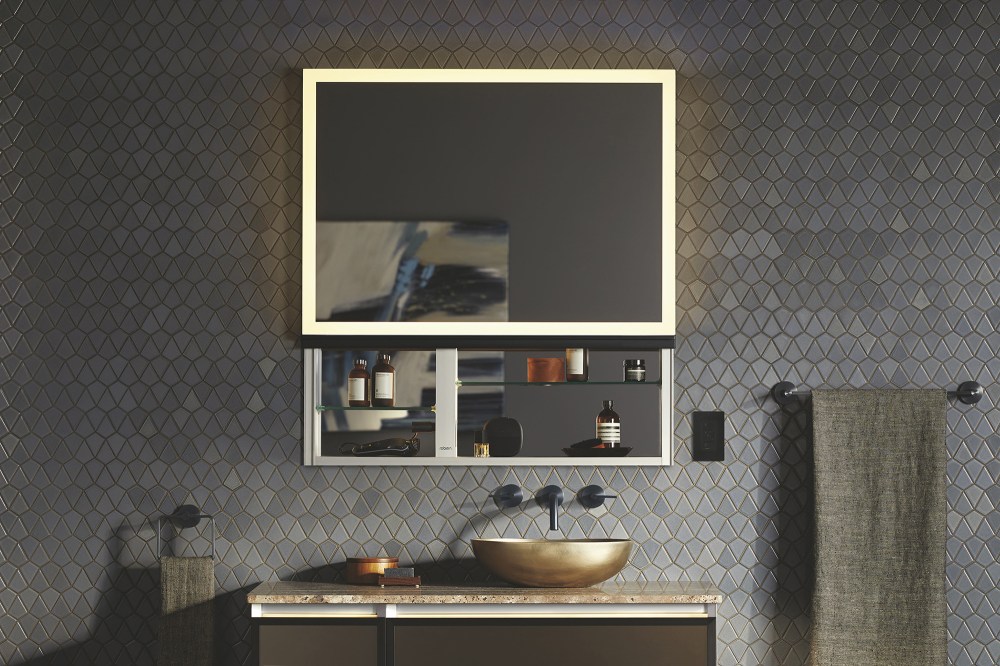
Citation: Uplift Tech Cabinet, More Than Meets the Eye
This elegant design solution by Robern impressed the R+D jury with its utility and minimalism.
-
Honorable Mention: Moon Village, a Vibrant Hub in the Unknown
Innovation knows no geographic bounds in this collaboration by Skidmore, Owings & Merrill, the European Space Agency, the MIT Media Lab, and the MIT Department of Aeronautics and Astronautics.

-
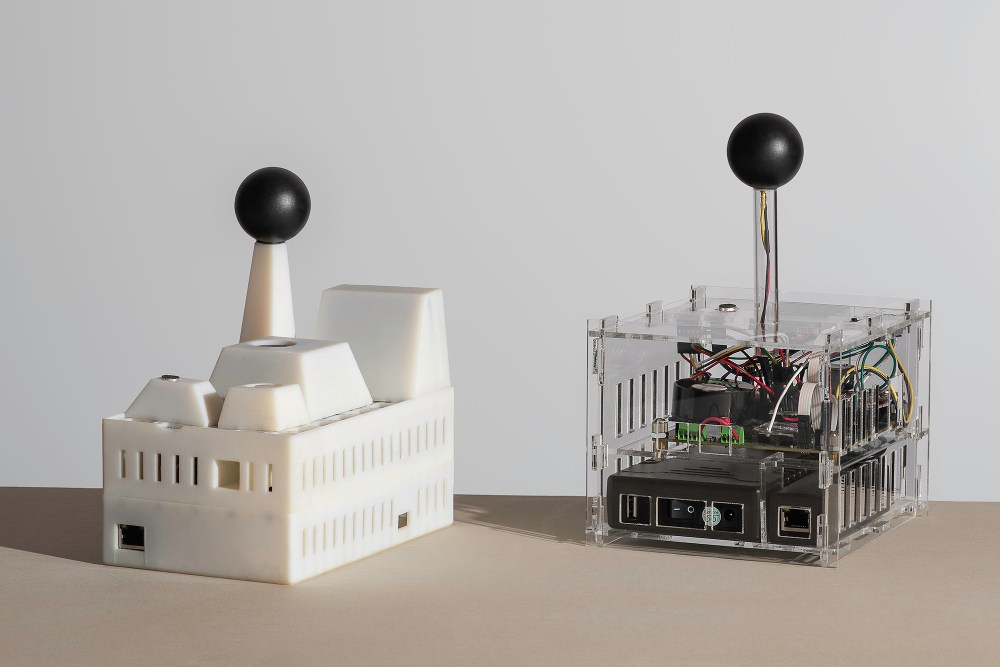
Honorable Mention: Post Occupancy Data Device (PODD), a Hands-Free Way to Monitor Projects
From hardware to software, LMN Architects has developed and designed a platform to help document the performance of buildings upon their completion.
-
Honorable Mention: Slide Identifies an Opportunity in Mudslides
In a region prone to natural and anthropogenic disasters, Rios Clementi Hale Studios formulates an idea to stabilize steep terrain.