
Project Description
FROM THE ARCHITECTS:
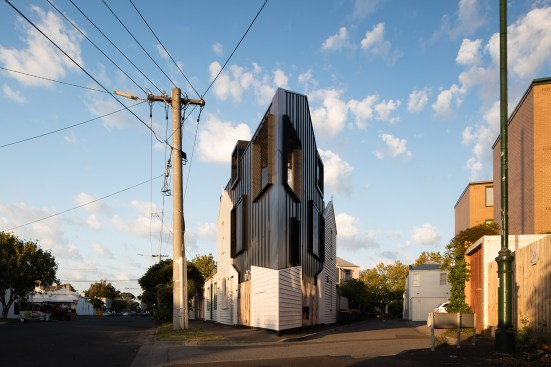
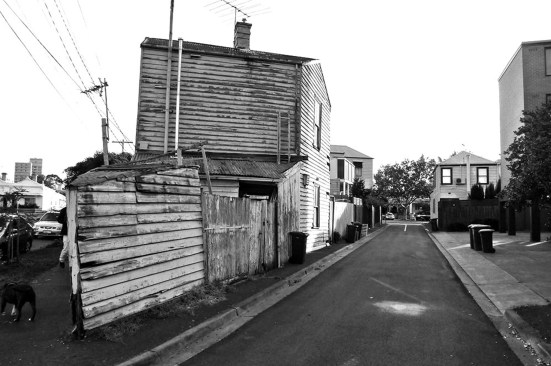
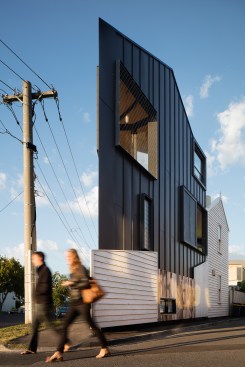
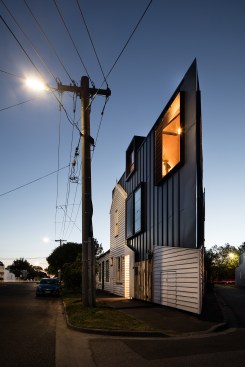
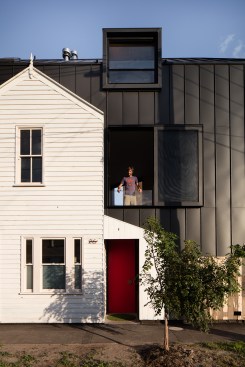
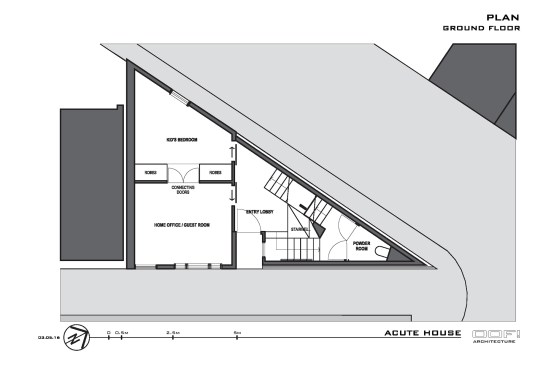
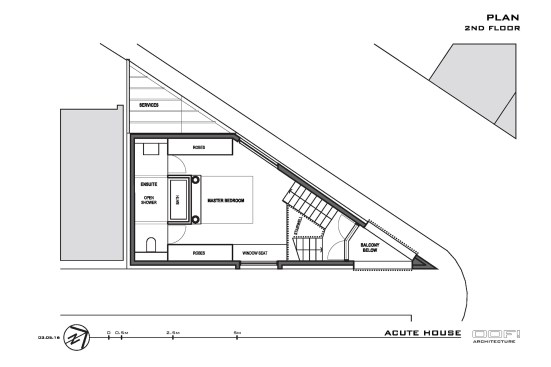
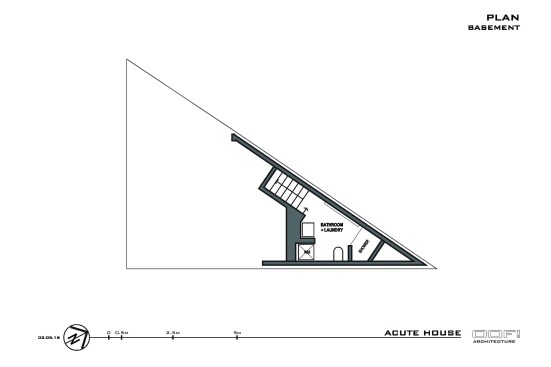
Acute House is the transformation of a 'renovator's nightmare' into a compact 21st century family home. The severe limitations of a tiny, very triangular site and the demanding heritage context have resulted in a pointy new wedge of house that is designed to exploit its problems.
The original, and extremely decrepit, Victorian weatherboard cottage had become impossible to inhabit but was well loved by the neighborhood as well as its new owners.
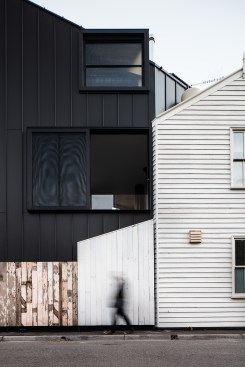
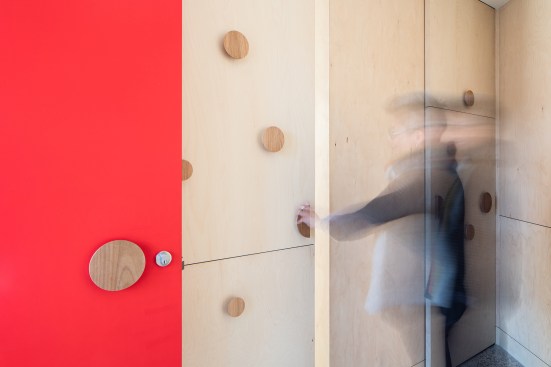
We tried to retain its weathered character by re-using as much original fabric as possible from warped weatherboards and fence palings to random accumulations such as door knobs, vents and street numbers. Like fragile museum artifacts, these were carefully removed, labeled, stored and re-installed in their original location on a new mount that not only highlights their charms by contrast but allows the house to live again in a new way.
Virtual Gardening
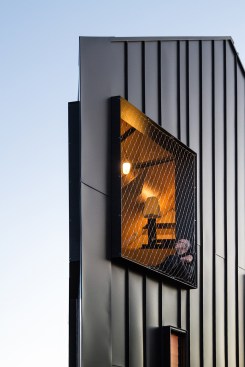
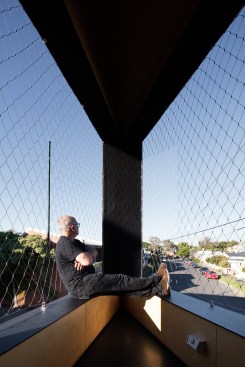
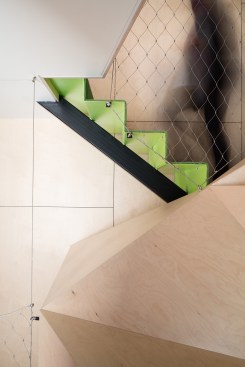
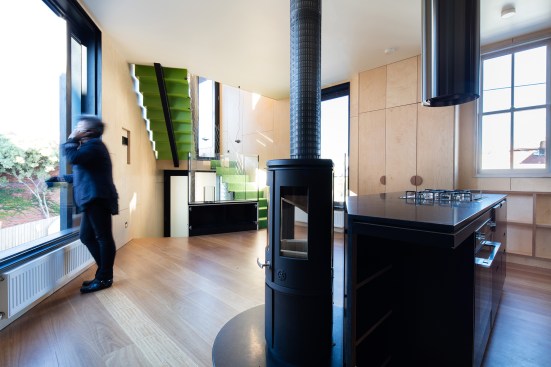
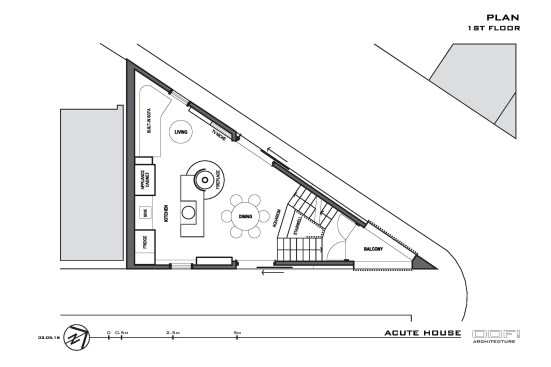
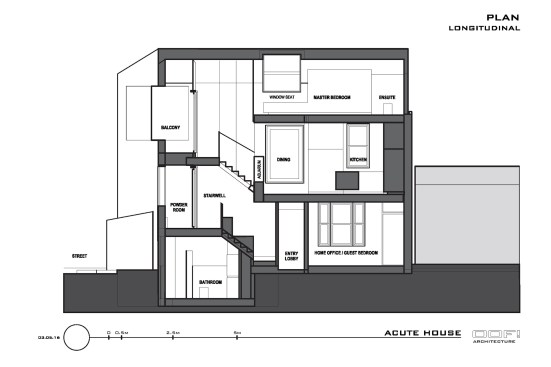
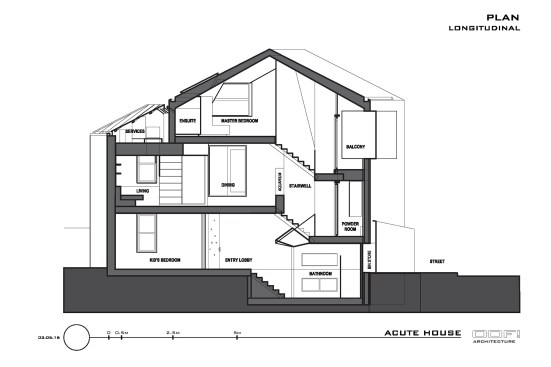
While site area limitations and geometry allowed the council to permit building over 100% of the site this advantage came with the counterbalancing disadvantage of 0% outdoor space. As a result, the house interiors had to accommodate the needs of a family as well as providing them with the enjoyments of the great outdoors. This total lack of garden is offset by the artificial internal landscape of the stairwell with lawn green carpets, hanging plants, a central aquarium of aquatic plants and fish and a sunny outlook to every room. Full height sliding doors and screens open up the main living level as a virtual veranda and the pointy, but surprisingly generous, balcony provides the ambiance of a yacht in the street.
Sustainability
As a general principle, smaller is better. While there were specific demands on this site, we always endeavor to achieve clear, lean plans that offer multiple overlapping uses of available space.
On a bigger picture, city wide level, the sympathetic densification of our inner urban fabric demands the use of as many of these weird “leftover” sites as possible. While their peculiarities will, of course, present special challenges, they are much more than merely serviceable as they offer unique opportunities for infill housing with enjoyments unachievable on conventional sites.
The comparatively narrow floor plate, arrangement of openings and open stairwell of the house allows natural daylighting throughout the day and evening in all seasons with pleasant sun penetration even in mid-winter. Sliding mesh shading screens and blinds are provided to the north façade openings for the times in the year when this needs to be controlled. Likewise, the narrow floor plate allows natural cross ventilation within each floor. The balcony doors and openable skylights at the top of the roof vent warm air from half basement to top floor via the open stairwell.
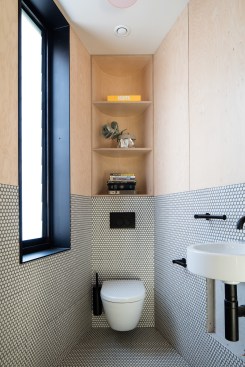
While it was not possible to incorporate water tanks or photovoltaic panels due to site and heritage constraints, high efficiency appliances such as a gas boosted evacuated tube solar hot water system and insulated slab hydronic floor heating are used where possible. All walls and roofs are highly insulated and all windows are timber framed double glazed and draft sealed. High water efficiency sanitary and tapware is used throughout.
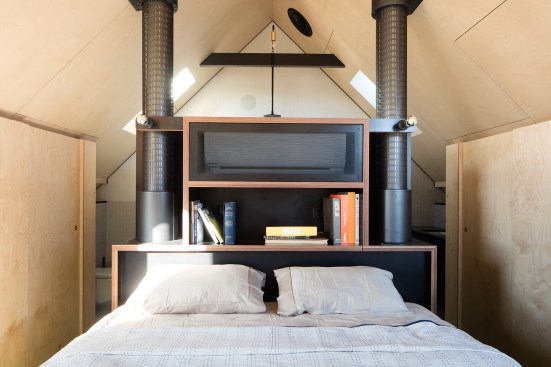
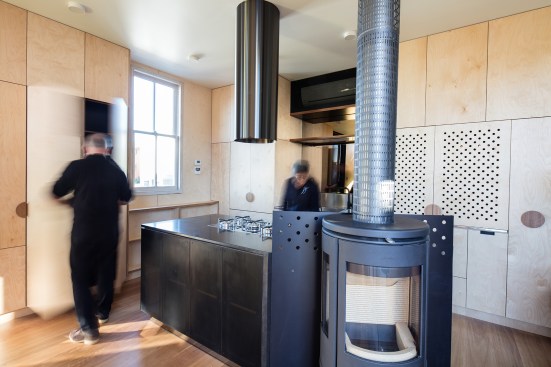
The internal finishes palette is minimal and modest using commonly available sustainable materials such as plantation grown Australian hardwoods, plywood and recycled timber cladding with minimal painting. External finishes require either minimal maintenance – powder-coated aluminum – or will be left to naturally weather and deteriorate – recycled timber cladding.
Form
To take advantage of the opportunities of such an unusual site, the geometry required an adjustment to the layout and lifestyle expectations of a conventional family house. Multiple levels were required to accommodate the basic space needs of a family home and these were accommodated where site geometry best suited them. These spaces are distributed over split levels with the vertical space of the stairwell providing visual privacy and a sense of definition without wasting precious space on internal walls, corridors or doors. Continuous circulation is provided through each floor with no dead-ends, allowing spaces to be kept lean yet feeling spacious and unclogged – visually or physically.
Heritage-ous-ness + Context
The resulting new wedge of house is designed as an unusual but highly responsive approach to the character of the surrounding neighborhood, and to the challenges and opportunities for responsive architecture presented by the site and its immediate context. It takes on the challenge of preserving an important but almost unsalvageable local landmark by working within the general typology of the surrounding neighborhood, "rhyming" with its housing stock while remaining resolutely contemporary in its expression and articulation.
This description has been lightly edited for clarity.