
Project Description
Steven Kratchman Architect, P.C. (SKAPC), recently completed the second phase of a multi-faceted repositioning of Ravel Hotel in Long Island City, N.Y.
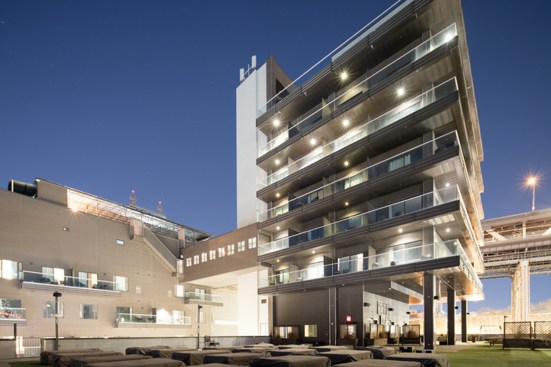
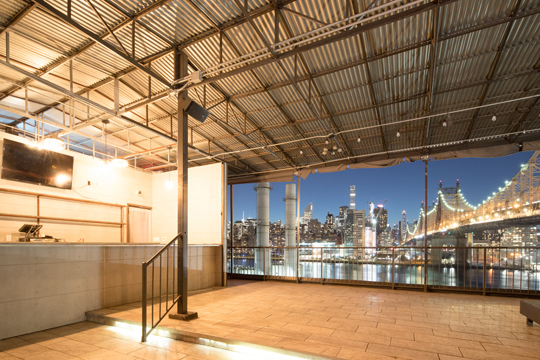
The initial phase – completed in 2008 – involved the design and construction of a ground-up, five-story building adjacent to and on top of the existing structure. The project added 9,500 square feet, 63 guest rooms, and expanded the parking area. The guest rooms and suites, designed with windows as a backdrop, featured open floor plans, high ceilings and modern finishes. SKAPC also incorporated new amenity spaces including Penthouse 808, a 9,500-square-foot indoor/outdoor rooftop restaurant and lounge with breathtaking views.
“We embraced the massive dimensions and proximity of the Queensborough Bridge, which dominates the hotel’s dramatic northern views,” Kratchman said. “Ravel is part of a trend in which underused sites near transportation infrastructure such as vehicular bridges, elevated automobile highways, and train trestles are considered exciting opportunities for new development. Building technology can now protect occupants from things like noise and pollution with better windows and filtered air.”
Almost 10 years later, Patel rehired SKAPC as architect of record to expand the hotel’s capacity to tap the lucrative food and beverage market. Patel had purchased three adjacent parcels with a strategy to appeal to the corporate events sector as well as to attract destination wedding clientele.
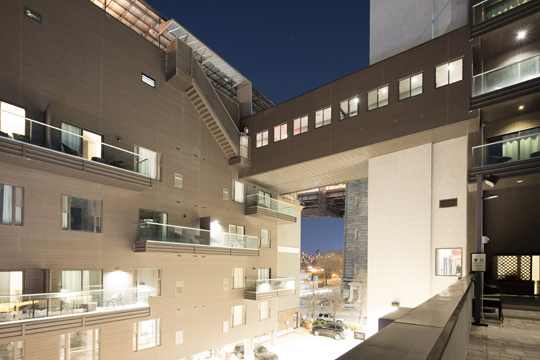
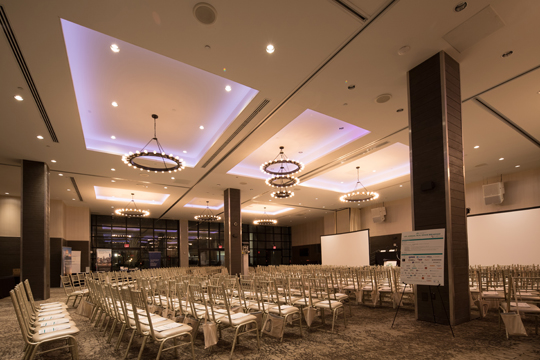
Approaching the project from a master plan perspective, the SKAPC team created a 10-story ground-up hotel tower with three levels of amenity space, including a grand ballroom with covered outdoor terraces, two roof top pools and an 18,000-square-foot pool deck. The tower housed 40 guest rooms and new dining options, with a bridge connecting the two facilities. Conceived as a way to ensure the hotel would never need to close during construction, the bridge proved to be a functional long-term solution to linking the spaces. Guest rooms were designed with communicating doors and walk around balconies to make it easy for friends and relatives to connect. SKAPC designed a new entrance lobby and upgraded the corridors, amenity spaces and building façade. In addition, Kratchman and his team resolved existing and potential parking issues, enabling guests to park and drop off onsite and under cover. The firm also was charged with addressing Patel’s desire to create a central catering facility. “He wanted the capacity to handle two or more large events simultaneously,” said Kratchman. The new kitchen was constructed below grade to avoid using precious floor space, and it allowed Patel to eliminate the satellite kitchens distributed throughout the hotel. “Ravi is so thrilled with the new catering facility that he uses it for all of his offsite restaurants,” Kratchman added.