
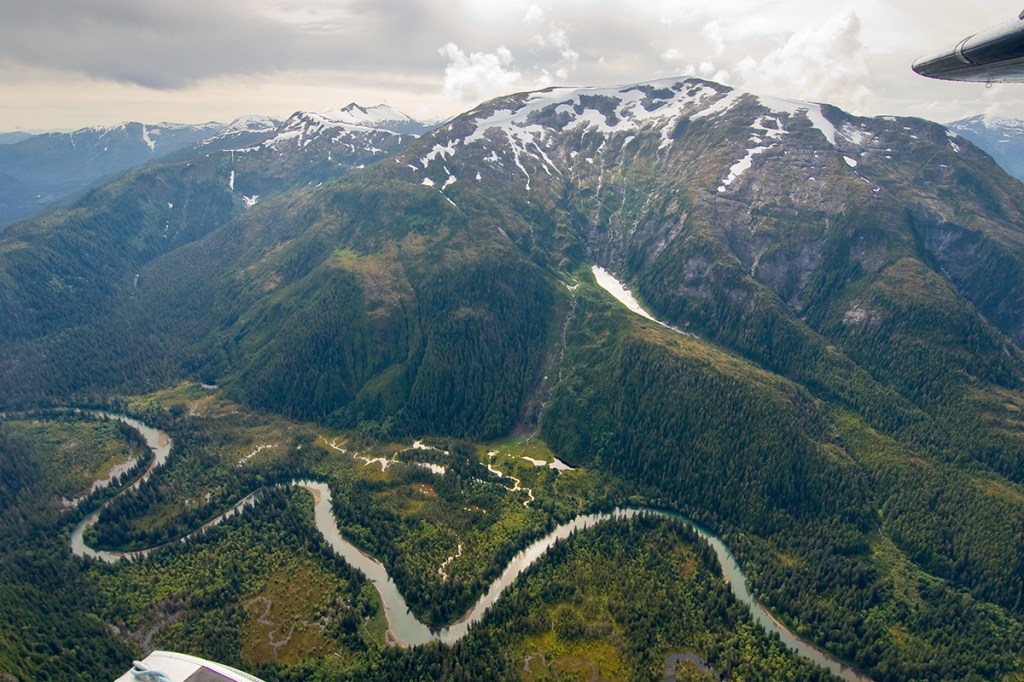
Last week, the Buckminster Fuller Institute (BFI) named the “Rainforest Solutions Project” as the winner of its annual Fuller Challenge program. The project, which will be awarded $100,000 for initial funding and upkeep, is headed by Tides Canada Initiative—a nonprofit focusing on social and environmental issues—in collaboration with environmental advocacy organizations Greenpeace, Sierra Club BC, and Stand. The entry was chosen from six finalists that were announced in late August, and the project team is made up of program director Jody Holmes, program manager Marlene Cummings, and steering committee members Valerie Langer (Stand), Eduardo Sousa (Greenpeace), and Jens Wieting (Sierra Club BC).
Courtesy BFI
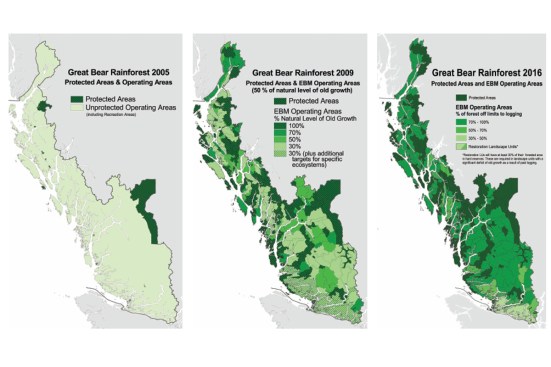
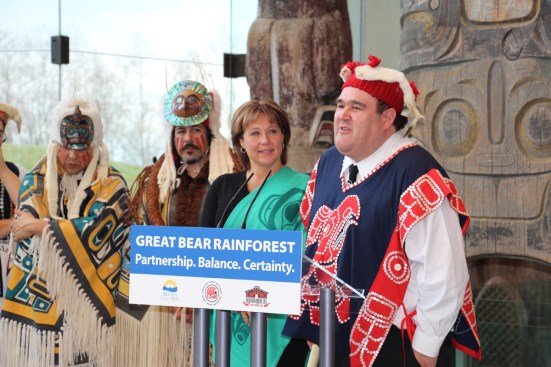
The 20-plus-year project has directly tackled problems related to deforestation, defense of indigenous rights, biodiversity loss, and climate change by reaching critical agreements between stakeholders as well as conducting a 15-million-acre case study of the Great Bear Rainforest in British Columbia. The team also co-created “Ecosystem-Based Management,” a scientific method which focuses on remaining respectful to indigenous cultures in the area while incorporating traditional knowledge with “cutting edge … forestry, wildlife biology, and climate studies,” says a statement by the BFI. A recent victory in February secured the signing of a 250-year agreement that manages and conserves 85 percent of the rainforest, while the remaining 15 percent abides by strict legal standards for commercial logging.
Courtesy BFI/Aurora Tejida
“[The project] meets all of the Fuller Challenge criteria, reflecting deep integrity and a commitment to designing a preferred system that works from multiple perspectives,” says the BFI in the same statement. “It provides an adaptable strategy that dynamically addresses complex social-ecological systems that change over time, demonstrating that healthy human relationships are key leverage points in the regeneration of planetary ecosystems.”