

If you have a green thumb but limited space or time, Lego might be able to help. The toy block company’s new Lego Botanical Collection introduces a duo of “mindful” models: a brightly colored flower bouquet and an intricate bonsai tree that even the most horticulturally challenged can keep alive. The 756-piece Lego Flower Bouquet features a customizable range of snapdragons, roses, poppies, asters, and daisies that builders can arrange in a vase and alter over time, creating the illusion of new buds and growth. The 878-piece Lego Bonsai Tree kit aims to help builders cultivate “a sense of calm as they carefully shape the bonsai tree model with either green leaves or pink cherry blossoms,” according to a Lego press release. “As adults look for new ways to switch off and relax, we’re delighted to be able to help them seek solace from their busy everyday lives as they immerse themselves in creating these beautiful botanical builds,” said Lego Group design lead Jamie Berard in the same release. [Lego]

courtesy Michael Ford
Mike Ford and his remixed Eames Lounge Chair
Michael Ford, Assoc. AIA, the Madison, Wis.–based social justice activist and founder of the Hip Hop Architecture Camp, has partnered with furniture manufacturer Herman Miller to remix the iconic Eames Lounge Chair and Ottoman. The chair, hand scribed by Ford with the names of Black victims of racism, is now on a national tour to host prominent guests as Ford interviews them via Instagram Live. [ARCHITECT]
Courtesy Council on Tall Buildings and Urban Habitat
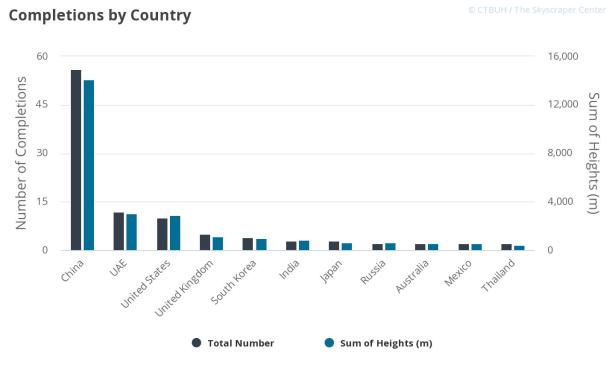
In its annual Tall Building Review, the Council on Tall Buildings and Urban Habitat (which oversees the database formerly known as the Skyscraper Center) notes that, for the second year in a row, the number of tall buildings completed has declined. Only 106 buildings at or above 200 meters (approximately 660 feet) tall were completed in 2020, a 20% decline from 2019’s 133 projects. The CTBUH review states that the decline stems in part from slowed or halted construction during the COVID-19 pandemic, as well as from “the efforts of China to curtail its debt, combined with public policy statements against needless production of exceedingly tall buildings.” Also of note: For the first time since 2014, the tallest completed building was in the United States: New York’s Central Park Tower, clocking in at 472 meters (approximately 1,550 feet) tall. [CTBUH]
With the the concentration of CO2 in atmosphere accelerating toward a critical point of no environmental return, corporations including Occidental Petroleum, United Airlines, and Spotify are investing in technologies that aim to suck CO2 right out of the atmosphere. With more carbon removal investments on the horizon, The New York Times takes a closer look at the risks and the potential of this pricey approach, including what carbon removal can realistically achieve. [NYT]
Courtesy Polymers, University of Cordoba
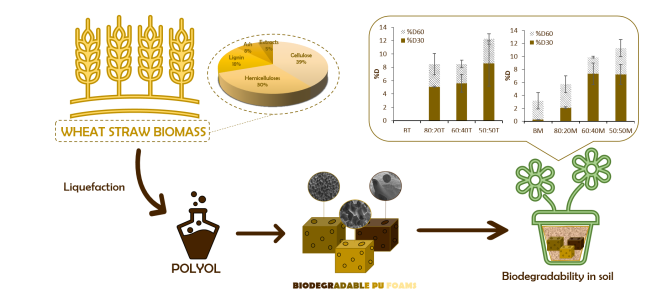
Researchers from the University of Córdoba, in Spain, have found an innovative use for wheat straw, the dry, agricultural byproduct of wheat grain harvests. By liquefying the wheat straw, researchers were able to create polyols, a chemical compound that plays a key role in the production of polyurethane foams; conventionally, the polyols are extracted from petroleum byproducts, as is commonly done. [Polymers]
Because the COVID-19 pandemic and increased security measures prevented the general public from watching the inauguration of President Joe Biden and Vice President Kamala Harris from the National Mall, as is customary, inaugural organizers filled the mall with nearly 200,000 national, state, and territorial flags. Arranged in different patterns and accompanied by 56 pillars of light, the “Field of Flags” honors the more than 400,000 U.S. victims of COVID-19. Thanks to a photo essay from Boston NPR affiliate WBUR, you can see the installation as if you were there. [WBUR]
Stefano Boeri Architetti
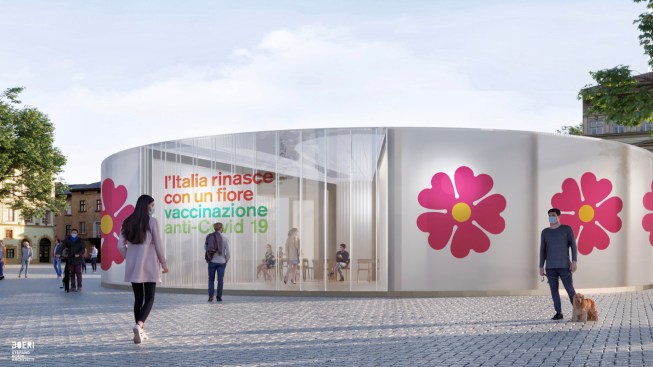
A temporary COVID-19 vaccination pavilion by the Italian architect Stefano Boeri
Milan-based Stefano Boeri Architetti has crafted a three-pronged coronavirus vaccination campaign for Italy, featuring a transparent, inoculation clinic that officials can construct in cities around the country. ARCHITECT columnist Aaron Betsky dives into the plan, distilling what other architects can learn from its initiative. [ARCHITECT]
Global firm Perkins&Will and The American Institute of Architects have released a 26-page white paper aimed at helping architecture firms create workspaces that foster justice and inclusivity. Co-authored by Perkins&Will principal and director of global diversity Gabrielle Bullock, FAIA, and principal Bill Schmalz, FAIA, “Creating a Culture of Justice, Equity, Diversity, and Inclusion in Your Architectural Practice,” outlines seven key steps that firms should take. [ARCHITECT]
Lucas Blair Simpson/Aaron Fedor/SOM
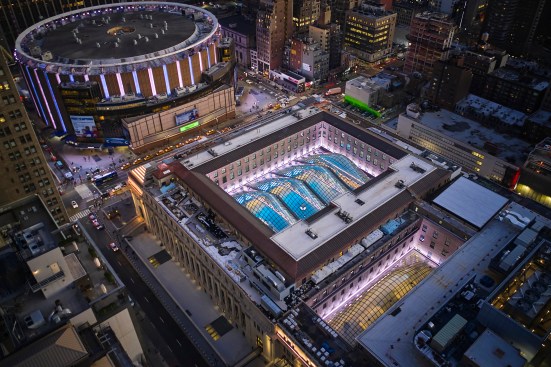
The Moynihan Train Hall, located across Eighth Avenue from Madison Square Garden
New Yorkers have waited 25 years for the newly opened Moynihan Train Hall. The much-anticipated Skidmore, Owings & Merrill project feels “like it was … inevitable,” like it always should have been there. Read more from ARCHITECT contributing editor Karrie Jacobs on the long-awaited annex to Penn Station. [ARCHITECT]