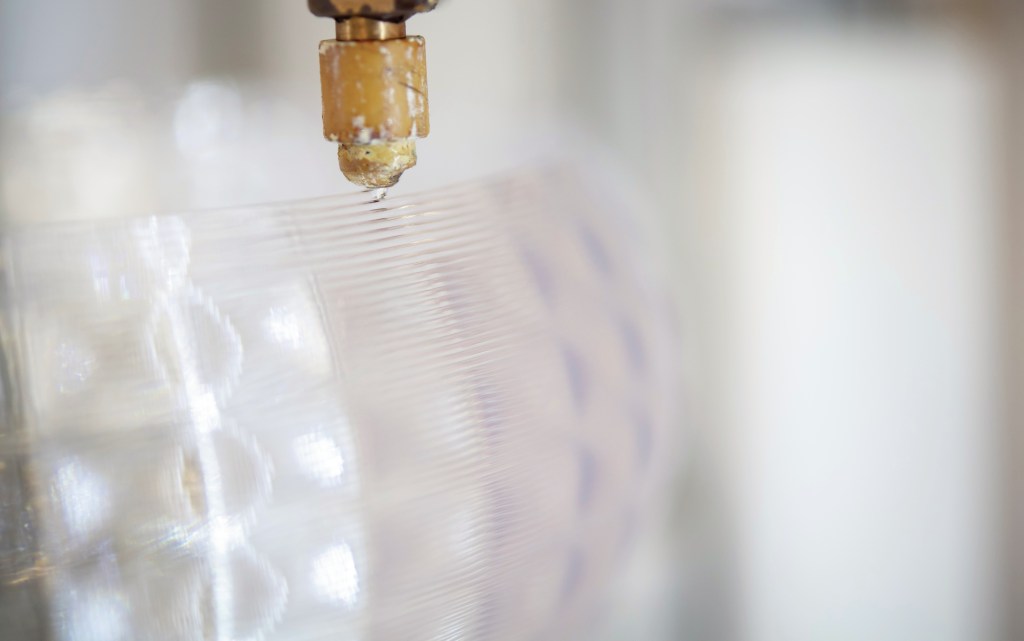
The Washington Post recently profiled UBQ Materials, an Israeli startup that has developed a technology to upcycle trash—of many forms—into raw materials. While UBQ executives were tight-lipped on the actual science behind its process, the company can melt down plastic and organic waste into “a homogeneous substance strengthened by fibers in the organic ingredients.” That mixture is then dried, shredded, and ultimately made into “a thermoplastic, composite, bio-based, sustainable, climate-positive material,” which can serve as raw material for other products, from pen holders to composite bricks. “The magic that we’re doing is we’re taking everything—the chicken bones, the banana peels,” said chief executive Jack “Tato” Bigio in the article. “We take this waste, and we convert it.” Located on a kibbutz in Israel, the factory can currently produce between 5,000 and 7,000 tons of the UBQ material annually. [Washington Post]
The Carbon Leadership Forum has publicly launched EC3, a free, open-access tool that helps building professionals determine—and reduce—the embodied carbon emissions of their projects. [ARCHITECT]
Autodesk and Virigin Hyperloop One have partnered to explore transportation efficiency with BIM. [ARCHITECT]
In a collaboration with global construction company Skanska, the U.S. Green Building Council (USGBC) has launched Insight, a digital tool that highlights project design features and strategies that can help architects improve building performance. “Insight can compare your project team’s aspirations for energy, water and waste savings with results from similar buildings in your region, which allows you to visualize how the performance of your project stacks up to other buildings like yours and will help you make informed decisions about practical and achievable sustainability strategies,” said Skanska chief sustainability officer Beth Heider, FAIA, in a press release. [USGBC]
Signify has launched several custom, 3D printed luminaires for professionals and consumers on a commercial scale. The company also announced a a newly opened 3D printing facility in the Netherlands, with additional 3D printing facilities due to open in the U.S., India, and Indonesia next year. [Architectural Lighting]
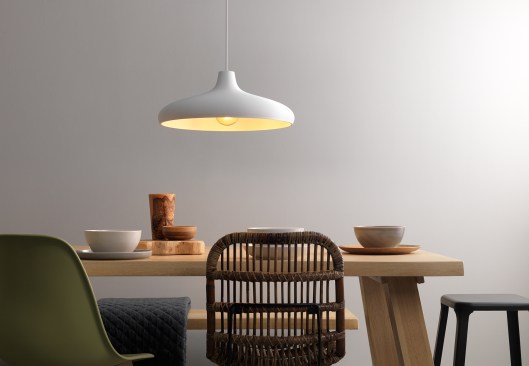
Courtesy Signify
Signify is also offer 3D printed luminaires direct to consumers in Europe. The luminaires are recyclable and Signify plans to make all 3D printed products from recycled materials by the end of next year. Currently the first product to feature recycled material is its Philips LED table lamp, which uses 24 recycled CDs in its construction. [Architectural Lighting]
Next year, buildings 25,000 square feet and larger in New York City will receive a grade from A to D based on their energy efficiency, as reported in The New York Times. Owners and managers of approximately 40,000 of the city’s 1 million buildings will be required to submit performance data following years of mandatory benchmarking. That data will be scored by a tool created by the U.S. Environmental Protection Agency, and then graded by the city. “Building owners and managers will be required to post signs with the letter grades ‘in a conspicuous location near each public entrance,’ according to the law,” the article states. [The New York Times]
MIT has released “Insights into Future Mobility,” a report that outlines technological innovations, policies, and behavioral changes necessary for sustainable personal transportation. The culmination of a three-year study, the report explains that there is “considerable opportunity for reducing emissions from personal mobility by improving powertrain efficiency and deploying alternative fuel vehicles in the coming decades.” [MIT]
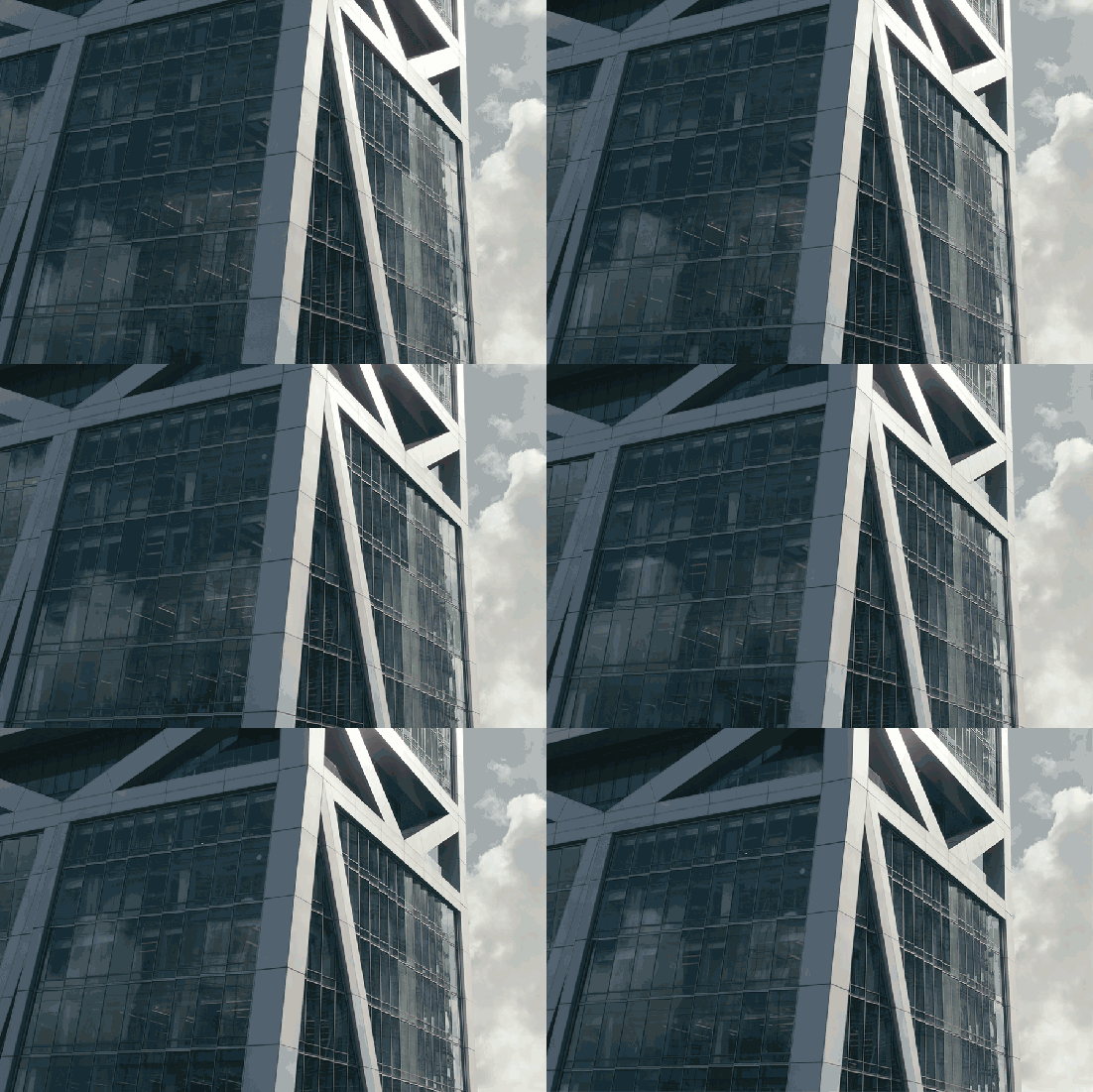
Home to a division of Facebook and a fresh class of urbanites, the 57-story 181 Fremont tower in San Francisco designed by Heller Manus Architects sets new precedents in resilience, sustainability, and urban development. Our interactive, multimedia feature explores how. [ARCHITECT]
ARCHITECT selected 30 products from its Fall 2019 Product Call, which garnered 218 submissions, several of which will be exhibited at the 2019 Greenbuild International Conference and Expo. [ARCHITECT]