
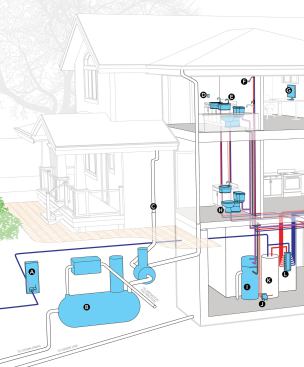
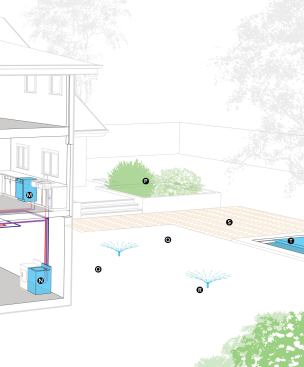
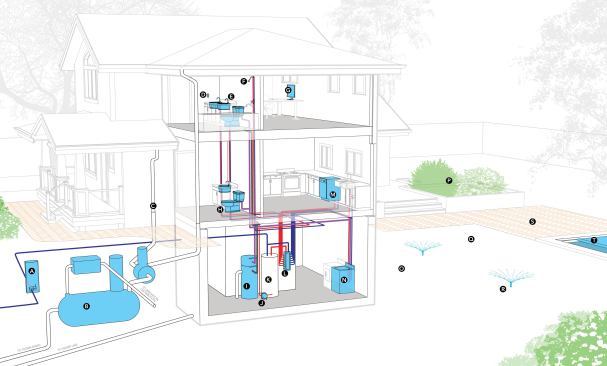
A) WATER METER Subsurface with grade-level display; wireless wit…
END GAME
If you’re still not convinced that significant water savings is not only achievable, but also marketable, at least consider that the bulk of the technology and tactics are available and affordable to incorporate into a green building protocol.
Saving water also enables homeowners to gain some power over big environmental issues. “Water is a resource that’s generally indigenous to a region. You have to use what’s there,” says Alicia Marrs, outreach coordinator for the EPA’s WaterSense program, in contrast to energy, which can be imported. “Homeowners who save water are being responsible for the sustainable growth of their communities.”
But the battle over saving water, and instilling its importance and impact on both builders and homeowners, remains in relative infancy. “Right now, and unlike energy, builders will generally do what’s required by code and not go beyond that,” says Nguyen, who is working to add the WaterSense standards to Cobb County’s building code given her area’s limited access to new water sources. “But it’s just as important, and maybe more so. I mean, we can’t live without water.”
Rich Binsacca is a contributing editor for EcoHome.
The Best of the Rest Dishwasher
Average Use/Home: 832 gallons/year/home; 1.4% of daily indoor use; Energy Star–qualified units result in estimated 30% water-use savings, as specified in the ICC International Green Construction Code