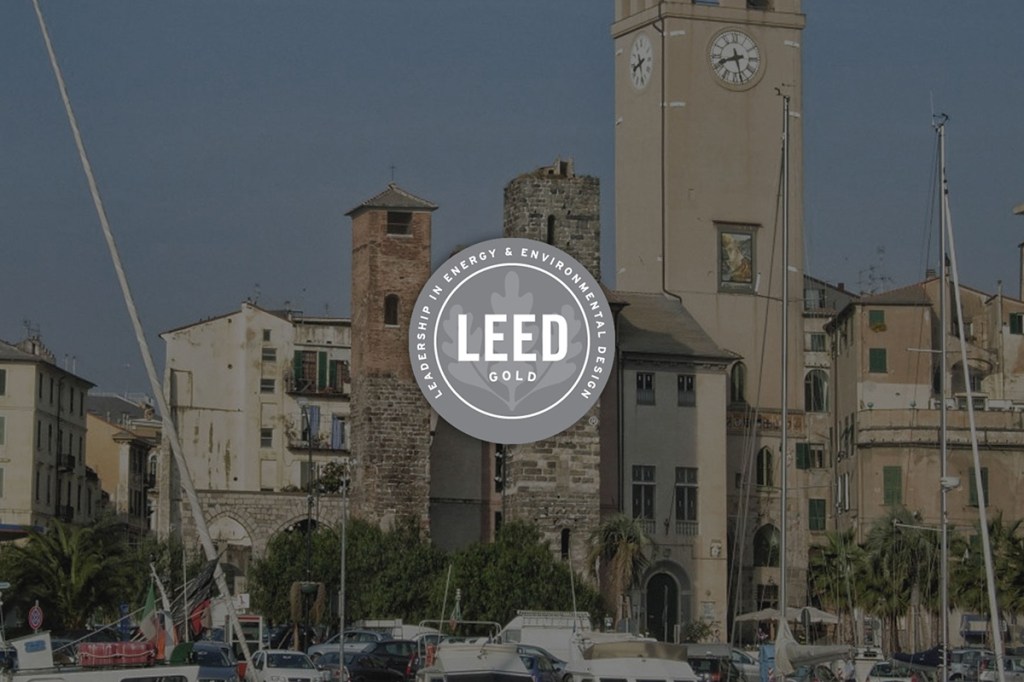
Today, the U.S. Green Building Council (USGBC) and Green Business Certification (GBCI) named Savona, Italy, as Europe’s first LEED Gold–certified city.
Located in the coastal region of Liguria in northwest Italy, Savona has in recent years taken clear steps toward citywide sustainability initiatives by transforming into a low-impact urban center. City officials have set high air-quality standards to reduce air pollution in the city and recent statistics, according to a GBCI press release, show that crime rates have drastically decreased, making Savona a “safe and livable city.”
“GBCI Europe and USGBC share a vision that buildings and communities will regenerate and sustain the health and vitality of all life within a generation,” said Kay Killmann, managing director of GBCI Europe in the release. “And we know that in order to realize a sustainable future for all, the next generation of green building must focus on the development of smart cities and resilient communities. Savona is now the first LEED city in Europe, championing equitable, safe, and healthy development policies; implementing inter-operable platforms and advanced technologies that improve the performance of the city; and incorporating concepts like wellness and human experience into city planning, development, and management.”
“We are proud to be recognized as Europe’s first LEED city,” said Mayor Ilaria Caprioglio in the same press release. “Our commitment is toward shaping a sustainable and resilient urban environment and a safe and equitable society. We believe that LEED for Cities is the instrument to grow awareness about cities’ actual performance and future outcome and to support decision makers.”
Savona was awarded the LEED Gold certification through USGBC’s LEED for Cities program, which seeks to revolutionize “city planning, development, and operations, while also improving life for citizens around the world,” according to the USGBC. Using the Arc digital platform, cities can measure, manage, analyze, and communicate their performance in various categories, including energy, water, waste, transportation, and human experience. The platform also allows cities to compare their performance against other cities. Previously, Washington, D.C., Phoenix, Arlington, Va., and Songodo, South Korea, have been recognized through the certification program.