Efficient movement of goods is an important part of building design. From hospitals and hotels to retail spaces and schools, material lifts and dumbwaiters offer safe, space-saving, and practical alternatives to manual handling or oversized freight elevators.
Why Include Vertical Material Handling?
Time + materials + space = money. Well-designed dumbwaiter, material lift, and vertical reciprocating conveyor (VRC) systems improve building performance and worker safety while optimizing space—plus, they can potentially save tens of thousands of dollars a year.
- Space utilization: Compared to a freight elevator, material lifts can save 50–75% of the footprint—useful where square footage is valuable.
- Efficiency: They free passenger elevators for people and reduce congestion, particularly in multi-story buildings.
- Safety: They reduce the risk of worker injury by eliminating the need to manually carry heavy or hazardous loads.
- Hygiene: Systems with HEPA filtration or sterilizable finishes are suitable for healthcare, food service, and labs.
- Sustainability: Smaller shafts and lower energy demand align with green building goals.
- Durability: Properly maintained lifts can provide decades of service, with modernization cycles extending life.
Applications Across Industries
- Retail: Stockrooms below grade maximize prime street-level square footage and sales floor layout.
- Hospitality: Dumbwaiters allow food and service items to move quickly between kitchens and dining areas.
- Healthcare: Dual-compartment lifts keep sterile and soiled materials separate.
- Education: Moving supplies or equipment between floors supports daily operations.
- Manufacturing and labs: They enable the secure transport of chemicals or components.
- Hazardous materials: Options include fire- and explosion-proof construction.
Project Snapshot: JD Sports, New York City
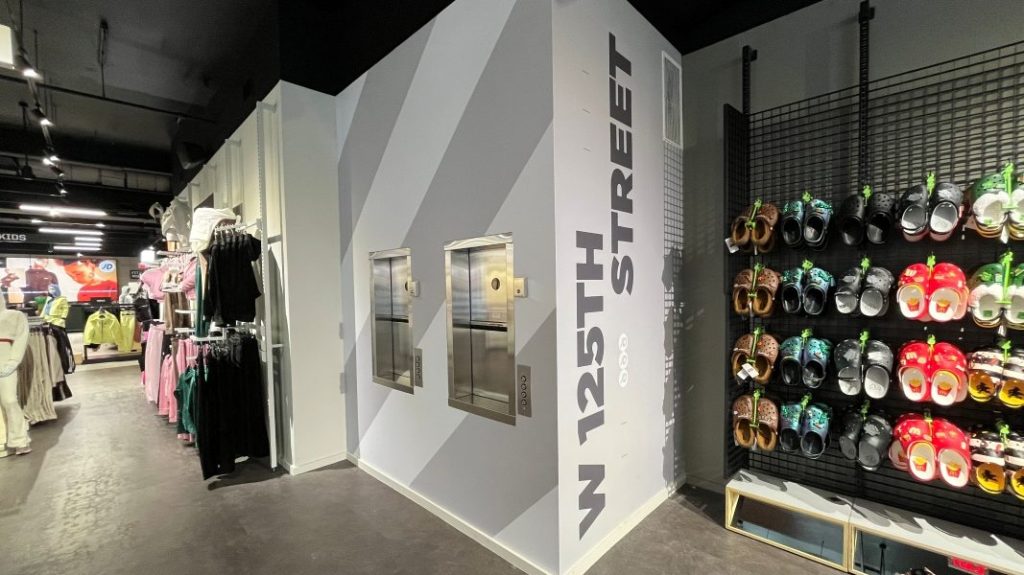
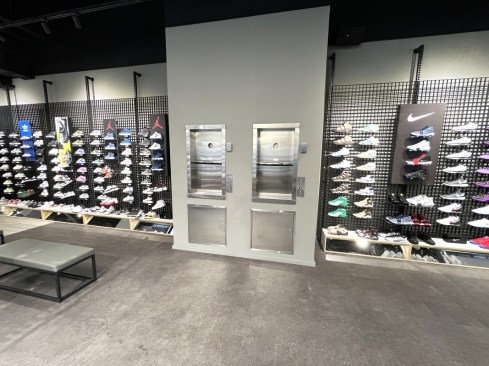
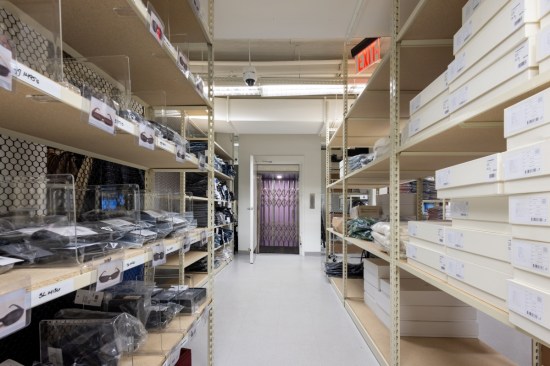
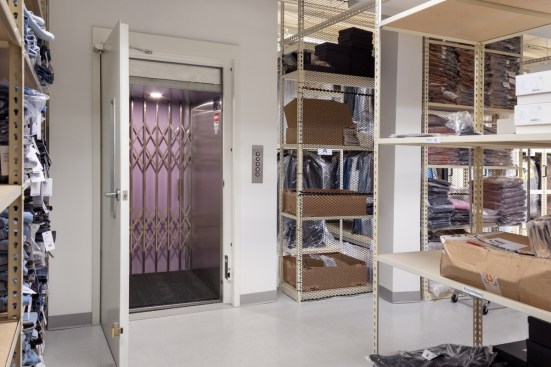
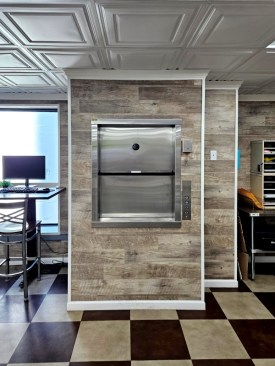
When JD Sports expanded in Manhattan, they needed a way to move inventory efficiently in multi-level stores without sacrificing selling space. Vertical transportation experts Mobility Elevator & Lift turned to compact Matot dumbwaiters by Savaria for the solution, which included
- Counter-height loading for fast access
- Fire-rated shafts to meet codes
- Systems sized to minimize impact on retail floor area
The result was faster restocking, better space allocation, and less reliance on congested freight elevators.


Planning Considerations
Early coordination makes vertical material handling systems easier to integrate into a project. Be careful not to over spec the unit and drive up costs. Key questions include:
- What’s being transported, and how much at a time?
- Small parcels or food trays may require a dumbwaiter (100–750 pounds)
- Larger loads (up to 2,000 pounds) call for a material lift
- Industrial projects may use vertical reciprocating conveyors (VRCs) with unlimited size and capacity
- Loading configuration:
- Counter-height for hand loading
- Floor-level for carts or wheeled goods (pit required)
- Drive mechanism:
- Winding drum for low- to mid-rise applications
- Traction systems for taller buildings
- Travel speed:
- Typically up to 50 feet per minute, with an ideal “flight time” of under 45 seconds between floors
- Space and structure:
- Confirm hoistway clearances, pit depth, and overhead
- Guide rails can be attached to shaft walls or independent angle towers
- Car openings:
- Single, straight-through, or 90-degree (adjacent)
- Safety and codes:
- ASME 17.1 and ASME B20.1 compliance
- Fire-rated shafts and doors where required
- Customization:
- Options include automated unloading or conveyor interfaces
Project Snapshot: Lion’s Gate Hospital, Vancouver
A hospital project required sterile supplies and soiled surgical carts to move within a single hoistway. The solution was a double-deck cart lift with two completely separate compartments:
- Sterile supplies in the upper car
- Soiled carts in the lower car
This eliminated the risk of cross-contamination, optimized limited space, and streamlined the hospital’s workflow between surgical and sterilization areas.
Lifecycle and Modernization
Material lifts and dumbwaiters are designed for long service life. When upgrades are needed, modernization can extend performance and compliance without a full replacement. Typical updates include:
- Replacing outdated controllers with programmable logic controllers (PLCs)
- Installing energy-efficient motors
- Updating doors, gates, or cab finishes to current standards
Work with a Global Leader
In April 2024, Savaria—an acknowledged innovator in accessibility and mobility—proudly acquired the dumbwaiter and material lift assets of D.A. Matot, Inc., a family-owned leader in the industry for over 130 years. This strategic move enhances Savaria’s already comprehensive portfolio of residential and commercial wheelchair lifts, residential elevators, commercial limited use/limited application (LU/LA) elevators, stairlifts, and patient care products.
With engineering in the company’s DNA, Savaria applies the same rigorous R&D process and manufacturing standards for quality, safety, and reliability to every material lift and dumbwaiter they produce.
Find case studies, design tools, videos, and educational materials.