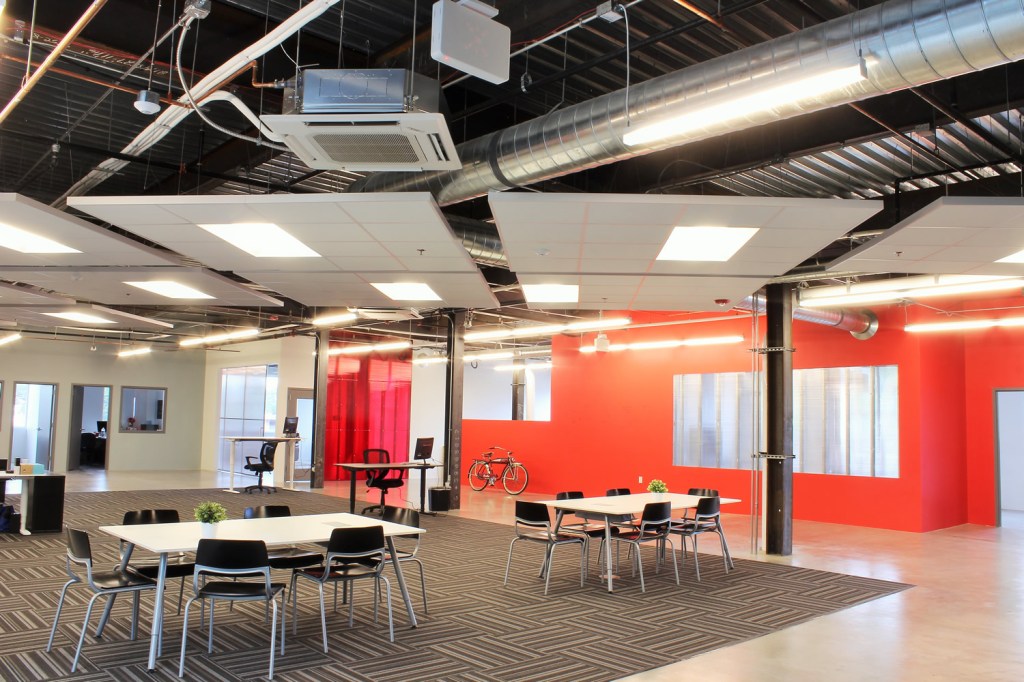
The days of sacrificing the integrity of your designs to achieve comfort and efficiency goals are over. Variable refrigerant flow (VRF) systems give you more design freedom and fewer constraints than conventional HVAC systems.
Design-Friendly Features
VRF zoning systems provide efficient, personalized comfort to almost any building design. Instead of relying on bulky ductwork to deliver conditioned air to a space, VRF uses small refrigerant piping or minimal ductwork to deliver precise personalized comfort to a building’s occupants.
Space Saving
Space is a major design consideration. VRF systems are compact and flexible, with a wide variety of indoor and outdoor unit styles that are perfect for tighter, smaller spaces. When ductwork is called for it, is often low-profile and short-run, allowing it to be tucked into small, tight plenum spaces. This not only saves ceiling space within the building, but also provides a more efficient way to condition a building.
Highly Efficient
Some VRF systems can perform up to 25 percent more efficiently than conventional HVAC systems. Those with variable speed inverter-driven compressor technology use the absolute minimum energy necessary to maintain comfort levels and adjust to partial-load conditions, which are prevalent most of the time. Systems with Hyper-Heating technology deliver efficient heating, no matter how cold it gets outside.
Easier to Design
Choosing a manufacturer with sophisticated design tools makes it easier to integrate VRF into building designs. Look for tools that enable discovery, preview, and download of Revit® files, models, drawings and product specifications for active design projects. To get the most out of Revit, you should have access to multiple file formats, M/E/P connectors, shared parameters, complete manufacturer metadata, geometry that is constrained to references, and more.
Easy to Modify
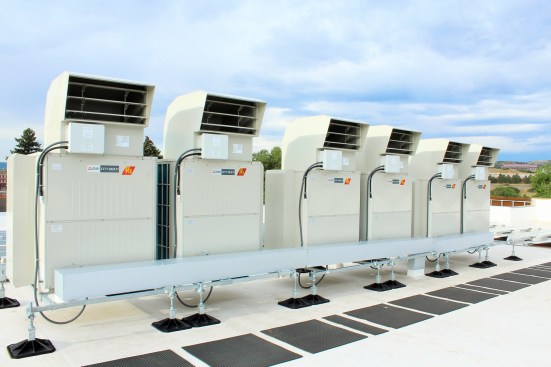
If capacity needs change or different indoor air handling units are required, VRF systems can be easily modified. Indoor units can be added, changed out or moved to accommodate building renovations. Outdoor units can be placed on the ground or rooftop for application flexibility and to satisfy design or aesthetics codes. When zones are not occupied, the system gives building owners the flexibility to turn them off, increasing energy efficiency during those times.
Learn more about how VRF can help you design around your vision at MitsubishiPro.com.