
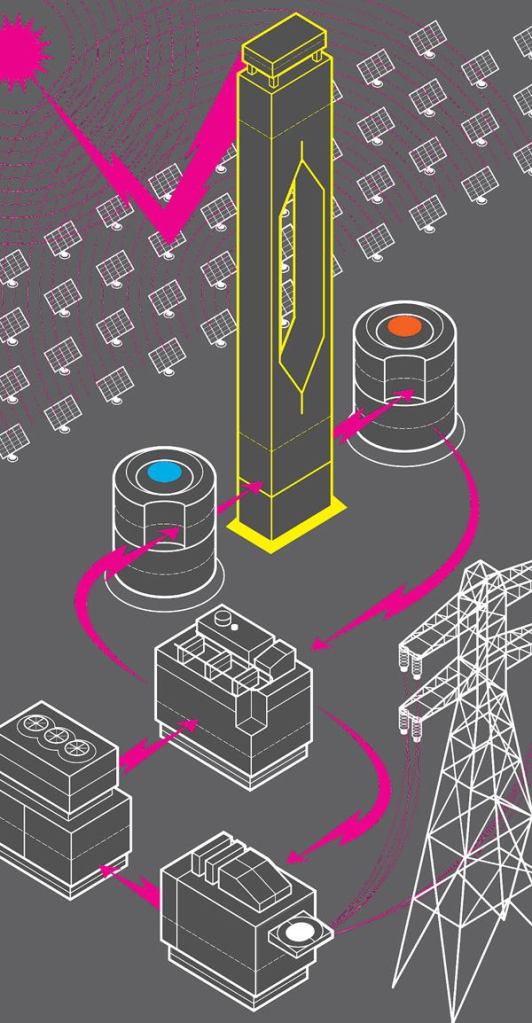
And while solar lighting systems generally are used where power is not available, it makes sense to connect solar luminaires to a small PV power grid. This would allow the entire system to share battery capacity and to help compensate for network weaknesses, such as luminaires suffering sunlight blockage or battery issues. Another option is to install a single large solar collector array and battery system on an optimum hilltop location with uninterrupted solar view.
Caveats Like most PV systems, there almost never is a direct payback from solar lighting. Night electric rates are especially low, and there are no major rebates or subsidies to reduce the pay-back time. Solar lighting is only cost effective where power is miles away and the costs of installing wiring are prohibitive; otherwise, it is at best only a sustainable gesture.
As for professional use, solar lighting runs the risk of being “off” when needed because of battery depletion or need for battery replacement. Perhaps the greatest concern is that practical solar systems employ only low-wattage lamps. To achieve IES recommended light levels, it may take more luminaires with higher wattage lamps, and some lighting requirements may not be able to be met.
However, look to LEDs to make solar lighting systems increasingly practical over time. Due to its low-voltage and controllability, the LED is perfect as a light source for battery powered systems. As LED efficacy increases, luminaires will use fewer watts per footcandle. Combined with concurrent advances in both batteries and PV systems, solar lighting will become smaller and less costly. There may quickly come the day where solar lighting systems are not only practical, they may actually become ideal.