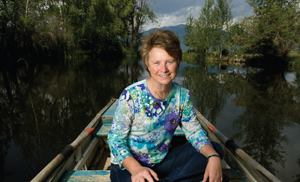
Biologist, innovator, explorer. All of the above describe Janine Benyus, a scientist working to create a more sustainable future. Her 1997 book, Biomimicry: Innovation Inspired by Nature, discusses how the natural world provides answers to the challenges we face with our built environment. Co-founder with Dayna Baumeister of 10-year-old innovation consultancy the Biomimicry Guild, Benyus works with leading companies to re-imagine the design process using tools and processes found in nature. In 2005, Benyus broadened the Guild’s reach by forming a nonprofit educational component—the Biomimicry Institute—a global community of educators and scientists in both academic and nonacademic settings. Recognizing the ecosystem’s ability to teach us, Benyus unites science with business and design, and brings us a step closer to sustainable solutions.
What excites you about science and nature? Individual organisms and their physical, chemical, and behavioral adaptations, knit together into an ecosystem that creates the conditions conducive to life on Earth.
What was your goal in establishing the Biomimicry Guild? To become a resource for innovators and to give them the biological information they need to inspire sustainable designs. We want it to become second nature to companies to hire a biologist and bring them to the design table. We have been successful beyond our wildest expectations working with mainstream companies such as GE, Boeing, General Mills, Herman Miller, and Nike.
And the Biomimicry Institute? We also realized there was a need for educating people about how to look to nature. Now we are training people from K through 12 all the way to the university level, and we have biomimetic design labs at design and engineering schools around the country.
How did AskNature (asknature.org) come about? It’s a giant inspiration gadget and a web community where biologists and designers get together and co-create. The website organizes biological information by function.
Do you think we can repair and rebuild our natural world? Yes. We’ve seen the unintended consequences born of the industrial revolution—the illusionary premise that the Earth was endlessly resilient. Now the question is: How can we pull our own weight ecologically, asking people and buildings to perform as well or better than the ecosystems around us. It’s our responsibility to future generations.