
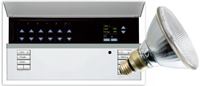
Lutron's latest offering in its Grafik Eye family—the QS—off…
I find these products fun and useful when trying to reduce energy use for a number of unusual situations. For example, replace incandescent marquee lamps with cold cathode; they can be dimmed and flashed without shortening their life. I like the MR16 converters in homes and other situations where a narrow beam of light was the perfect replacement for an R-lamp’s blob of light.
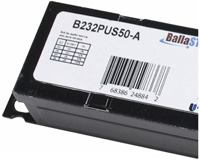
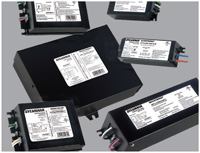
BALLASTS It is amazing that ballast manufacturers are able to accomplish energy savings from already-efficient systems, but they do. Among fluorescent ballasts that stand out, efficient versions of just about all T8 and T5 lamps are now available. There also are efficient ballasts for T5 twin tube lamps achieving nearly 100 lumens per watt that may make 2-foot-long luminaires a good choice instead of linear lamp fixtures. Several companies also have developed high-efficiency ballasts for the 2-foot lamps, something we need to make better use of, particularly for F17T8 and F14T5 lamps.
I also noticed that new generation efficient ballasts are now available for 8-foot T8 lamps. This is important: the 8-foot T8 lamp is now just as efficient as the 4-foot super T8 and offers the full range of ballast factors, too. Start thinking about going back to the 8-foot lamp in low-bay commercial applications where the T5 is too bright and the limitations of HID are a problem.
Perhaps the most exciting ballast-related development is that efficient dimming ballasts are now available. Until recently, dimming ballasts for a T5 or T8 lamp required 25 percent more lighting power than nondimming ballasts, but with the exception of California’s Title 24, no energy code credit was given, effectively discouraging the use of dimming ballasts. The new dimming ballasts are about as efficient as regular nondimming ballasts. Versions in 0–10 volt, 3-wire analog, 2-wire analog, and digital addressable lighting interface (DALI) are now available.
HID electronic ballasts also are a big story. Major developments in low-wattage ceramic metal halide include smaller and more efficient ballasts, ballasts that can sense and operate multiple lamp wattages, and ballasts with heated thermal protectors allowing recessed uses including incandescent (IC) housings. For the higher wattage lamps over 150W, electronic ballasts are the way to go for indoor HID lighting, and many of the versions allow limited range dimming as well as easier interfacing of auxiliary lamps, daylight sensors, motion sensors, and other modern control devices. The most important story about HID ballasts, however, is cost; thanks to volume and competition, prices are dropping on HID electronic ballasts, making their use cost justified in most of the country.
Another intriguing development among ballasts is multilevel and step dimming products. They offer simple, low-cost controllability for a price point somewhere between nondimming and dimming equipment. With energy codes requiring multilevel lighting, these are smart options to achieve level controls without the ugly partial switching solutions we have been using for so long. Stepping ballasts are now available with the high efficiency technology of “super” ballasts, making them excellent choices for most lighting applications where full range dimming is not needed.
CONTROLS The biggest news in all of lighting, other than LEDs, is the evolution of controls. As mentioned earlier there have been some wonderful and appealing new products for dimming of incandescent lamps and other loads applying conventional technology and design approach. I am more focused on the evolution of behind-the-scenes technology, and there is a lot going on.
At the top of the list is the maturation of digital lighting controls. The promise of DALI is now being realized as manufacturers finally have developed whole lighting systems that are easy to install and inexpensive to commission. Keeping in mind that DALI is a minimum starting point, these products include proprietary enhancements that make all the difference in applicability. For instance, ballasts provide power and connect photosensors, motion sensors, and manual controls to the system and thus dramatically reduce the cost of installing state-of-the-art controls. I am especially happy to see PDA-based setup and whole-building management software.
Next on my list is daylight systems integration. As we design more advanced buildings, we are going to need to control blinds, skylights, and other active sun control systems with electric lights. Once as simple as using a photoelectric controller, systems that permit user control over shades can now be very complex to integrate active solar, electric lighting, and audio visual functions. Both digital systems and normal preset lighting control systems now enable shading systems to be part of user-selectable scenes.
Finally, there is the ongoing revolution in wireless lighting controls. At the consumer level, this appears to be the year of Z-wave technology for homes. Costing slightly more than existing X-10 equipment, the Z-wave Alliance has more than 125 manufacturers making compatible products. At the commercial and professional level, existing wireless systems are starting to be challenged by Z-wave and Zigbee mesh network systems, with the threat of making wireless control cheap and easy to retrofit to existing buildings.