





Philips
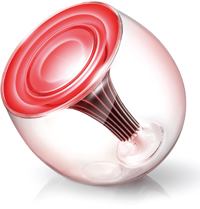
The company offers sleek new luminaire designs with color-changi…
Joern Siebke, associate, Arc Light Design, New York Bio: Siebke joined Arc Light Design in 2003 and has focused his time on the firm’s notable hospitality projects around the globe. Siebke’s distinctive background in film lighting design and landscape architecture have contributed to the firm’s approach and philosophy to lighting design. Siebke has taught lighting design for interior design and display design students at the Fashion Institute of Technology in New York for past three years.
Impressions of Light+Building: In general this year’s show was the most exciting and inventive in years. It was evident that the majority of companies have used the economic downturn to invest in R&D and to develop new products. Most of these efforts seem to have gone toward LEDs and designs that for the first time took advantage of the specific characteristics of LEDs and the new shapes and concepts that this source allows.
The process of miniaturization also made great leaps forward. There are now several products available that can seamlessly be integrated into architecture, and make the light source and/or fixture disappear. What comes to mind is a product by Flos called ‘soft architecture’ as well as minimal extrusions by others.
The quality of white light LEDs has also made great advances, and these LEDs are now becoming more comparable in their ability to mimic the characteristics of incandescent sources. This is achieved through new phosphors and technologies that “apply” the phosphors to the diodes, as well as through control systems for LED sources, where the light output is directly related to a shift in color temperature. What comes to mind here is a system shown by LG that allowed controlling the two properties—output and color temperature—digitally.

In terms of the quality of white light LED sources, one development that was specifically interesting was the effort of a company called Xicato, who for the first time tried to set an independent calibration-standard for color temperature consistency by employing McAdams ellipses. These are essentially areas in the color spectrum that are defined as not representing a perceivable color-shift. This standard would address one of the most prevalent problems facing the fast-developing arena of LED products: the backward compatibility of new products. Being able to engineer all future products to stay within the same range (ellipse) as the original product that it supersedes would be a significant step.
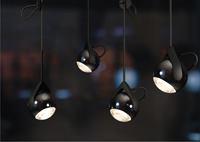
The other singular, most noticeable element of the show, from a design perspective, was the use of a rotation joint—the ball-joint. This makes for a great mechanical connection with minimal moving parts and great industrial looks. This type of joint was omnipresent in designs from recessed fixtures with hidden mechanics as shown by Viabizzuno, to decorative fixtures where the joint is the design feature as seen at Tobias Grau.