
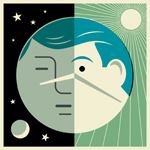
TEENS’ CONFLICTING CLOCKS Teenagers must rise at a set time to get to school on time, regardless of when they may fall asleep. As a result, it is quite possible that students are missing the morning light necessary to synchronize their biological clocks with the 24-hour solar day, because they are often traveling to and arriving at school before the sun is up or just as it’s rising. Most of our electric lighting is designed to meet the needs of the visual system, not to stimulate our biological clock. As teenagers spend more time indoors, they miss out on essential morning light needed to stimulate their circadian system.
Another study in 2009, conducted by the LRC at Algonquin Middle School in Averill Park, N.Y., examined how extended daylight hours influence the sleeping patterns of teenage students. The study found that the 16 subjects from this upstate New York school experienced a delay in melatonin onset by an average of 20 minutes measured in one day in spring relative to one day in winter. The Daysimeter was used again and the students also kept sleep logs as part of the seven-day study, which collectively showed a 16-minute average delay in reported sleep onset and a 15-minute average reduction in reported sleep duration measured in one day in spring relative to one day in winter. The results demonstrated that it was the extended daylight hours due to the seasonal change, not evening electric lighting after dark in the home, that likely had the greatest impact on delayed sleeping patterns.
The results of the Algonquin Middle School study supplement the Smith Middle School studies and emphasize the general hypothesis that the entire 24-hour pattern of light-dark exposure influences synchronization of the body’s biological clock to the solar day. In addition to teenagers increasing morning daylight exposure year round, they should decrease evening daylight exposure in the spring and early fall to help ensure they will get sufficient sleep during the school year.
If the lighted environment in schools promotes circadian synchronization, it will help students fall asleep earlier, and therefore reduce their sleep deprivation. Studies have shown that teen sleep deprivation may lead to mood changes, increase risk of obesity, and perhaps contribute to underperformance in school. The studies detailed in this article, funded by the U.S. Green Buildings Council and the Trans-National Institutes of Health’s Genes, Environment and Health Initiative, will result in a set of guidelines for architects, designers, and school administrators to enable the development of school building designs that promote circadian synchronization and maximize students’ health, well-being, and performance.
Mariana Figueiro, Ph.D., is Light and Health program director at the Lighting Research Center and associate professor at Rensselaer Polytechnic Institute. Her research is focused on the area of human circadian response to light. She is former chair and current member of the Illuminating Engineering Society’s Light and Human Health Committee.
Barbara Plitnick, RN, is a research nurse at Rensselaer Polytechnic Institute’s Lighting Research Center where she plays a critical role in managing and conducting studies pertaining to the effects of light on human health and well-being.
The Daysimeter In order to link the impact of daylight and electric lighting on students’ performance and well-being, it is necessary to quantify the actual amount of daylight or electric light that students are being exposed to—specifically, the kind of light that stimulates the circadian system. The Daysimeter5 is a research device first developed by the Lighting Research Center (LRC) in 2004 that monitors and logs an individual’s light exposure and rest-activity patterns over an extended period of time. It is the first device to accurately measure and characterize circadian light—the light entering the eye that affects the biological clock.6 The Daysimeter also measures conventional light levels and records head movements to differentiate between rest and active periods.
The current generation Daysimeter has been used extensively in LRC and non-LRC research efforts. Its look has transformed since its initial development, continuing to shrink in size and become more user-friendly. As demonstrated above, it can easily be worn using a small, lightweight head-mounted device. Under a grant from the Trans-National Institutes of Health’s Genes, Environment and Health Initiative, the LRC is currently developing an even smaller next-generation Daysimeter with wireless communication and enhanced biofeedback capabilities.
Use of the Daysimeter is allowing for more in-depth studies concerning the impact of light on human health and well-being. It will enable better design of light sources, luminaires, lighting techniques, and lighting applications that will help maintain regular circadian functions.
1Figueiro M.G., Rea, M.S. 2010. “Lack of Short-wavelength Light During the School Day Delays Dim Light Melatonin Onset (DLMO) in Middle School Students.” Neuroendocrinology Letters 31(1): 92-6.
2Figueiro M.G., Rea M.S. 2010. “Evening Daylight May Cause Adolescents to Sleep Less in Spring than in Winter.” Chronobiology International 27(6): 1242-1258.
3Figueiro M.G., Brons J.A., Plitnick B., Donlan B., Leslie R.P., Rea M.S. “Measuring Circadian Light and its Impact on Adolescents.” Lighting Research and Technology, in press.
4Lighting Research Center. 2004. “Daylight Dividends Case Study: Smith Middle School, Chapel Hill, N.C.” Go to lrc.rpi.edu/programs/daylighting/pdf/SmithCaseStudyFinal.pdf.
5Bierman A., Klein T.R., Rea M.S. 2005. “The Daysimeter: A Device for Measuring Optical Radiation as a Stimulus for the Human Circadian System.” Measurement Science and Technology 16: 2292-2299.
6Rea M.S., Figueiro M.G., Bierman A., Bullough J.D. 2010. “Circadian Light.” Journal of Circadian Rhythms 8: 2.