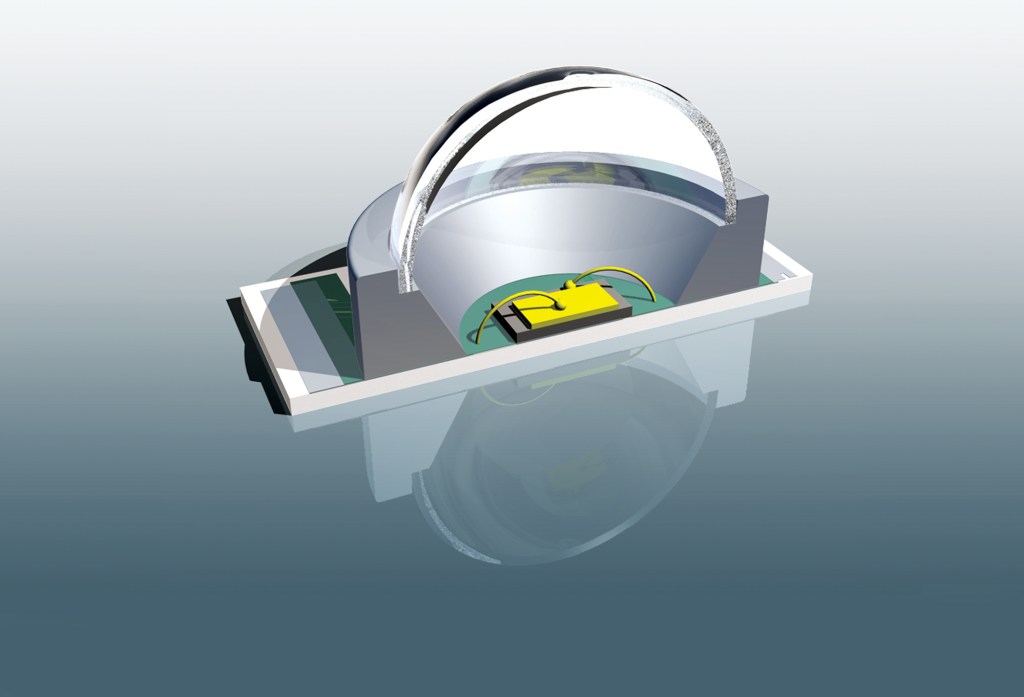
The introduction of LEDs into the architectural lighting design market has been a paradigm shift unlike any other the lighting industry has seen. And while it has been dynamic in terms of the possibilities that it affords designers and manufacturers for new design and technology, it certainly has been a disruptive force, and has caused the lighting community to rethink many of its assumptions about lighting.
The greatest challenge has been the rate at which solid-state lighting technology changes. LEDs have introduced an added level of complexity for designers and manufacturers who are trying to keep up to date with both new products and the new metrics developed, such as LM-79 and LM-80, that are now needed to monitor and measure the new source’s photometric performance.
Another challenge has been in form factor. The point source allows for slimmer fixture profiles, but early generations of luminaires didn’t use that feature and instead just put LEDs in an existing housing. LED luminaire design has come a long way in the past decade, and the current generation of products now reflect a high level of color rendering and control capabilities.
And then there’s the financial impact. A 2011 McKinsey report, “Lighting the Way: Perspectives on the Global Lighting Market,” estimates that “the LED lighting market will amount to $91 billion by 2020—close to 60 percent of the overall lighting market.”
Explore all 30 Moments in Lighting from our 30th Anniversary Issue here.