

Jakob Boserup / Courtesy Velux
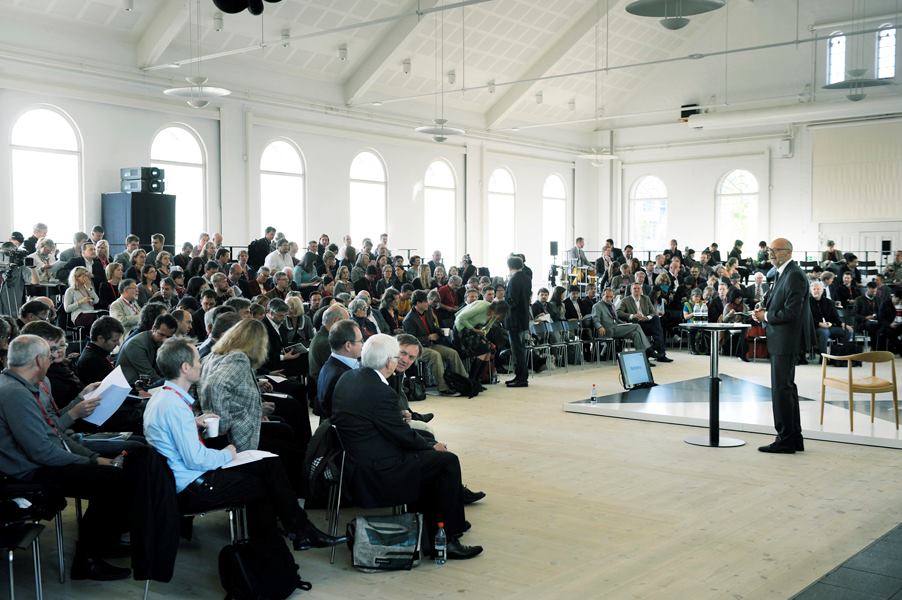
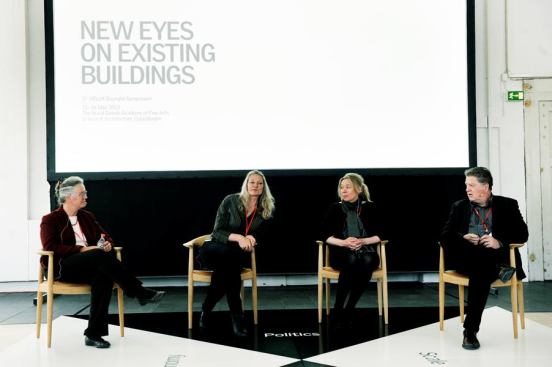
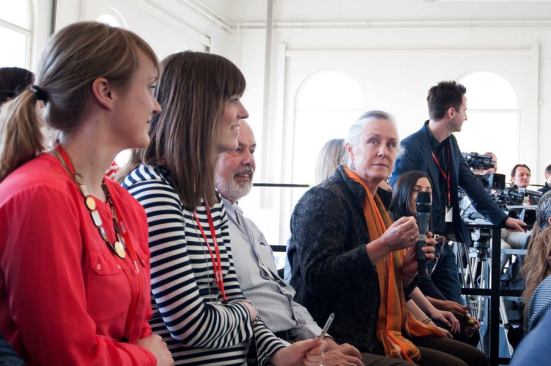
Question-and-answer session with presenters Lisa Heschong, Tina …
In the area of organizational initiatives, Peter Head, a director at Arup, and Christiano Lepratti, visiting professor of sustainable design at the Sapienza University of Rome, discussed their respective work for the Ecological Sequestration Trust and the Union of Architects’ Architecture for a Sustainable Future.
Nearly all the speakers noted the role of daylight on human health, and several made it their presentation’s focus. Author Richard Hobday noted that sunlight and outdoor air can serve as anti-depressants and germicides. Laval University architecture professor Claude Demers discussed the challenge of defining daylight in terms of ambience. The first comprehensive report on the benefits of windows is what Martine Knoop, lecturer at the Chair of Lighting Technology, Technische Universität Berlin, is working on with the CIE.
Calling light “the most essential design element of advanced 21st-century buildings,” Deborah Burnett, interior designer, presented recent findings from epigenetics studies. After reviewing more than 80 articles that correlate daylight with human wellness, sustainable design consultant David Strong presented his recommendations for a standardized metrics in daylight codes and regulations worldwide.
Data aggregation and computer modeling have helped researchers answer questions whose answers seemed out of reach only decades ago. Signe Kongebro, associate at Henning Larsen Architects, discussed how the increasing density of cities doesn’t have to undermine the amount of daylight in buildings. Lisa Heschong, managing principal of TRC Energy Services, presented her multiyear study to discover how much energy California office buildings could save through interior renovations and photocontrols. (Her answer: 4 to 5 percent.) Cambridge University sustainable design professor Koen Steemers examined the correlation between urban density and energy usage. MIT associate professor Christoph Reinhart discussed the multi-institutional Lorax project and the development of a comprehensive solar map to determine the electricity yield of a photovoltaic panel located anywhere in a city.
Design and material reviews were also presented. Michael Pawlyn showed biomimicry and architectural projects from his own practice, Exploration, as well as the work of others. Kasper Guldager Jørgensen, 3XN partner and director of the firm’s innovation unit, GXN, presented nature-inspired materials in the Material World Catalog. John Mardaljevic, building daylight modeling professor at Loughborough University, reviewed technologies in variable transmission glazing.
Project and product case studies were presented by Arup director Florence Lam, who discussed the Acropolis Museum in Athens; Raghu Padiyath, senior product development specialist at 3M, who showed the company’s daylight redirecting film; and TU Delft doctoral candidate Hester Hellinga on a hospital’s replacement of daylighting with a vertical garden.
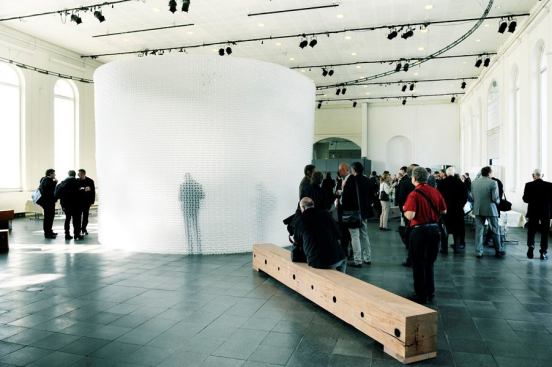
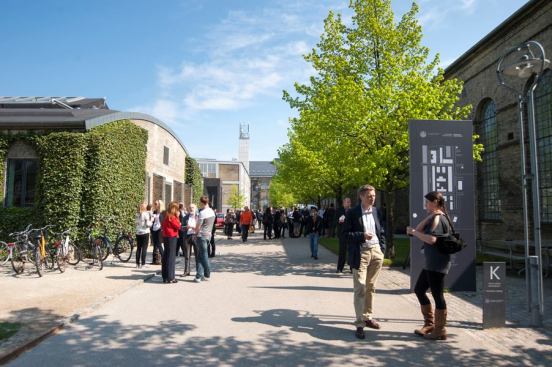
In the policy arena, Philip Allsopp, Transpolis Global co-founder, presented the consequences resulting from the dearth of design expertise in policy making and municipal development. Copenhagen city architect Tina Saaby discussed the planning strategies behind the city’s longstanding appraisal as one the world’s happiest. Prior to his talk on integrating skylights on existing big box buildings, James Benya, principal of Benya Burnett Consultancy, compared the spectral distribution curves of different sources based on the audience’s positive review of the symposium’s venue.
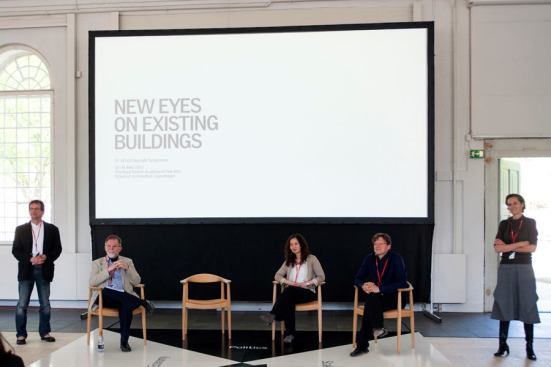
For the symposium’s traditional closing debate, Benya led a rousing panel with presenters Lam, Allsopp, Reinhart, and Pawlyn on the topics of sustainability, daylighting as a right, and public policy. One takeaway from the symposium, he said, was the definition of sustainability. It’s not about sustaining the planet, which will find a way to endure, he said. Rather, “we’re talking about sustaining us and human life as we know it.”
Lam expanded on the topic. “Sustainabilty is not about energy efficiency,” she said. “It’s about maintaining human advancements that will impact next generation.” Converting daylighting into energy savings is a losing battle, she said. But by focusing of why daylight works in the project context, she continued, designers can argue better to their clients on why the built environment should open its walls to the outdoors.
The lack of designers in policymaking generated fervent discussion. Reinhart said that many designers see politics as “a thankless task,” while Lam pinpointed perhaps the base of the problem: Designers and engineers have to overcome their introvert tendencies and find ways to apply and utilize their expertise, she said. The reality is that politicians and business leaders have different priorities and drivers. “Until we…speak their language,” she said, “they won’t hear us.”
In a highly politicized and financially driven world, architects and engineers must protect the best interests of the public and environment, the panel said. “Architects need to become more like a conductor,” Pawlyn said. “A conductor [receives their] power by making other people powerful.” A successful design is one that is unifying in vision “rather than having others conform to one vision.”
“We have to become more involved as professionals,” Allsopp said. “There’s a tendency for developers to treat architects as drawing services.” By securing a foothold in the building profession, which is made all the more challenging by the current economy, designers can “create places that resonate with the human spirit.”
In his closing remarks, Andersen acknowledged the importance of ongoing dialogue. “We hope the discussions don’t stop here,” he said.
The exchange of ideas and business cards among the daylight community are perhaps two of the symposium’s most important outcomes. “The knowledge transfer at the symposium will give the daylight community and the Velux Group an even bigger collective understanding of the need for daylight in buildings in the years to come,” Andersen says.
Disclosure: The writer attended the symposium as part of Velux’s press junket.