
Allan Toft
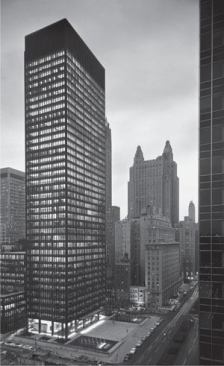
| The Seagram Building, New York, 1957 |
One of the very first lighting designers to marry the worlds of architecture and light, Richard Kelly not only helped to define the profession of architectural lighting design, but he established a vocabulary—aesthetic and technical—to go with it. Kelly envisioned lighting based on three principles: focal glow (highlight), ambient luminescence (graded washes), and play of brilliants (sharp detail). Kelly’s lighting of Mies van der Rohe’s iconic steel-and-glass Seagram Building employs a balance of interior and exterior brightness. In the lobby, Kelly developed a cove system that washes the elevator core’s travertine walls with light, accentuating their height. Along the interior and exterior ceiling edges of the window wall and under the entrance canopy, Kelly placed rows of downlights, anchoring the building in a pool of light. While the brightness of the base of the tower is dominant, the luminous ceiling forms a continuous band around the perimeter of each office floor, creating a clean and consistent appearance that continues up the entire elevation—making the building a tower of light. As was often the case when he could not find the luminaires he needed to complete a project, Kelly designed the ones used here himself, working with illuminating engineers and manufacturers. The luminous ceilings were a collaboration with Noel Florence at Lightolier; at the time—in 1958—these were the largest flat diffusers ever manufactured.