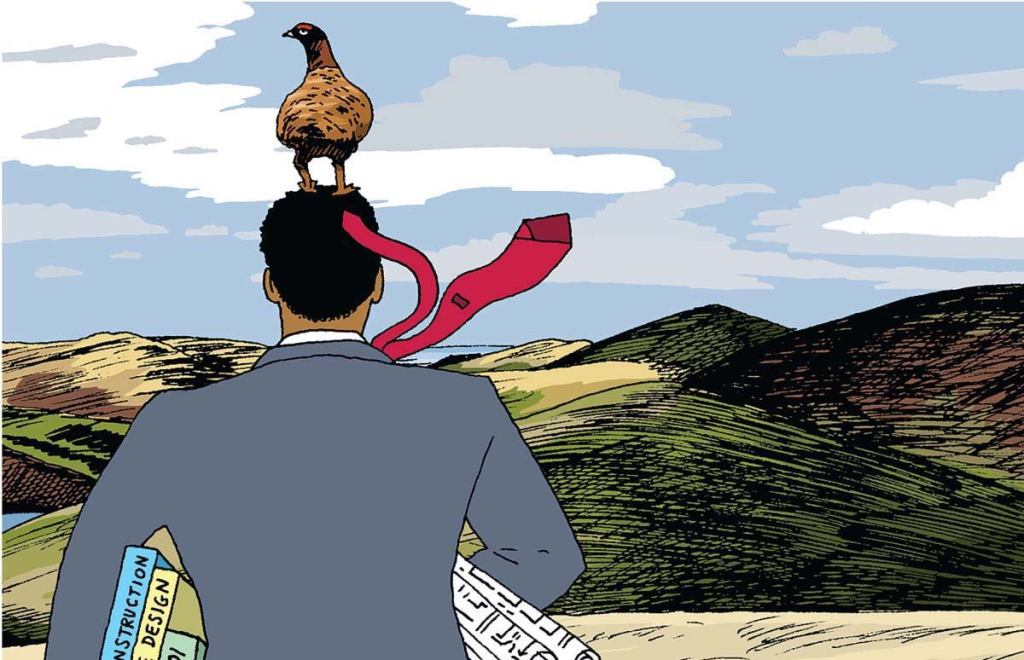
In January, the AIA put sustainable design on its list of annual continuing-education requirements. A November letter to members from 2008 president Marshall Purnell about the addition noted that “climate change and the impact of buildings on carbon emissions have [led] clients and the public to look to the expertise of architects for solutions to help them leave a greener footprint.” The decision represents a laudable new direction for the AIA and underscores its growing commitment to environmental advocacy. But it’s not enough.
Typically, learning units are earned by attending lectures and conferences or reviewing articles and reports. While this academic approach might be suitable for topics such as building codes or software applications, it falls far short for sustainability. Designing for the environment means understanding and appreciating the environment better, and training videos and technical reports only go so far. To learn to swim, you have to get wet. To go green, you have to go outside.
Ironically, many of us working to protect the environment don’t have much firsthand experience with it. Architects spend more time in conference rooms than in fields and forests; we watch PowerPoint presentations instead of touching a tree or fording a stream. How can we embrace nature when we rarely encounter it?
The more clearly we can focus our attention on the wonders and realities of the universe about us,” wrote Rachel Carson in Silent Spring, “the less taste we shall have for destruction.” Immersion in nature inspires respect, and familiarity breeds conservation, not contempt. The great outdoors is also a great place to learn: The optimal educational environment, says David Orr, the Paul Sears Distinguished Professor of Environmental Studies and Politics at Oberlin College, isn’t a classroom, it’s a riverbed, or a meadow. Research shows that outdoor learning stimulates better health, alertness, and creativity, all at once.
Architectural training can apply this knowledge through open-air workshops, nature walks, wilderness retreats, or field trips that occur in an actual field. For a perfect model, look to the Biomimicry Guild and its co-founder, Janine Benyus. Three times a year—in Montana, Costa Rica, and Peru—the Guild pairs biologists with designers to explore nature as “model, measure, and mentor” (the consultancy’s motto). The Costa Rica event proved to be one of the most valuable experiences of my career.
The AIA should encourage and support outdoor education, because sustainability isn’t an idea; it’s an action. To create a “greener footprint,” get out of the office and into the wild.