As additive manufacturing is increasingly deployed at an architectural scale, the primary drivers for its use are reduced building time, cost, and construction waste. However, a less celebrated advantage, also related to waste reduction, concerns optimizing material performance as a fundamental feature of the design itself.
Additive manufacturing’s high precision and customizability enable the fabrication of intricate structures that would previously have been cost-prohibitive. As a result, form can become a more accurate realization of performance. This possibility is particularly advantageous in the case of engineered structures like bridges and canopies, which must provide adequate support without excessive use of resources.

Additive manufacturing’s ability to manifest a sophisticated embodiment of performance is of keen interest to architects and engineers. Masoud Akbarzadeh, associate professor of architecture and director of the University of Pennsylvania’s Polyhedral Structures Laboratory, has explored this capacity in the Diamanti canopy project, an exemplar of 3D-printed concrete structures.
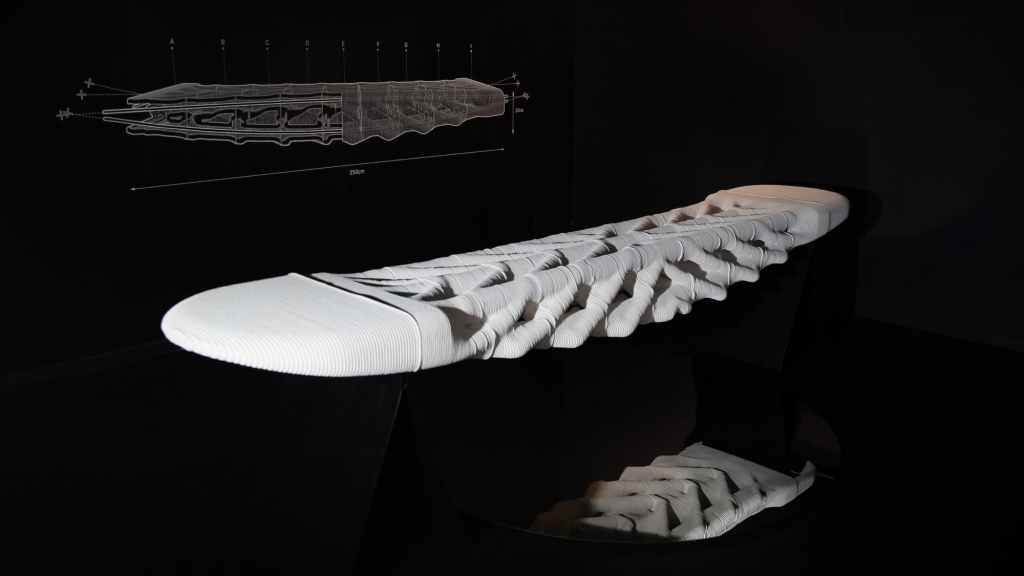
Currently on display at the Giardini della Marinaressa in Venice, Diamanti is a 10m (33 ft) long, post-tensioned concrete structure informed by tensile as well as compressive forces. The canopy’s “periodic anticlastic,” diamond morphology is the direct result of an endeavor to maximize mechanical performance while minimizing material, including reinforcement, to reduce carbon footprint. Akbarzadeh’s story about how the project came into existence and his subsequent plans for this work provide insights into the future of form-finding optimization in 3D printed structures.
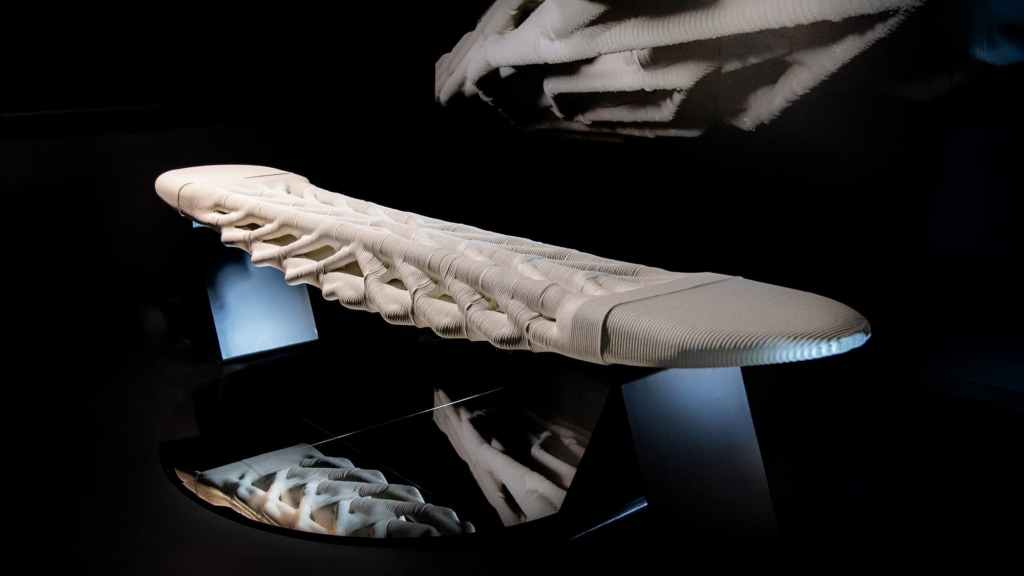
Like other designers and scholars exploring this research trajectory, the Polyhedral Structures Laboratory’s goal with Diamanti was to push the boundaries of design and construction in 3D printed materials. The team developed and refined the structural and engineering principles for this project over three years, with the goal of presenting it at the European Cultural Center in 2023. “Venice offered a uniquely fitting context because of its strict ground-load restrictions, which required innovative approaches to distributing forces,” explains Akbarzadeh.
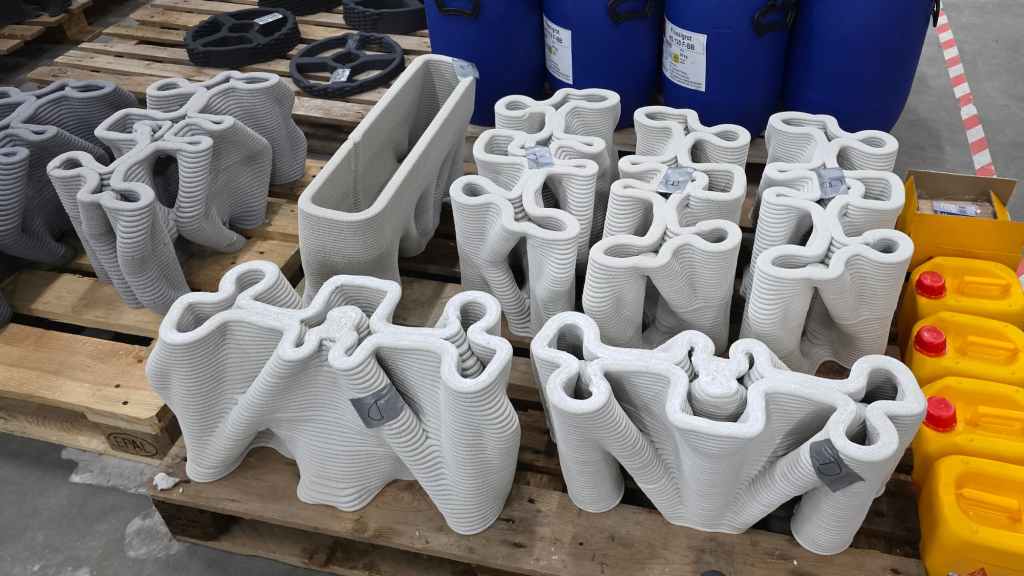
The team aimed to install a 10-meter beam as a canopy on a cross-laminated timber (CLT) construction with two goals: to reduce self-weight and ground loads via the use of wood, and to demonstrate how lightweight 3D printed concrete elements can integrate with timber construction. This approach also demonstrated how future composite systems can achieve a desirable carbon footprint across their life cycle.
The researchers pursued large-scale construction and experimental load testing to validate these ideas. Although these tests succeeded technically, the exhibition regulations changed in 2025, preventing a complete structure installation. Instead, the team exhibited a smaller 3-meter prototype.
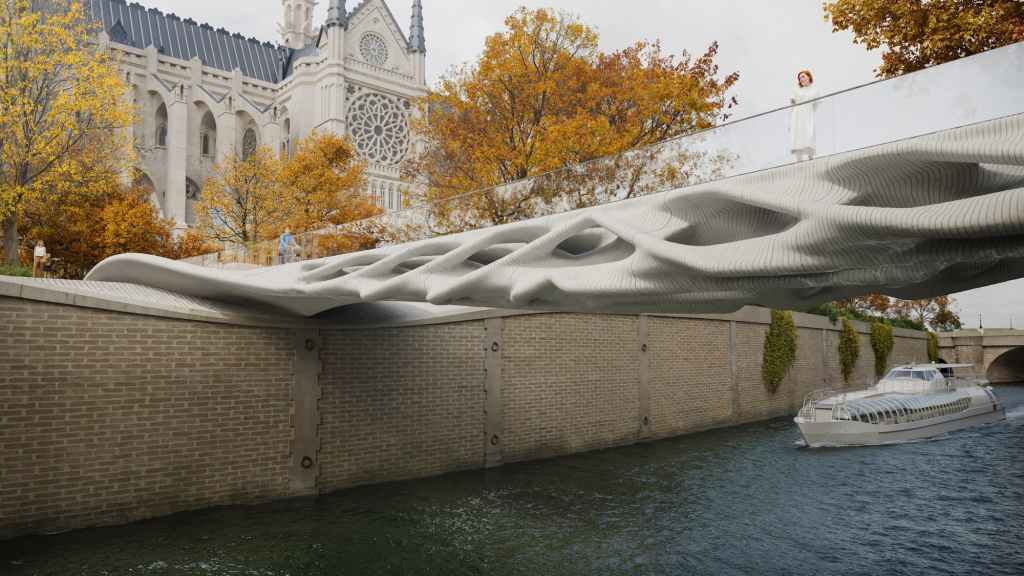
Since then, in collaboration with Sika Group and Carsey3D in France, the researchers have been advancing proposals to realize the canopy as a pedestrian bridge in Paris, with potential sites currently under review.
The structure reportedly uses 60% less material than conventional reinforced concrete—a significant achievement. The efficiency of the Diamanti approach is based on Polyhedral Graphic Statics, a geometry-based structural design method devised over 160 years ago. This method has historically shaped landmark structures such as the Eiffel Tower, Gaudí’s works in Park Güell, and Maillart’s Salginatobel Bridge.
“In 2012, I extended this method into three dimensions, based on the foundational work of Maxwell and Rankine, and have since applied it in several projects, including this bridge and the lightweight glass bridge completed in 2024 at the Corning Museum of Glass,” explains Akbarzadeh. (Physicists James Clerk Maxwell and William J. M. Rankine developed important contributions in structural analysis.)
Polyhedral Graphic Statics enables the creation of forms where internal forces are primarily pure tension or pure compression, minimizing bending moments. This technique allowed the team to eliminate unnecessary material, achieving the 60% mass reduction. PGS also provides precise control over the flows of forces, such as ensuring constant tension along the bottom chord of the structure, enabling the strategic integration of a post-tensioning cable.
By incorporating triply periodic minimal surfaces, the team also increased geometric stiffness while reducing reliance on conventional reinforcement. “The combined use of these methods made the bridge exceptionally material-efficient without compromising performance,” says Akbarzadeh.
With this design in mind, the team set out to develop the fabrication workflow, necessitating accounting for both material and machine limitations and gravitational effects during printing. The researchers created computational tools and analytical models that optimized the geometry for printability while ensuring structural performance.
The team sought to integrate each step—from digital modeling, structural analysis, and segmentation into printable elements, to the actual extrusion of the concrete—into a seamless design-to-production process. According to Akbarzadeh, the resulting project “represents the longest-span structure constructed with 3D-printed, post-tensioned elements.”
The Polyhedral Structures Laboratory envisions Diamanti as just a starting point with broad applicability. The structure is part of a larger research agenda focused on carbon-absorbing 3D printed concrete systems, supported by ARPA-E and the U.S. Department of Energy. The team is currently developing proof-of-concept applications, such as two-way slab systems, for residential and commercial buildings.
These methods could be scaled across infrastructure types, opening the door to more sustainable construction practices. The researchers are also investigating self-morphing building blocks and advanced manufacturing techniques that could redefine efficiency in construction. “These explorations aim to extend the lessons of the Diamanti Bridge into broader architectural and infrastructural contexts,” explains Akbarzadeh.
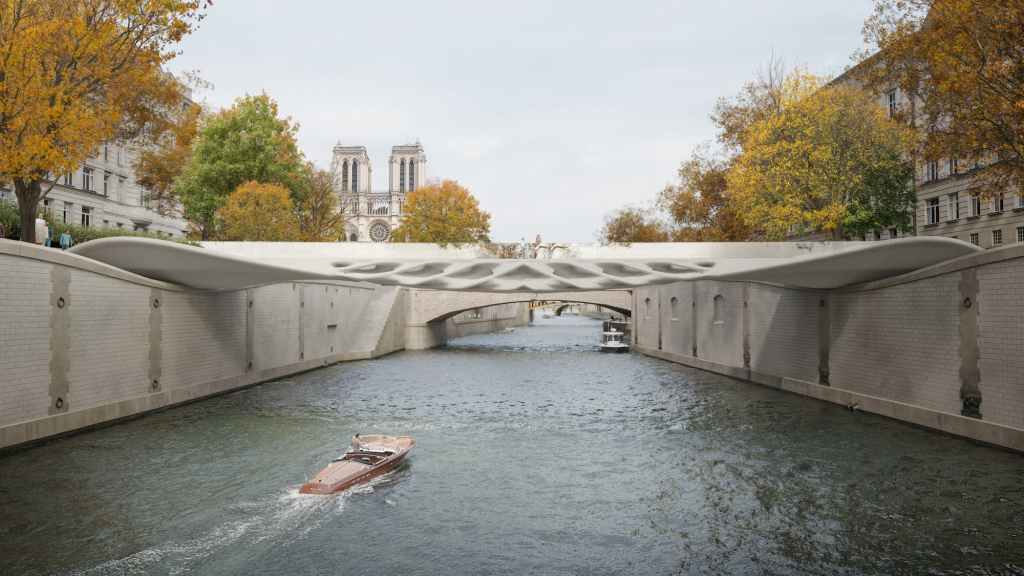
For now, the next step is constructing a complete bridge in Paris. Once the site is confirmed, the team must tailor the design to the location’s specific conditions, including geometry, scale, and structural requirements. Akbarzadeh notes that the most significant challenge thus far has been regulatory issues.
Although 3D printed concrete has advanced significantly, the field still lacks comprehensive building codes and design standards. Current protocols are limited, which complicates approval for large-scale applications. Nevertheless, Akbarzadeh remains optimistic, arguing that “as interest and research in this area expand, we expect clearer guidelines and regulatory frameworks to emerge, paving the way for broader adoption.”