Automated vents in the lower portions of the glazed wall open ne…
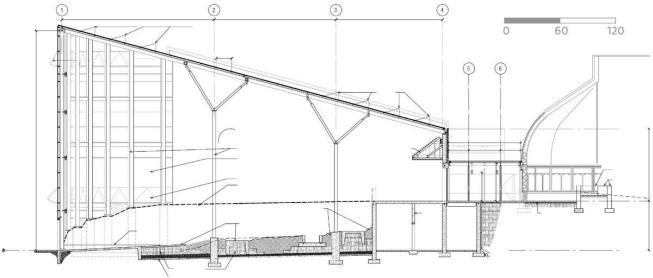
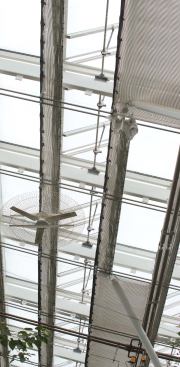
Automated vents in the lower portions of the glazed wall open near the floor of the 60-foot-tall space to capture prevailing southernly breezes. The air then climbs as it warms and exits through roof vents. As breezes pass over the glazed roof vents, a Venturi effect is created: Wind speed accelerates and draws warm air out of the interior space. Building operators continue to tweak vent-opening configurations to optimize interior conditions.
Matt Greenslade
IKM Architects carefully choreographed the visitor experience. Y…
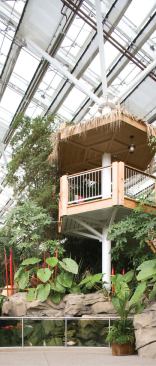
IKM Architects carefully choreographed the visitor experience. You enter at a high point, where mountain rain forest plants are positioned, then descend along a winding path through lowland ecosystems. Comfort for people and plants was also a high priority. An array of localized controls create microclimates for particular families of plants without wasting energy.
Matt Greenslade
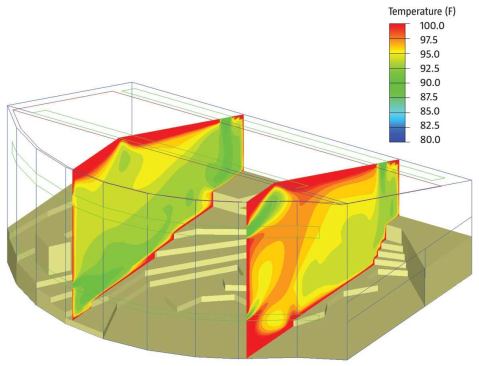
Studies of the interior air show how fresh and how warm the air …
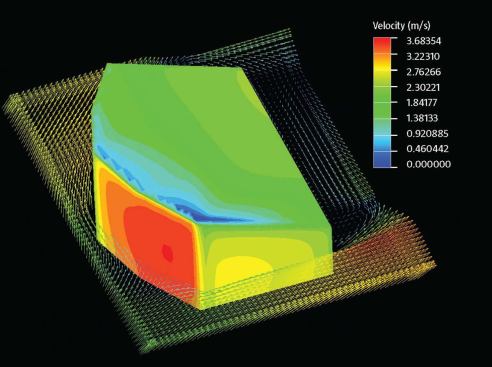
Studies of the interior air show how fresh and how warm the air is, as well as how quickly the air moves throughout the space.
Matt Greenslade
Passive solar design and natural convection are common strategie…
Passive solar design and natural convection are common strategies in most green buildings.
Matt Greenslade
To meet the specialized lighting and ventilation demands of the …
To meet the specialized lighting and ventilation demands of the conservatory, state-of-the-art software and sensors analyze conditions inside and outside, automatically adjusting vents, shades, dampers, and valves to optimize conditions.
Matt Greenslade
All glazing is argon-filled insulated clear glass except above d…
All glazing is argon-filled insulated clear glass except above door height on the south wall, where uninsulated, single-pane glass permits the maximum amount of light to reach the light-hungry tropical plants. To minimize shadows, window mullions on sunny exposures have narrow profiles and are perpendicular to the curved wall. If sunlight overheats the interior, automated shades unroll below the roof to keep the heat near the envelope. The shades are Mylar coated on the upper surface to reflect radiant energy and have insulating fabric on the underside. The architects plan to add shades on the vertical south glass wall, because the conservatory gets a bit too warm on sunny winter days.
Matt Greenslade
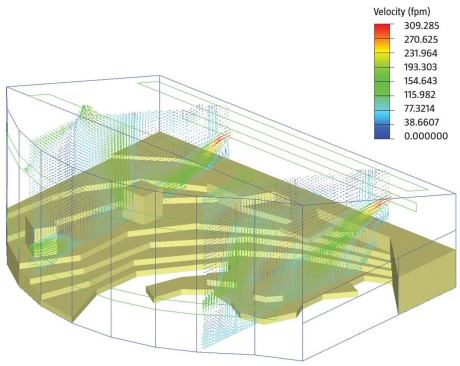
Pressure and velocity studies show how outside air hits the sout…
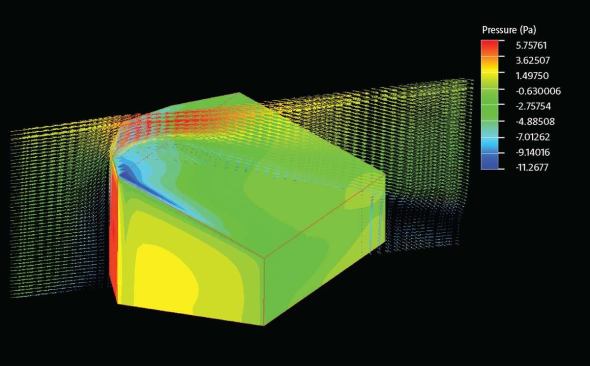
Pressure and velocity studies show how outside air hits the southern wall of the building, then loses speed and pressure as it flows over the aerodynamic form.
Matt Greenslade
This movement helps draw warm air out of vents on the roof, main…
This movement helps draw warm air out of vents on the roof, maintaining air flow and temperature inside.
Matt Greenslade
Plant beds have root-zone heating, so the canopies of the plants…
Plant beds have root-zone heating, so the canopies of the plants can endure cooler temperatures without suffering. Misters deliver a fine spray of water to plant canopies as needed, and in summer ultrasonic foggers near the footpaths introduce evaporative cooling locally. Radiant heating in the footpaths provides supplementary heat when needed.
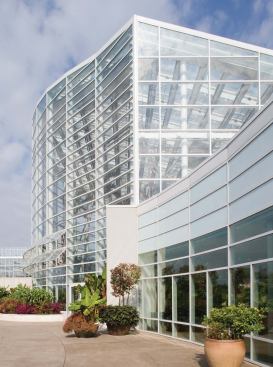
Located in the heart of Pittsburgh, the Phipps Conservatory and Botanical Gardens has “the greenest garden in the world,” according to director Richard Piacentini. He could be describing the Phipps’ Thai-style forest filled with winding pathways and diverse vegetation that he created—or the new Tropical Forest Conservatory that encloses it. The 12,000-square-foot sustainable building, designed by IKM Architects, overcomes the problems the Phipps faced maintaining the interior temperature and humidity in its beautiful but inefficient Lord & Burnham conservatory built in 1893. The new design is engineered to get the most out of natural sunlight: On a glazed roof, light is often hard to control and gets reflected away in the winter, when it is needed most. The tall south wall (shown right) admits the most direct sunlight, allowing for better control and better penetration into the space. Roof glazing provides plants with much-needed sunlight on overcast days, but is angled down and away from the direct sun to avoid oversaturation.
J. Patrick Rand is a professor at the North Carolina State University School of Architecture.
HEATING AND COOLING: Outside air is pulled through six 24-inch-diameter concrete tubes that are 300 feet long and buried deep in the earth, where the temperature is 55 degrees Fahrenheit year round. In the winter, the tubes deliver air that is passively warmed along this path before entering the interior space. In summer, the same tubes direct passively cooled air to the spots where visitors are most likely to linger.