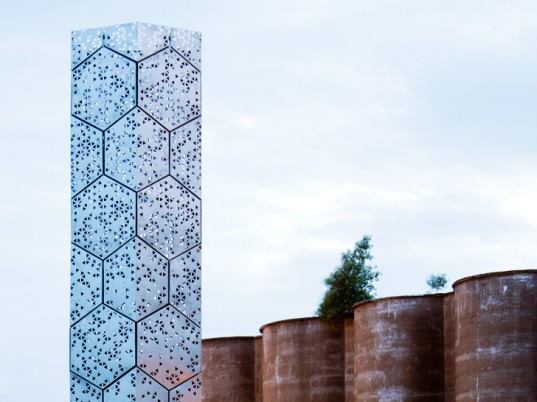
Architecture is typically an anthropocentric affair, with a focus on the welfare of human beings—often at the neglect of other species. But a team of architecture students at the University of Buffalo has demonstrated that architecture can provide benefits to living creatures other than people.Elevator B is a structure designed especially for bees. At 22 feet in height, the tower made of steel, glass, and wood serves a colony of honeybees that were found in a nearby, decaying grain mill. Described as an “apartment building” for the insects, Elevator B came into being as a response to a competition held by the University of Buffalo’s Ecological Practices Research Group, which asked for a living structure in which local bees could thrive within an urban environment, and which would serve as an educational demonstration project. Given the concerning decline in bee populations, this project demonstrates one way in which architecture can be used as a tool for preserving biodiversity.
Elevator B provides an invitation to human visitors in the form of a movable glass window located below the hive. Intrepid spectators can enter the base of the structure and witness the hum of activity above—a reminder of the busy lives of this other important group of city-dwellers.