



Project Description
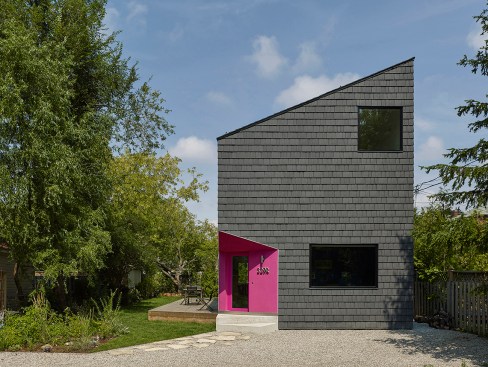
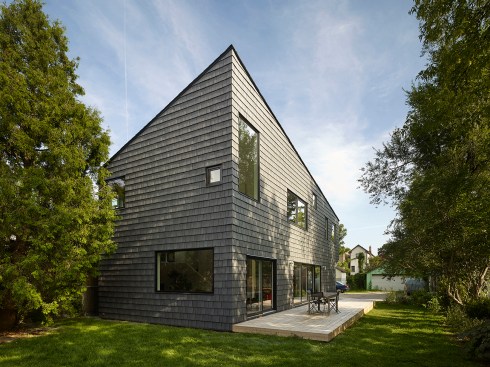
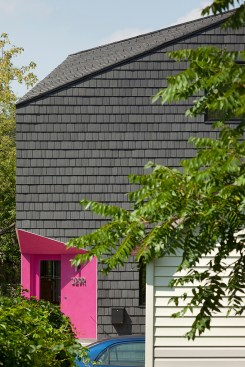
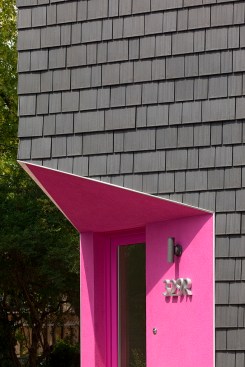
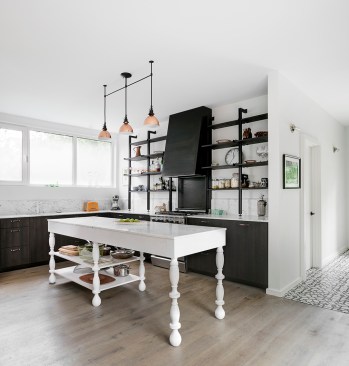
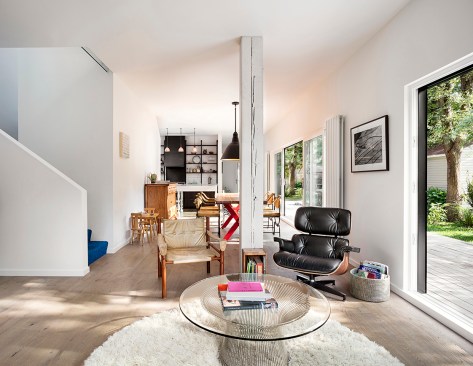
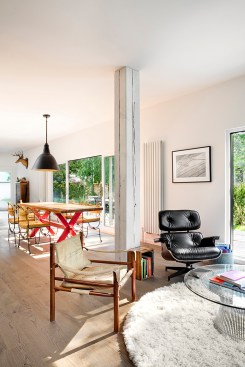
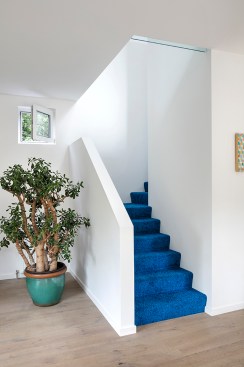
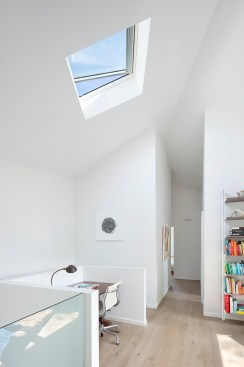
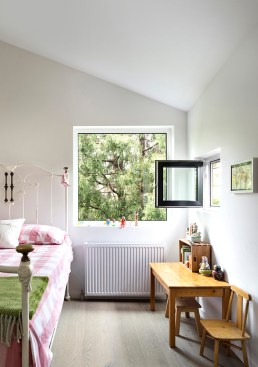
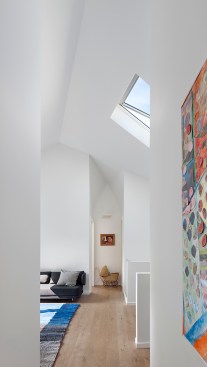
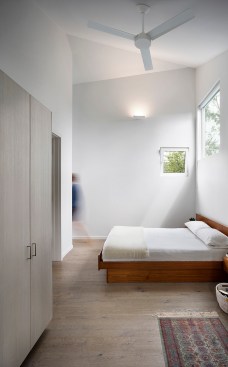
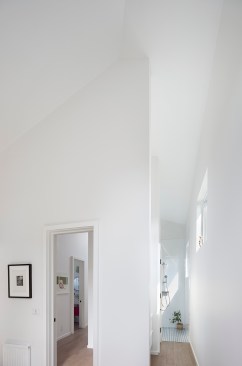
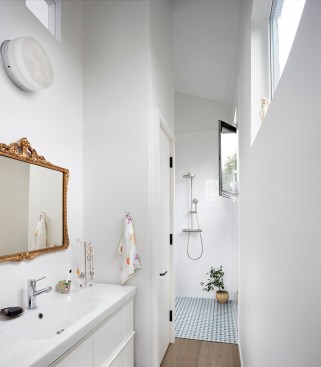
The clients owned a traditional Toronto semi-detatched home on a nontraditional site. Their backyard doglegged behind the neighboring yards. The large lot provided the couple — both teachers who love design and the arts — a unique opportunity to construct a highly personal, custom home from scratch, by severing the lot, selling their semi, and building a new house on the back portion. The couple wanted a contemporary expression that would juxtapose with for their existing, mostly antique furnishings. The goal for the house design was to surprise and delight: the familiar twisting into the unexpected, perceptions shifting and a witty interplay would take shape between seemingly contradictory elements — traditional and contemporary, real and artifice, volume and void. The home’s unconventionality is evident on arrival. The shape of the house, its silhouette and its materiality were inspired by the garden sheds and small garages found in the lanes and backyards of the neighbourhood. A consistent materiality wraps both the sides and roof of the house — an effect that is heightened by a lack of eaves lines and a continuous reading from roof to wall. To elevate the form well beyond its humble starting point, the architectural designers angled the sculptural roofline, so that the building appears to be either rectangular or triangular in plan, depending on how it is seen. The shingles — made from a non-combustible, recycled and recyclable composite that silvers over time like real cedar — are meticulously aligned with the windows to make a precise grid that is restful on the eyes. The grey of the shingles contrasts smartly with bright pink stucco that surrounds the main entryway, articulating the point of arrival and paying homage to the homeowner’s Mexican heritage. The pop of colour also signifies the levity of the interiors within. A mainly white, neutral palette, with white oak floors, allows the homeowners’ furniture and art to shine. An array of seemingly random, modular windows of different sizes flood the spaces with light. Throughout, the designers humourously played with notions of the traditional and the contemporary. Many elements, such as the spindle legs on the kitchen island and the “Victorian" wallpaper in the powder room, reference history. On closer look, however, the spindles are over-sized, and the wallpaper is full of irreverent references such as skulls and pistols. The house also plays with closed, solid volumes and open spaces. For example, the entry into the pantry extends into the kitchen with a crystalline form. The interesting shape contrasts with the otherwise open plan of the kitchen and living spaces on the ground floor, each one accentuating the other. Lastly, the LEED-silver structure goes well beyond aesthetics. The passive ventilation, lack of mechanical air conditioning and use of recyclable cladding underpin perhaps the most important perceptual shift in the house — that a whimsical aesthetic can also be highly sustainable.