

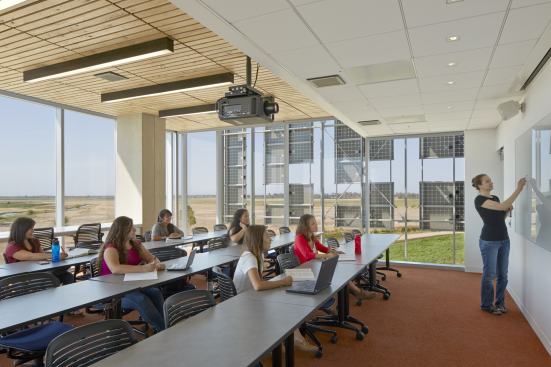

Project Description
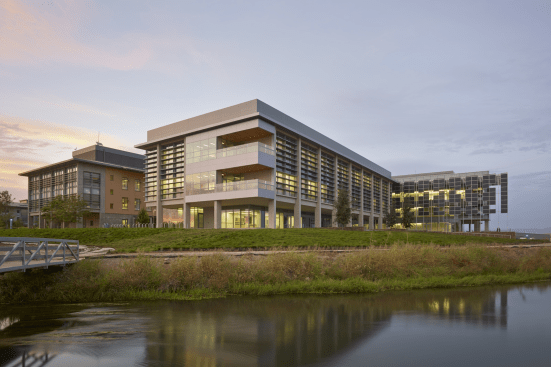
The goal of the new University of California, Merced, Science and Engineering 2 building was to create a modern design that complements the surrounding landscape while promoting interactions and optimizing circulation. The facility meets UC Merced’s triple net zero commitment and incorporates learning and research trends into the design to favor student-centered multidisciplinary pedagogies and research.
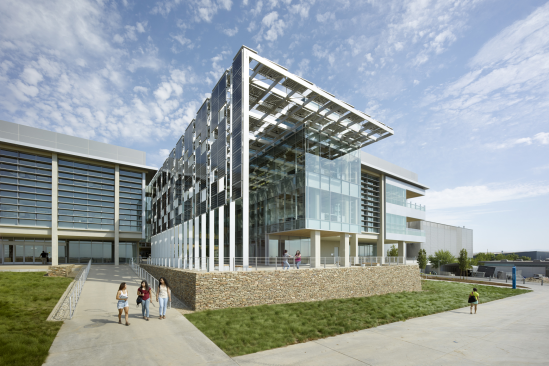
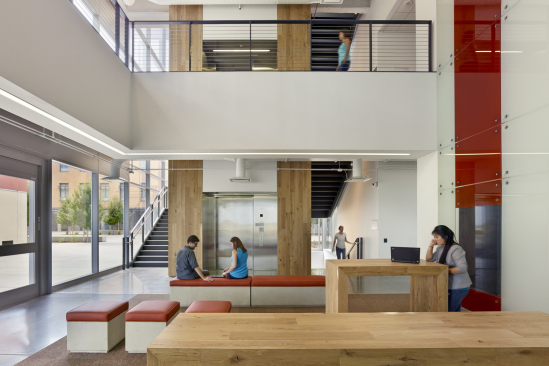
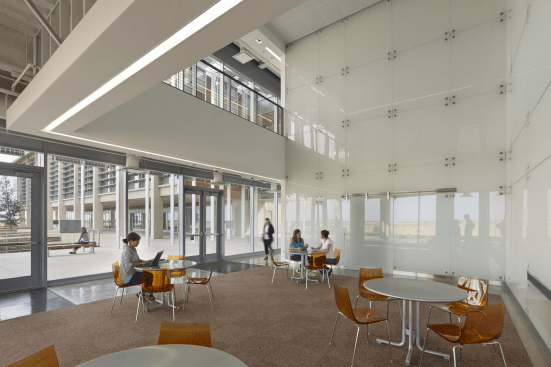
A soaring entry space capped by photovoltaic panels creates a shaded exterior gathering space for education and recreation. The planning concept supports a range of indoor and outdoor spaces that integrate into the native, drought-tolerant landscape. The ground floor building functions were placed near the existing campus pedestrian circulation system to allow the facility to open its interdisciplinary work and collaboration areas to the entire community, fostering connection and collaboration.
The environmentally sensitive design minimizes the non-renewable energy and materials consumed, reducing the total carbon footprint and attaining LEED Platinum certification. With extreme summer temperatures and the University’s desire to produce renewable energy, the design team incorporated passive design strategies, mitigating solar heat gain impacts on the façade and minimizing cooling loads.
Additionally, the building accommodates the latest pedagogical trends providing faculty and students with a “living laboratory” for testing and showcasing the emerging technologies developed in their labs. The building’s mechanical, electrical, plumbing and telecom systems were intentionally left exposed to accommodate a growing interest in using building systems as learning and research tools.