

Project Description
Surely no contemporary building has had a more unlikely trajectory over
the last two decades than the Kunsthal in Rotterdam. It is both an
emblem of the rise of arguably the world’s most influential living
architect and the setting for one of the most spectacular art-heists in
modern memory. Action, adventure, architectural history—this project has
it all. And now it has entered a new chapter quietly and
inconspicuously—just how the architect would like it.
Completed in 1992, the Kunsthal was one of the first buildings to
emerge from the Office for Metropolitan Architecture (OMA), cofounded by
Dutch design mastermind Rem Koolhaas, Hon. FAIA. Koolhaas had come to
architecture after years as a would-be filmmaker and journalist; his
1978 book, Delirious New York, broke like a thunderclap over
the profession, announcing the arrival of a wildcat iconoclast who’d set
his face against modernist pieties and postmodernist cheek. Until the
late ’80s, OMA’s work had comprised mostly speculative and unbuilt—or
unbuildable—projects, including a contribution to the 1980 Venice
Biennale’s Strada Novissima installation and a failed proposal for
Paris’s Parc de la Villette.
The Kunsthal could thus be considered the first project to translate
Koolhaas’s hyperactive functionalism and irreverent regard for form into
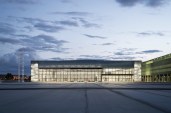
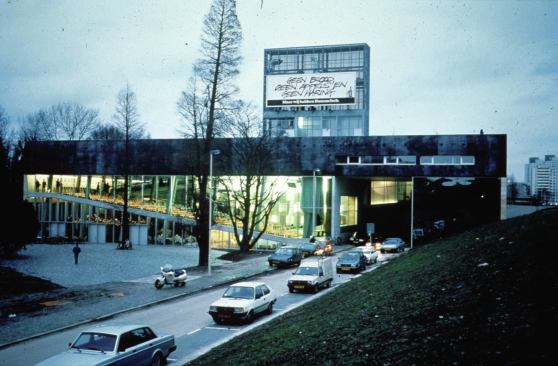
architecture. Squat and square, the structure is divided into two
volumes. One features an upper course of stone cladding above a lower
register of glass, in alternating straight and angled strips that are
punctuated by regular vertical mullions. The other features a fully
glazed enclosure topped by a Miesian, flat, steel roof.
With Rotterdam’s existing art museums freighted with their own
permanent collections, the municipal government commissioned the project
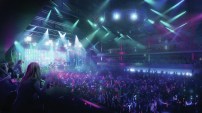
to create a space that could host temporary exhibitions, film
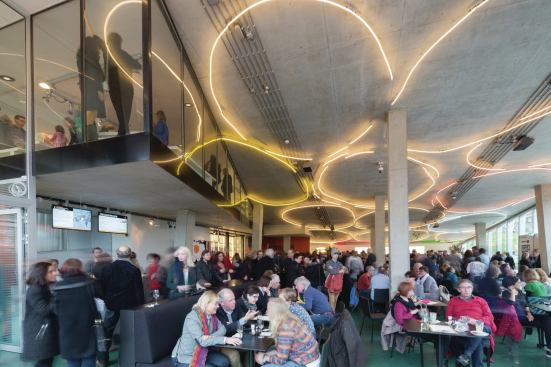
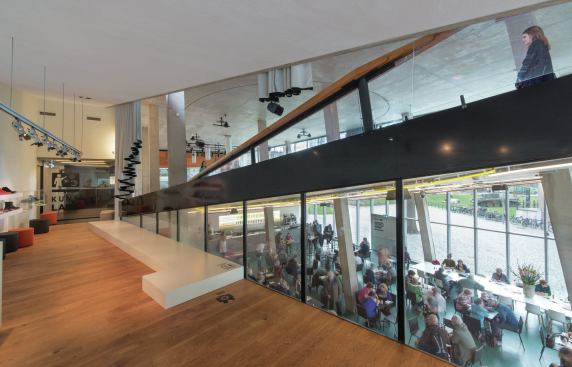
screenings, art classes, and dining. Koolhaas seized the mixed program
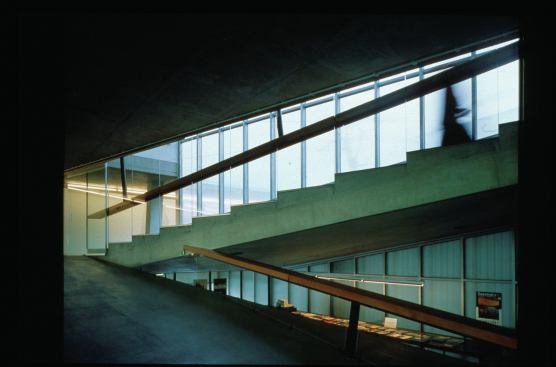
with gusto, creating a layered sequence of spaces, including a
semi-outdoor café, auditorium, and exhibition halls, all of which
overlapped each other in a determinedly anti-hierarchical jumble.
OMA has certainly evolved since then, but signature elements in the
Kunsthal have appeared again and again, in projects from the Casa da
Musica in Porto, Portugal, to the Seattle Public Library. As the firm’s
breakthrough building, the Kunsthal had surely secured a place in
history. Unfortunately, it’s not the only reason why the building is
famous.
In October 2012, as part of the institution’s 20th anniversary, the
Kunsthal presented a show of major 19th- and 20th-century paintings from
the Triton Foundation collection. On Oct. 16, two thieves broke into
the rear entrance of the building in the early morning, triggering the
alarm but escaping with seven masterpieces by the likes of Picasso and
Matisse.
The robbery was one of the most costly to hit the art world in a long
time: The combined insurance value topped $23.8 million, and the resale
price would have been even higher. But with the pieces logged in the Art
Loss Register, hindering their sale on the international market, the
thieves fled with the loot to their native Romania, where one of them
made a fateful decision: He entrusted the paintings to his mother, who
then allegedly burned them in her home fireplace to hide her son’s
guilt.
The thieves and conspirator pled guilty last year and were sentenced to
prison. But with its security system exposed as a near total dud, the
Kunsthal has not quite recovered from the publicity. As part of its
efforts to reinvent itself, the institution completed its first major
renovation in January, with Koolhaas and company back at the helm.
OMA partner Ellen van Loon, who led the renovation, wasn’t with the
firm during the Kunsthal’s original construction, but she certainly knew
it well. “It’s a project that’s hard to miss,” van Loon says. “At the
time it was built, it was quite a progressive project in Holland, and it
made a lot of people discuss architecture. There weren’t any architects
who didn’t notice it.”
In returning to a building that was so central to OMA’s early days, you
might expect a certain cringe factor—like looking at your own baby
pictures—but van Loon and her team were fairly pleased by how well the
building had weathered. “Our conclusion was that the building worked
better than anyone thought, from day one,” she says. “Materials that
people said would only wear five years would wear 20 or longer.”
That said, the building needed a tune-up, and not just to its security
system. Sustainable design was in its infancy when the initial scheme
was completed, and higher performance standards have since become de
rigueur for OMA and the profession at large. Updates to the building
envelope and M/E/P systems, which will slip by unnoticed by most
visitors, will reduce the museum’s heating bill by an estimated 30
percent, and the energy consumed by its electrical and HVAC systems by
28 percent.
Achieving these improvements without distorting the essence and
experience of the Kunsthal required strategic moves guided by the
subtlest of design changes. High-performance double-glazing replaced the
wraparound windows. Fluorescent lamps and LEDs have partially replaced
conventional sources in the museum’s distinctive lighting plan. Low-flow
fixtures outfit the reconfigured bathrooms, and a heat recovery system
salvages thermal energy circulating through the building. Humidity and
carbon dioxide monitoring systems maintain the physical comfort of
visitors.
The central museum’s open plan also experienced some tweaks. The
“continuous routing,” as van Loon describes it, meant that large swathes
of the building had to be conditioned even when they weren’t in use.
New glass partitions allow heating and cooling to be delivered to areas
where needed, and shut off where they’re not.
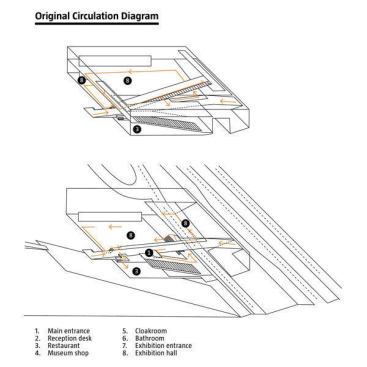
Next on the docket was the Kunsthal’s programmatic layout. “The
building is visited by many more people than we originally planned,” van
Loon says. Though the renovation brief didn’t specify an expansion of
the approximately 70,000-square-foot interior, the existing envelope
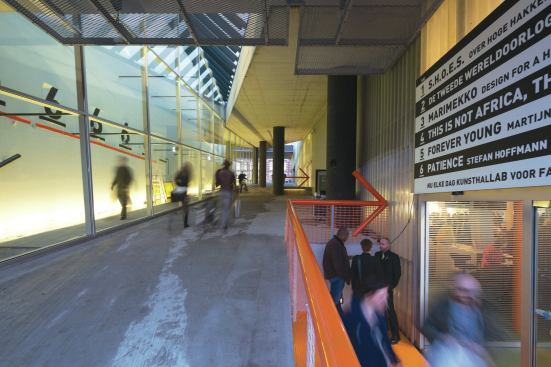
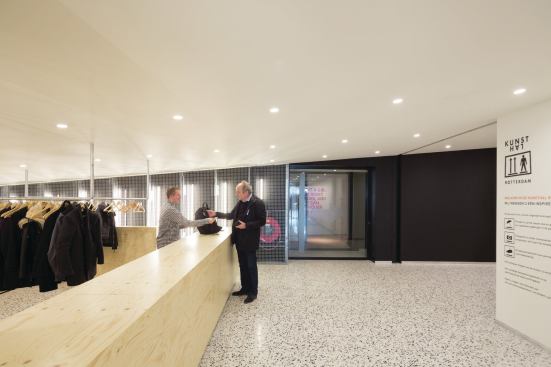
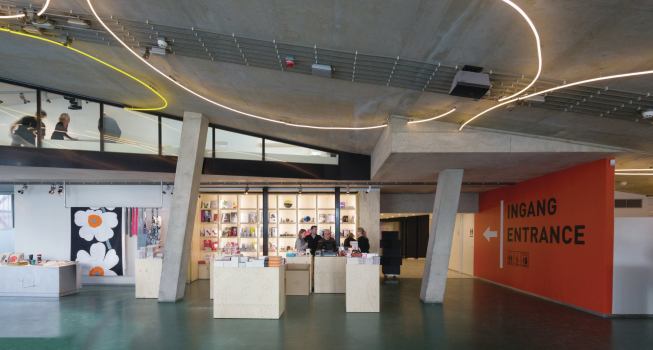
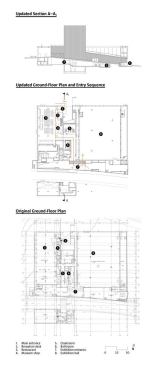
could accommodate more museumgoers. The building’s main entrance was
relocated to what was formerly the entrance to the restaurant; now
guests are steered through the café and museum shop, around a cloakroom
and restrooms, and then up and down the iconic ramps.
Along with minor shifts and partitions in the interior plan and a
revised wayfinding and signage system, the rearrangement allows
different parts of the building to be used simultaneously and discretely
by different users. This reflects in part a major shift in Dutch
society since the early ’90s: While the Kunsthal was once almost
exclusively government funded, it now has to rent out its spaces to
outside groups to generate revenue. “We basically made the building more
multifunctional,” van Loon says—an operation that is very much in line
with OMA’s functionalist philosophy.
As for security?…?well, let’s just say major changes have been made.
With the top-to-bottom refurbishment of Amsterdam’s massive Rijksmuseum
finished just last year, a lot of experts in art protection are rattling
around the Netherlands these days. OMA found a local consultant—they
declined to name which—to help ensure that the 2012 incident does not
repeat. Neither van Loon, nor anyone else, can discuss the new security
measures. “It’s confidential,” she says. Understandable.
When it comes to iconic buildings, the potential to over-tinker with
the original concept always hangs above the heads of those who are
overseeing the renovation. The Kunsthal, though, had the good fortune to
be operated upon by its own progenitors, who—as parents often
do—combined a special reverence for their creation with a frankness in
assessing its flaws.
Looking back, van Loon does see that the initial scheme left room for
improvement—but not in the way of making the museum more of a guarded
citadel. If anything, she says, the renovation has opened up the
building and made it even more of an OMA project: active, stimulating,
and full of surprises and unexpected maneuvers. “What we’ve done is
[added] these acupunctural interventions on the project to make it work
better functionally,” she says. “It’s just more flexible now, without
losing the original idea.” —Ian Volner