
Project Description
FROM THE ARCHITECTS:
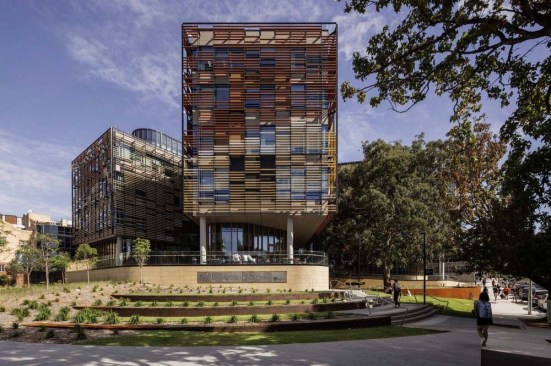
In a strategic move to consolidate its facilities across nine buildings on the Camperdown/Darlington campuses, Woods Bagot has designed the flagship home for the new University of Sydney Business School.
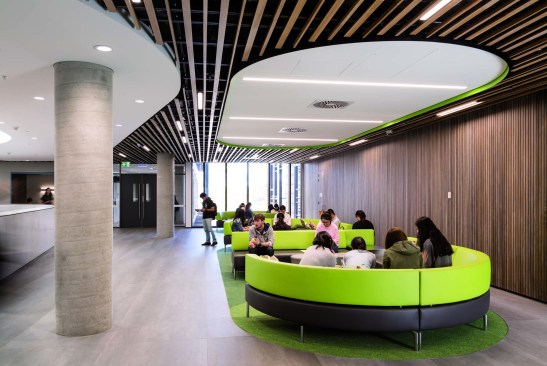
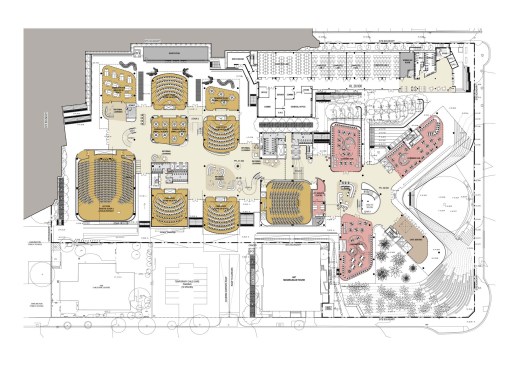
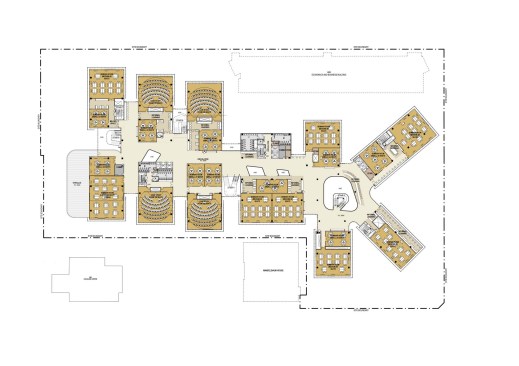
Catering to over 6,000 students, the Abercrombie precinct includes three 550-seat lecture theatres, eight 100-seat study rooms, 40 seminar rooms, a learning hub and 1,500sqm of informal learning space.
One of the main objectives of the Business School was to reshape the conventional higher education triptych of teaching, learning and research. Drawing on this goal, the vision for the project was to create a 21st century learning environment that fosters productive interactions with the business community while responding to the needs of students.
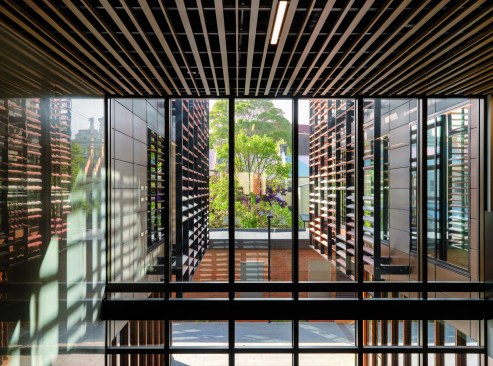
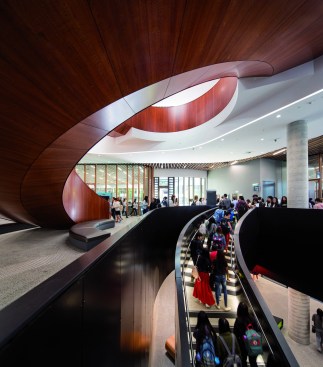
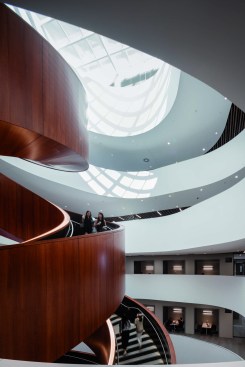
The functional floor plates provide a spectrum of learning environments positioned around a centrally-located social spine, encouraging collaboration and visual accessibility. Providing transparency and a sense of dynamism from the street to informal learning environments, the building is activated via the use of exposed stairs which link the various floors.
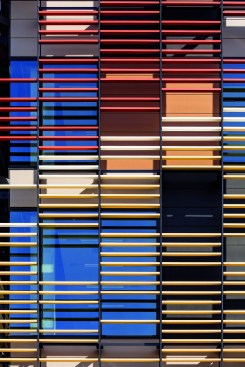
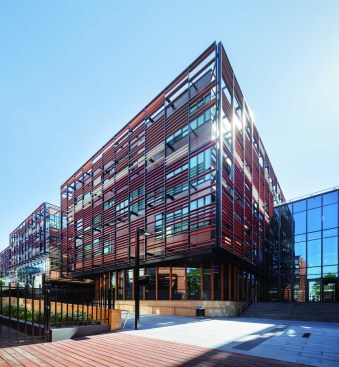
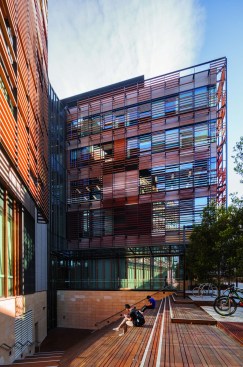
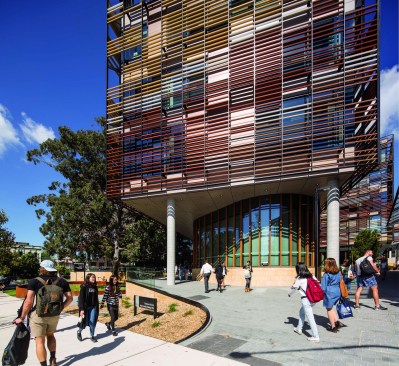
The exterior skin draws inspiration from the historic and textural character of the neighbouring Darlington terraces and the university quad. The double-skin façade system is intelligently designed to react to both the interior and exterior building adjacencies, with density and rotation of blades responding to desirable sightlines, privacy concerns and daylight penetration to study areas. In a contemporary reinterpretation of historic local sandstone, the stratification of terracotta baguettes integrates the architecture firmly within the campus aesthetic.
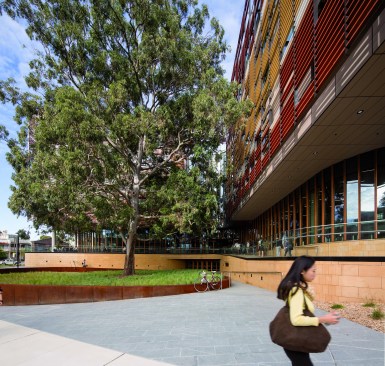
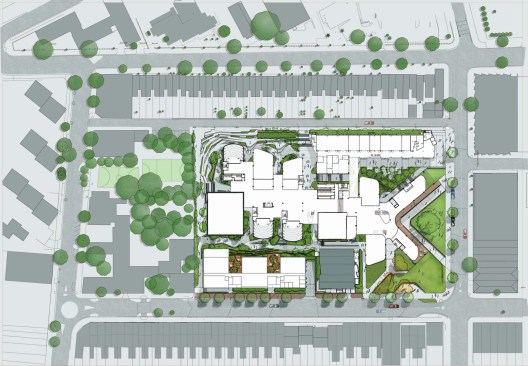
The building celebrates the presence of the existing Sydney Blue Gum on the site by establishing the hardwood tree as a central feature around which the building wraps. This strong entry statement also acts as a bold visual and physical link reaching out to the community and main campus.
Secondary entries throughout the site allow for permeability and openness to the campus and amenities. The building’s design means it is set back 11m from the property line, ensuring the retention of significant trees which, in addition to landscaped parklands, create a sense of a ‘building in the park’. The landscape concept has delivered a campus environment that supplements and connects the variety of learning and social spaces.
Presenting a new iteration of a university community, the design has facilitated a creative, collegial and collaborative learning and research environment for the next generation of global business leaders.