

Project Description
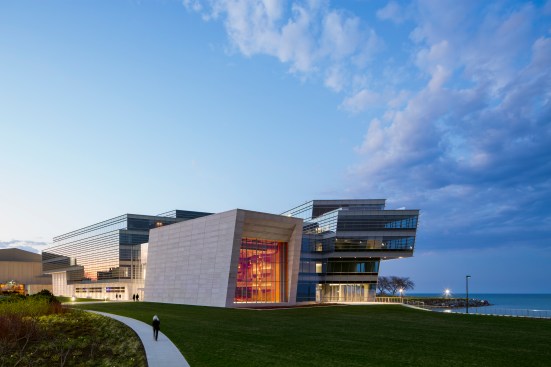
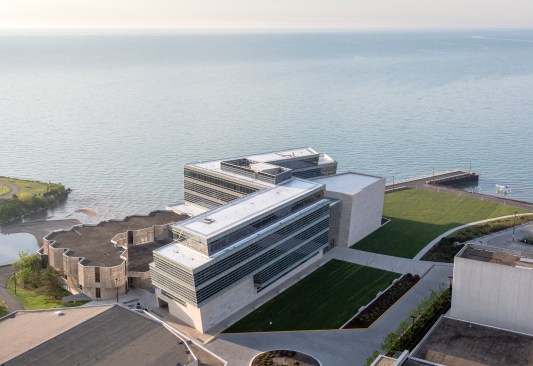
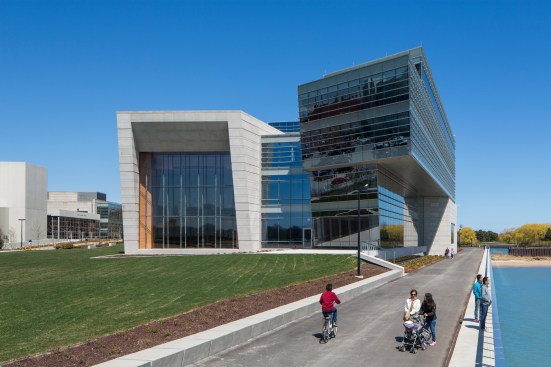
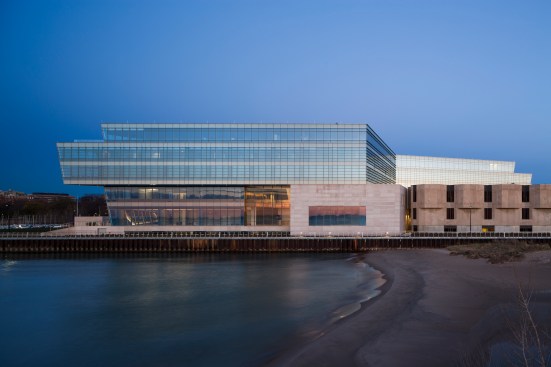
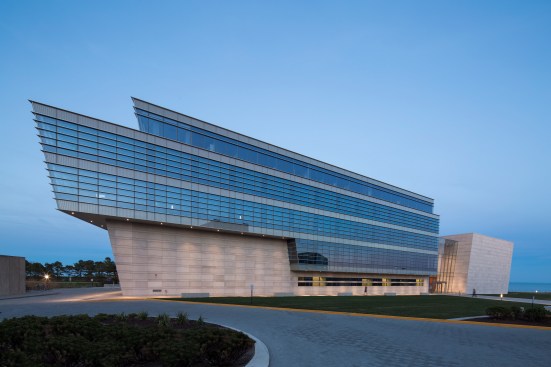
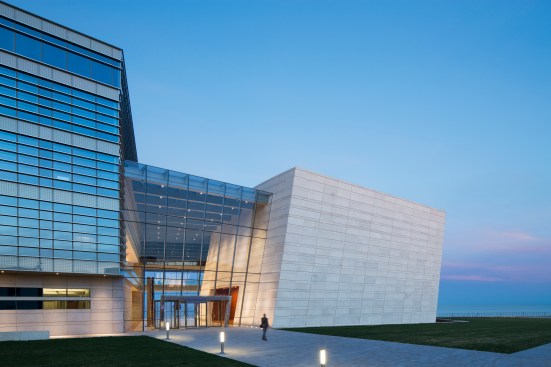
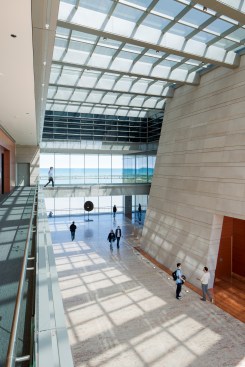
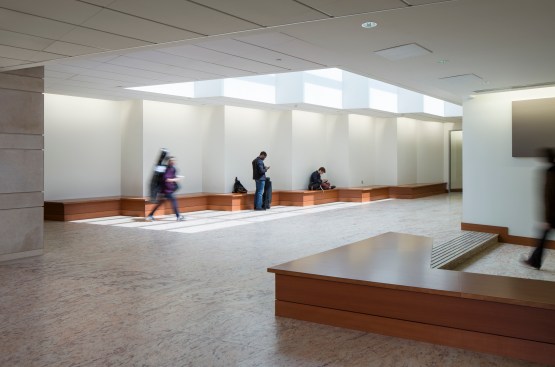
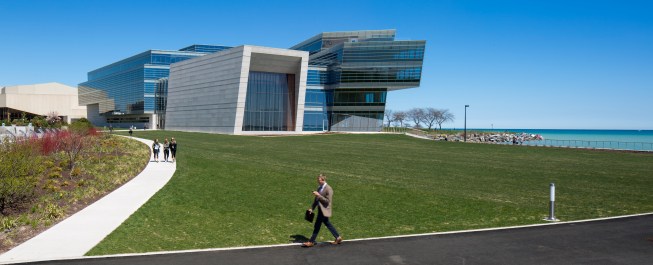
The new music and communication building is located just south of Northwestern University’s Pick-Staiger Concert Hall and Regenstein Hall of Music, on the southeastern edge of the Evanston campus. Sited on a prime parcel fronting Lake Michigan and a new arts green, the building is envisioned as a signature facility. Designed to wrap and connect with Regenstein Hall, the building enables the School of Music to consolidate its programs for the first time ever. The dynamic, Z-shaped plan of the building mass defines the eastern edge of the arts green then jogs to the western edge of the lake. A large atrium divides this form, providing the main entry and gathering space and offering clear views of the lake. Awarded LEED Gold status, the building offers a variety of innovative features including a double-skin facade and grey water system. All spaces met enormous acoustical requirements, including the opera rehearsal room and choral recital.
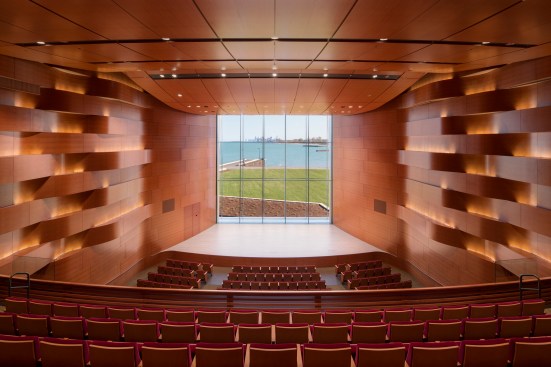
The recital hall is the building’s crown jewel. Featuring a 40-foot-high glass wall, the space sets performers against a dramatic backdrop of Lake Michigan and the Chicago skyline. The detail needed to consider the overall acoustical challenges of a monumental 42’ x 40‘ glass wall and the resultant acoustical reflections within the recital hall. The vertical supports of the glass wall are hung from above and achieve their slenderness by using highly tensioned horizontal cables that are anchored to the recital hall’s massive concrete side walls. Solar/blackout shades are hidden above the ceiling, contained within the accessible cavity so that they don’t interfere with the acoustics of the hall. The inner glass wall is tilted inward to prevent an echo from being heard by the audience. Acoustical banners can be employed inside the recital hall to fine tune the acoustics during a performance. The horizontal weaving wood ribbon panels of the recital hall were designed to absorb the sound reflections from the glass wall so that the entire room could work in harmony to create a unique vision opportunity without sacrificing acoustical performance.