

Project Description
FROM THE ARCHITECT:
The place affirms its liberty and appears free from the
barely solemn city, only defined by a nick of water and trees who crystalize
History on this very site. Nothing stands up to this geographical feature.
There, a very vivid and live passage, a bridge, and the beyond — the inner city
border, the one of links and connections.
Located East, in the Ferté Bernard, Sartre area, the Jean
d’Ormesson media library is set in a dense urban area, at the heart of the
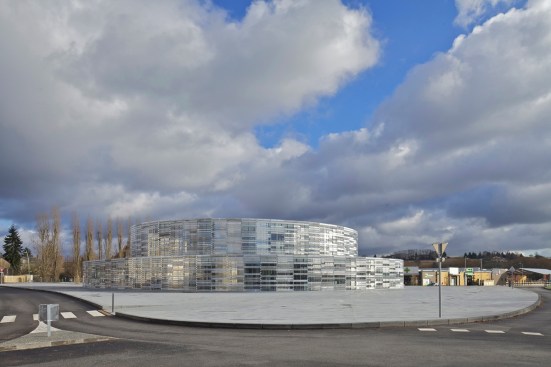
city. The 1800m² lot is situated on the edge of the old town and the river that
surrounds it.
Opposite of the old town, the outdoor activities center and
the main traffic lane gather to galvanize the nearby cycle of ongoing movement.
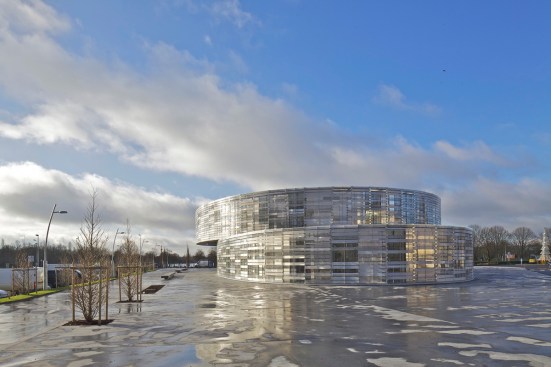
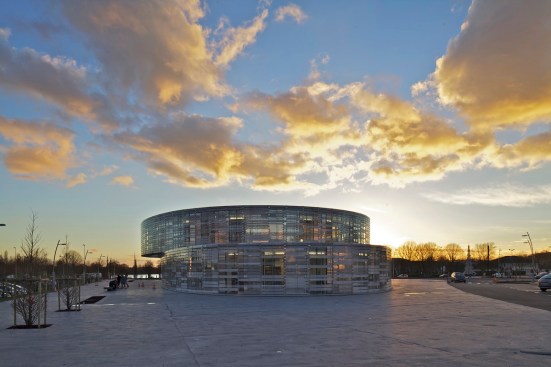
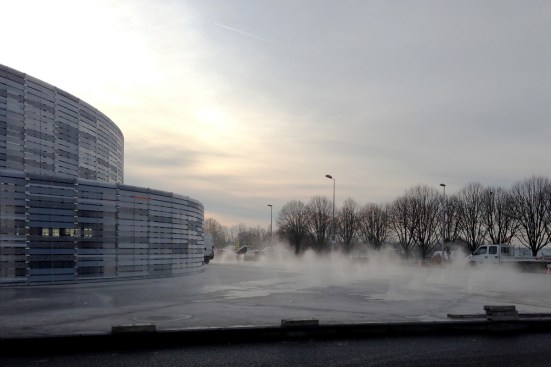
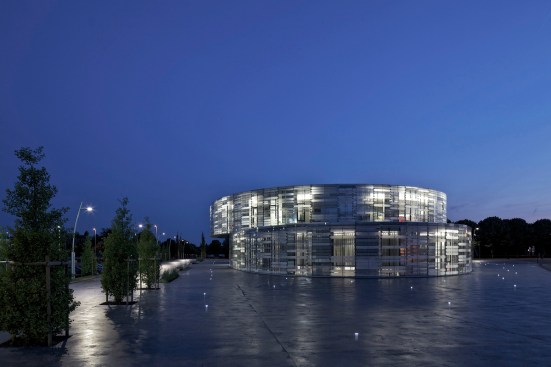
They both break the connection with the large body of water. The Media library is a delicate object, dramatized
within a subtle mist coming from the ground and transforming the forecourt into
a large mirror reminding of the surrounding water.
USE
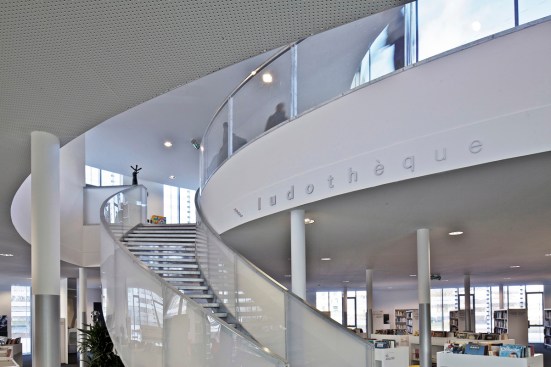
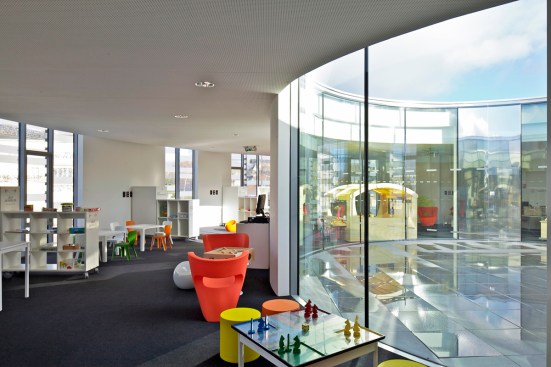
The program emanates from the coming together of two
facilities: a games library and the Médiathèque itself. The approach we offer
regarding the project’s interaction with its environment is to consider its
manifest off-site location on the edge of the old town, and to acknowledge its
cultural energy as a means of openness and modernity outwards. The accumulation
of volumes allows to connect the game library and the Médiathèque as parallel
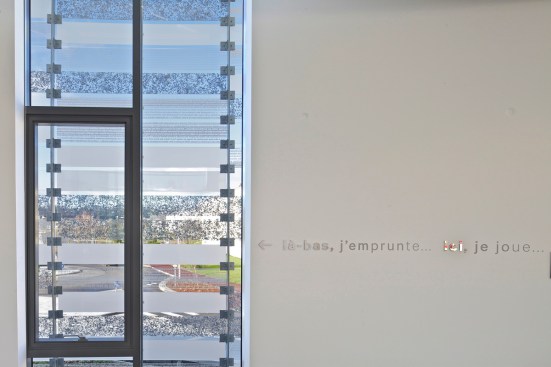
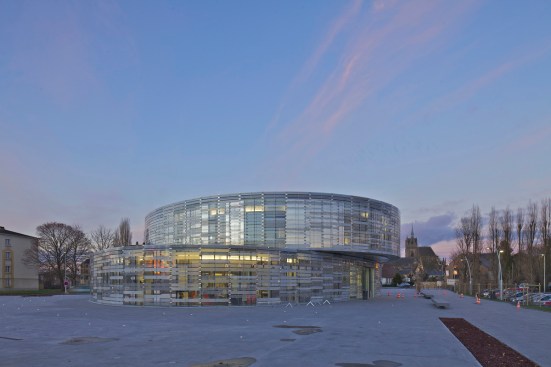
universes. The building’s wrapping is rooted in its own purpose, arrayed with textures, texts and signs, back
against reflections and light shades.
Functionalities result in a simple flowing volume, directly
connecting the program and compulsory procedures of usage. This approach allows
for a coherent integration and homogeneous landscaping of the surroundings. The
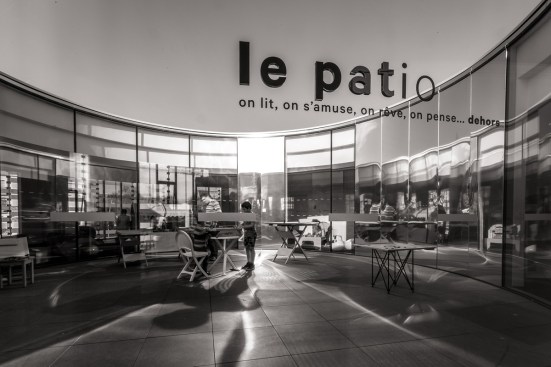
upper floor’s momentum creates a signal, and sheltered point through which one
can access to the inside. The relation to pedestrian alleys is strongly
emphasized, as their role of of connecting points of passage between
neighborhoods is essential.
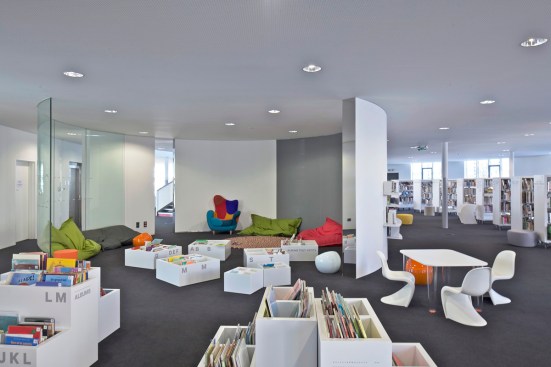
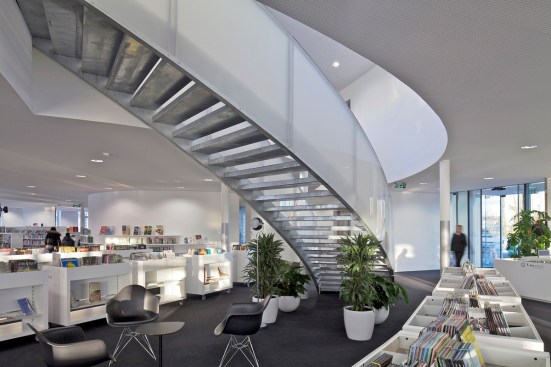
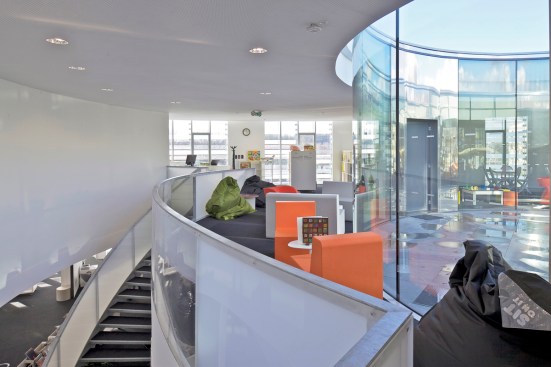
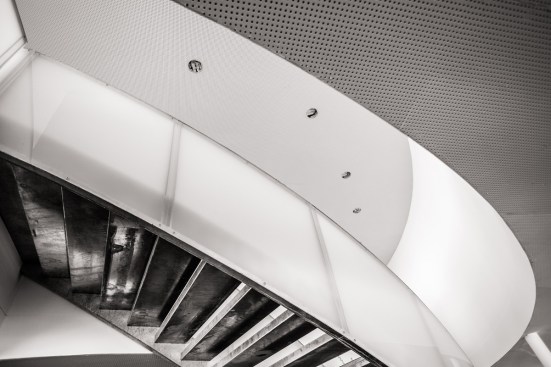
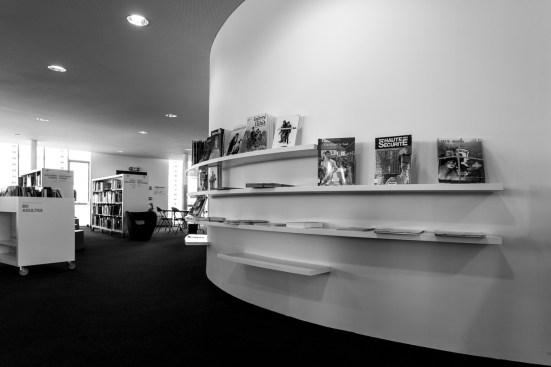
From the inside, poles are developed into a core design from
which users can move in a flexible and smooth movement. Moving around is
possible and facilitated, as it can be developed over an outlying design of in
a concentring way. Movements are interspersed with reception desks regularly
spread to stimulate dialogue over the cultural series offered by the Media
library’s team.
MATERIALS
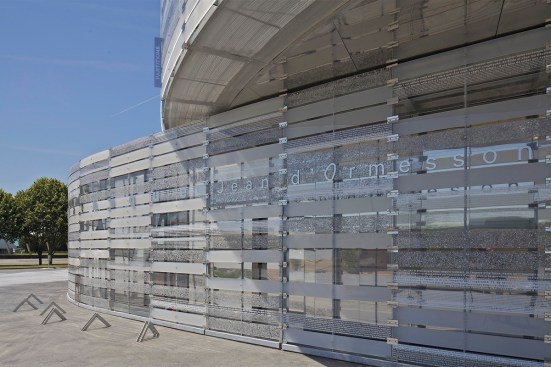
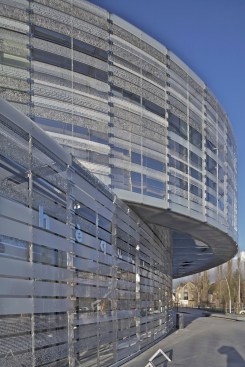
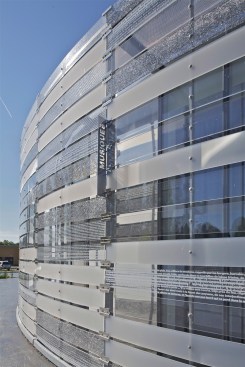
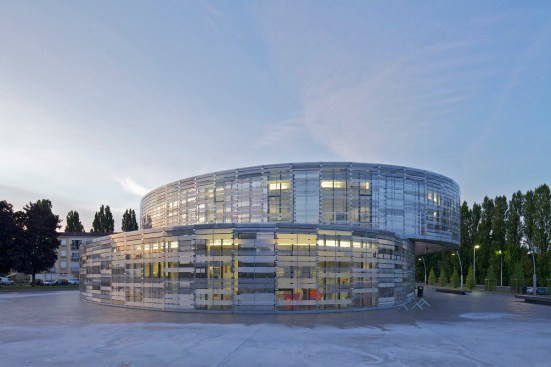
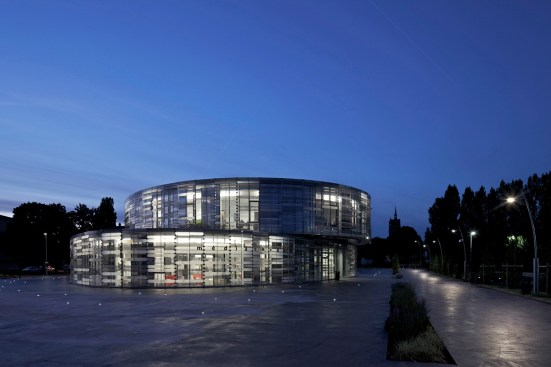
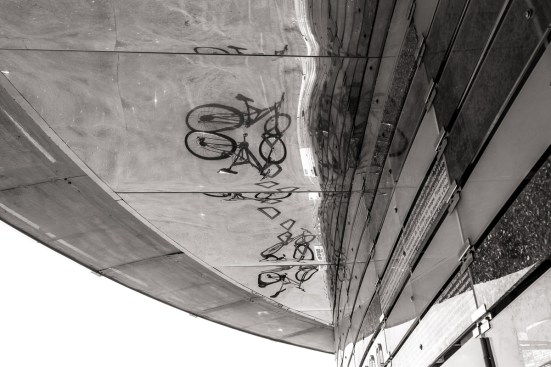
The building is a reflection of its environment. It is a
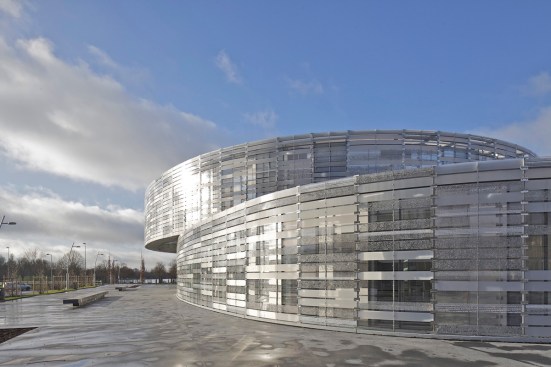
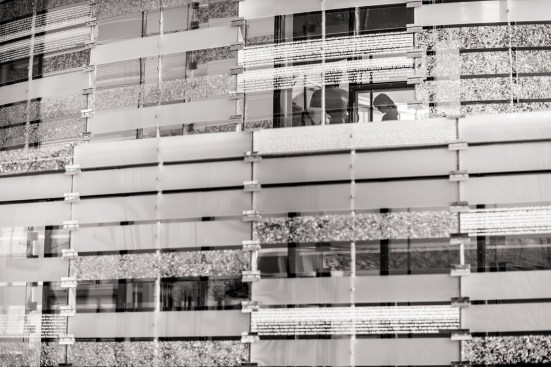
direct reaction to the site’s energy flows. The facade builds reflections to
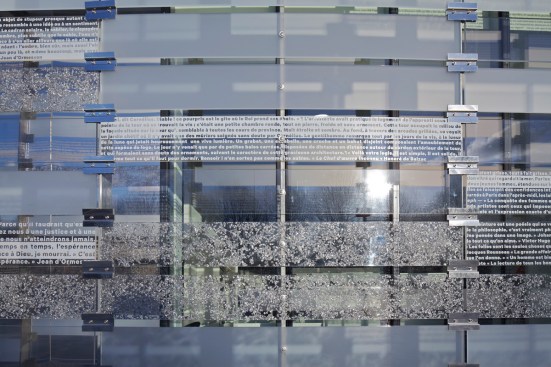
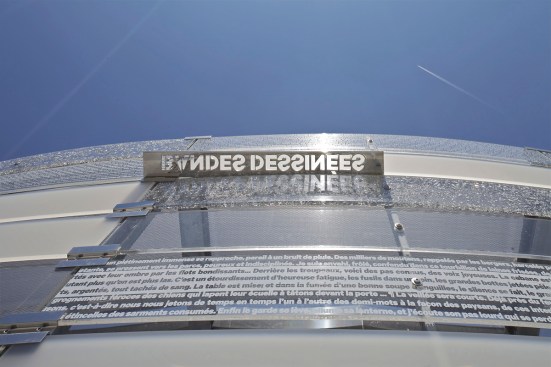
vanish behind the frontage. It is spread with signal signs that work as
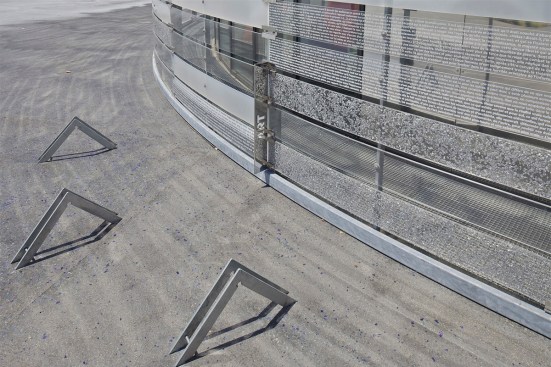
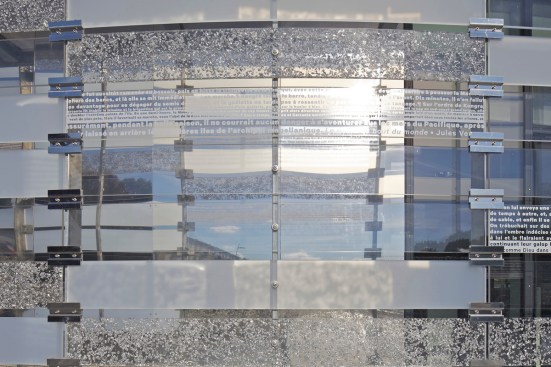
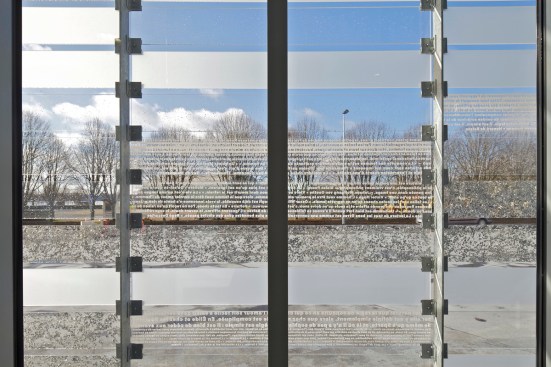
bookmarks. Entirely covered with PMMA plaques and scarcely touched with
stainless steal, the frontage plays as a blurred mirror through which we can
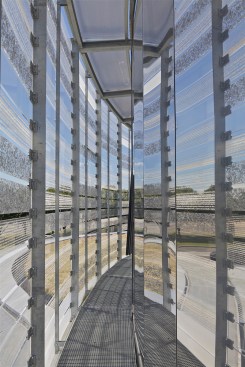
perceive the depths of stratums. It stages the direct surroundings as a lively
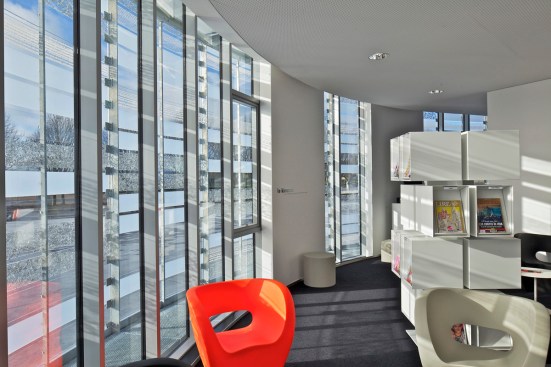
opening toward the game library and the Médiathèque, and protects the inside
against heat and glare. Transparent pads of plastic and lean open frames allow
for broad direct and numerous views. The Médiathèque’s pull is conveyed by
see-through inserts.
Its reflections and direct connection to the city and to the
various landscapes nearby link the Mediathèque to its surroundings. Moreover,
the reminder of a simile or an incomplete reflection is present throughout the
project and acts as a thread that strengthen its cohesion. Little wavy pads
contribute to the movement induced by the material, and blur the limit between
the design and its own reflection.