
Project Description
FROM THE ARCHITECTS:
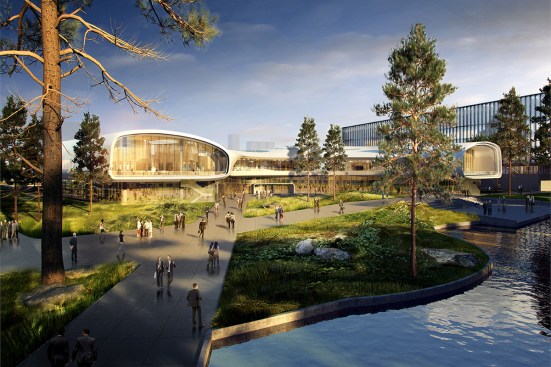
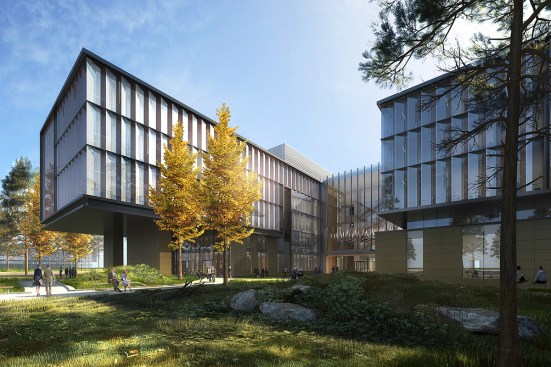
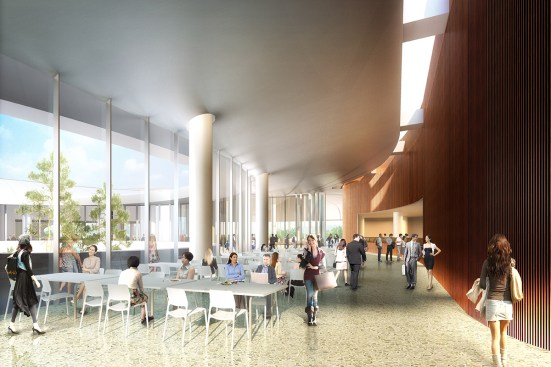
Ennead Architects’ design for the Huawei Wuhan Research Center in Wuhan, China, is set to define a twenty-first century campus for research and development that fosters interdepartmental interaction amongst employees while maximizing access to the surrounding landscape.
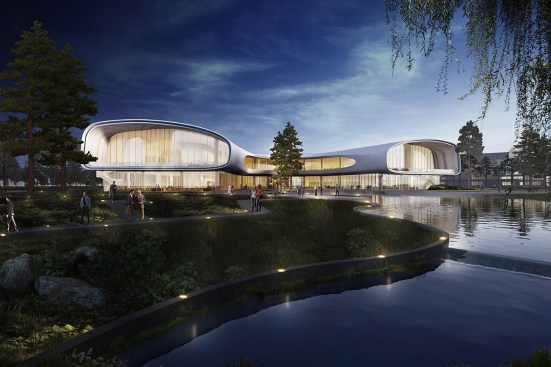
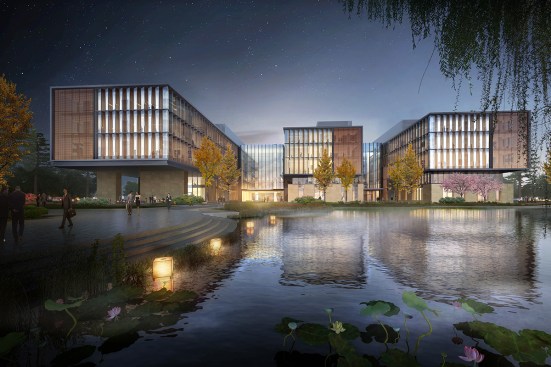
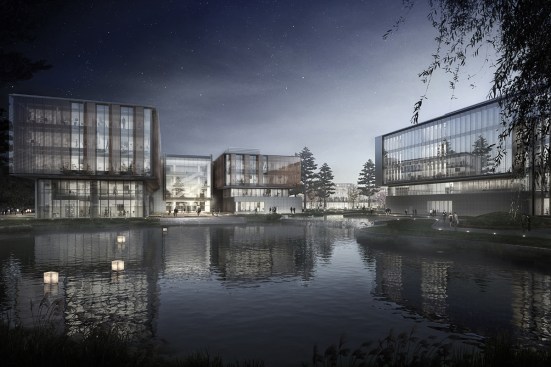
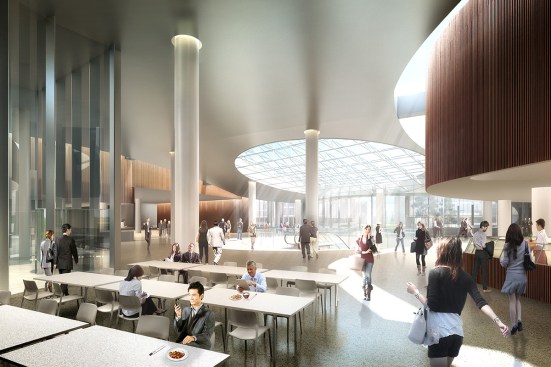
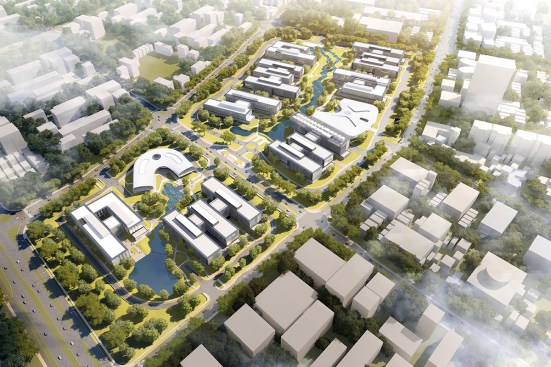
Developed for Huawei, the largest China-based networking and telecommunications equipment supplier and the second-largest supplier of mobile telecommunications infrastructure equipment in the world, the campus is comprised of eight research buildings and two canteens, arranged along a linear park space and water feature.
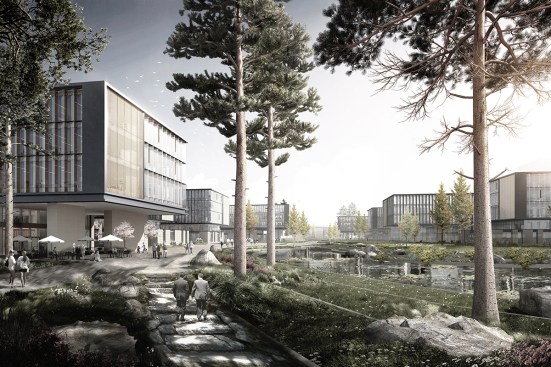
Integrated into the natural topography and landscape of the site, the design’s central valley forms a visual and active pedestrian spine. While automobile traffic is held to the site’s perimeter, all pedestrian traffic is filtered towards this central landscape. By connecting the various programs of offices, laboratories, data centers, and employee amenities, this shared landscape encourages the spontaneous interactions and productive collisions that are crucial to the development of a well-functioning research environment.
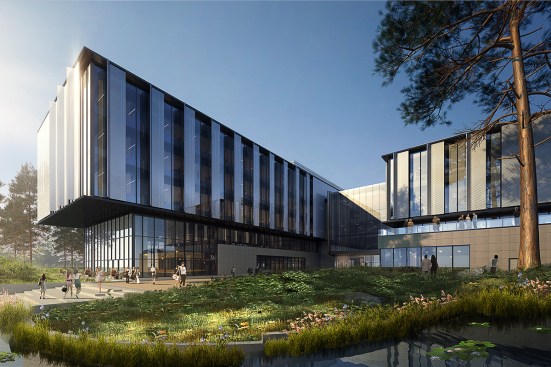
The research buildings are conceived as a simple, modular kit of parts. Each building is based on the same typical office bay, allowing the client to flexibly redistribute departments and project teams as needed throughout the campus. The research buildings are arranged in narrow linear bars, a repetitive design which creates a strong unifying visual identity, defines the edges of the campus’ central valley, and maximizes access to light, air, and landscape views from every workstation throughout the project.