
Project Description
Polycarbonate is one of those materials that can be found in just about
anything, be it a golf cart, CD, or blender. And while the construction
industry is one of the largest consumers of the polymer, it is rare to
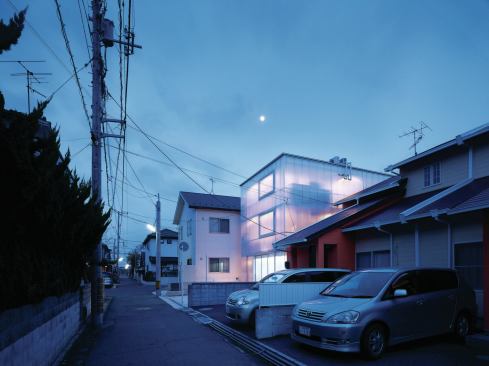
find a project that showcases it more thoroughly than the House in
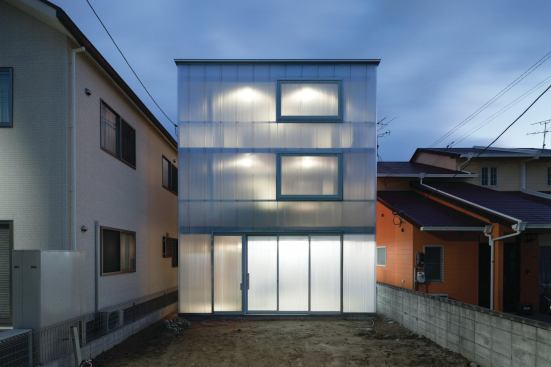
Tousuien in Hiroshima, Japan. Usually an accent panel, or the stuff of
skylights, in this house for a couple and their three children on an
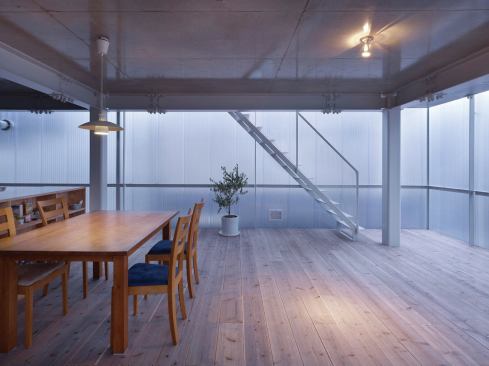
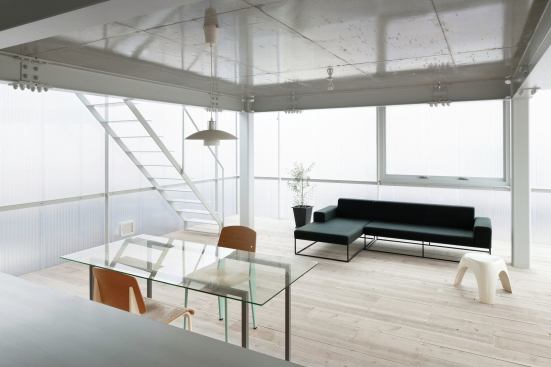
infill lot, polycarbonate essentially is the house—forming the entirety of the exterior cladding for the three-story structure.
The architects at Suppose Design Office turned to the material because
“we tried find the best materials within the budget, while keeping it
fun and creative,” says project architect Makoto Tanijiri, who founded
the Hiroshima- and Tokyo-based firm in 2000. The material was cost
effective, but also addressed other concerns that were important to the
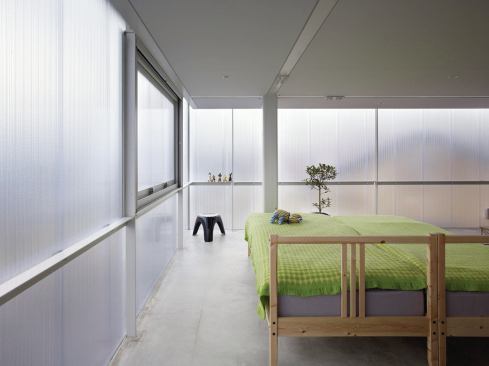
clients—in part, because “it softens natural light while providing a
sense of privacy,” Tanijiri says.
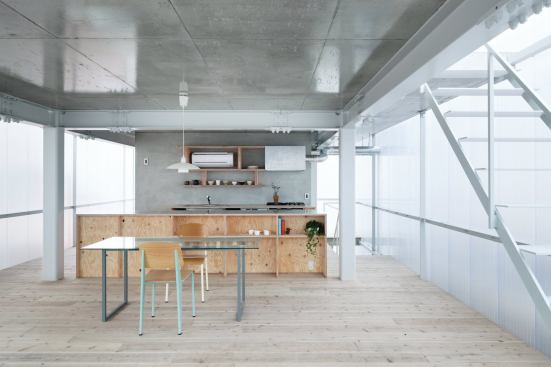
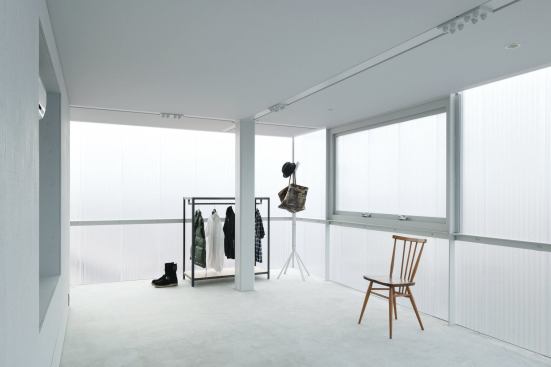
The translucent walls allow the minimalist interior—the steel structure
is lined with warm wood floors—to be flooded with ambient light, all
while screening the surrounding neighborhood from view, and shielding
activities within the house from prying eyes.
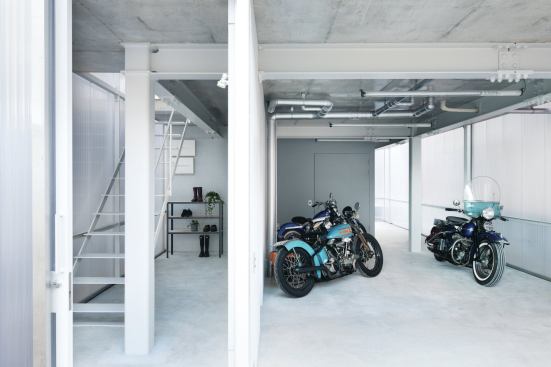
Daylight even reaches what would normally be considered back-of-house
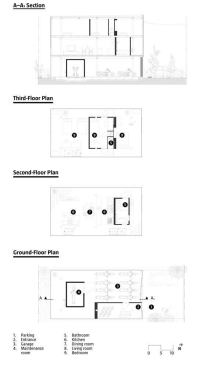
spaces: A pocket garage and front door on the ground floor open to
reveal an amply lit eight-motorcycle garage and maintenance room, and a
stairway to the main living floors above. On each of the three levels,
there is one fully enclosed room: a maintenance room in the garage, the
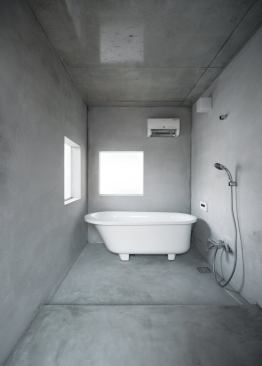
bathroom on the second level, and a child’s bedroom and bathroom on the
third. Aside from that, the plan is left largely open to maximize the
light that pours through the translucent walls.
For all its benefits, the novel wall assembly did not come without its
challenges—in this case, the installation of operable windows (outfitted
with more polycarbonate, rather than vision glass). “We had to make
sure that the window frame was properly sealed to the polycarbonate
exterior wall in order to prevent water from coming into the interior,
and from leaking to the hollow centers of the polycarbonate boards,”
Tanijiri says.
So what did the neighbors think of a polycarbonate box coming into their
quiet enclave of pitched roofs and pastel stucco? Tanijiri and his team
gave the neighbors plenty of notice, so they were prepared to “see
something different,” he says. Upside? With a glowing, translucent house
on their block, no one will lose their way home again. —Katie Gerfen