

Project Description
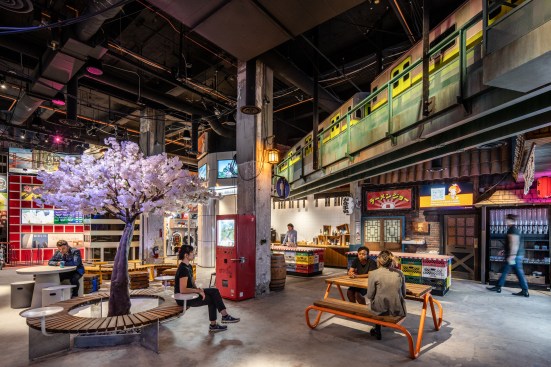
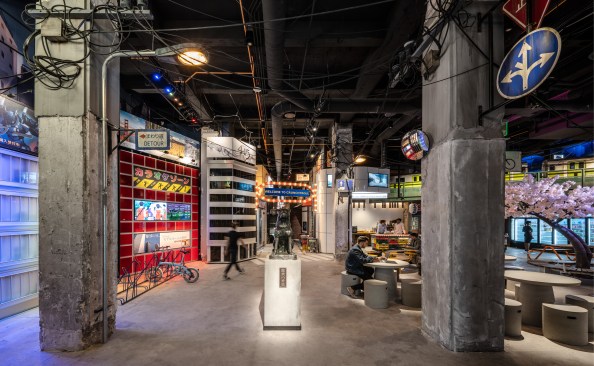
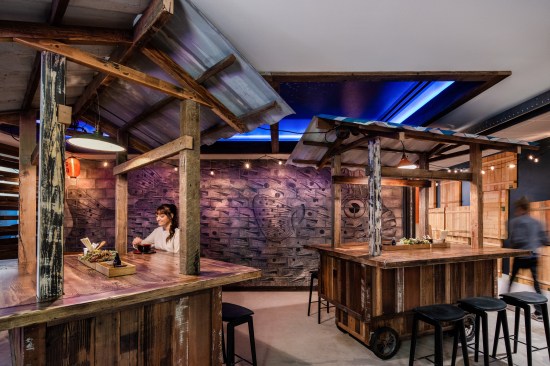
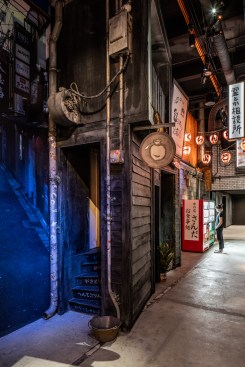
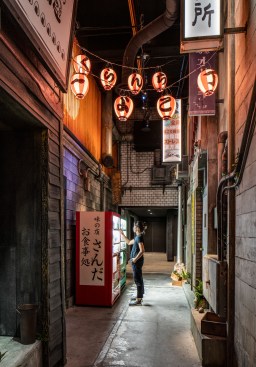
The heart of the 80,000 square foot Crunchyroll San Francisco Headquarters project is the lobby space. From the beginning our client said: “I want people to step through the front doors into downtown Tokyo.” We were immediately inspired to push beyond just graphics and hints of a Tokyo “theme” and give people an authentic experience of walking the streets of a hyper-stylized city. There were challenges to this approach, to say the least. But with our interdisciplinary in-house team of designers, artists, engineers, and master fabricators, we were ready to give it our best effort.
When we began the project, the lobby was a massive, empty, windowless basement with 20’ ceilings, strange dark corners, and exposed mechanical systems. We knew that in order to achieve our design goals we would have to break up the space, introduce angles and layers to the floor plan and create intriguing compositions and viewpoints. We would also have to build on the work that the architect of record (Salas O’Brien) had already done to program the space.
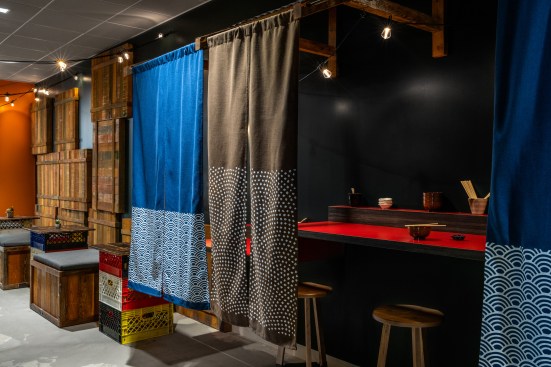
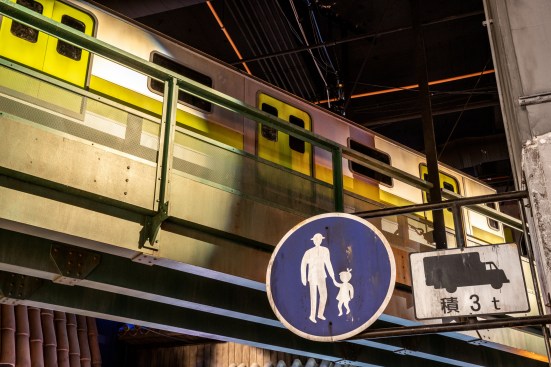
Now that it’s complete, every moment in the Crunchyroll lobby introduces something new, just like a walk through an unfamiliar city. Around one corner, there’s a retro godzilla billboard with hand-painted lettering; down a dim alleyway there’s a storefront with Crunchyroll merch; look up and beyond a tangle of power lines and street signs there’s a commuter train suspended overhead. After we built and installed all these elements, we unleashed our in-house team of scenic painters to “dirty it up,” so that everything looks and feels real, worn, and lived in.
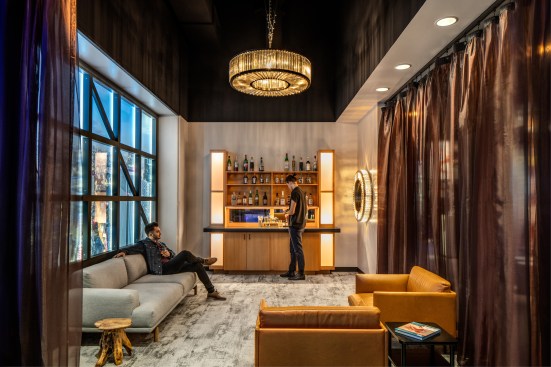
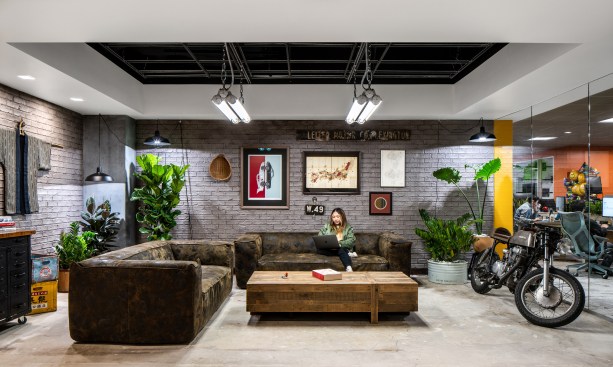
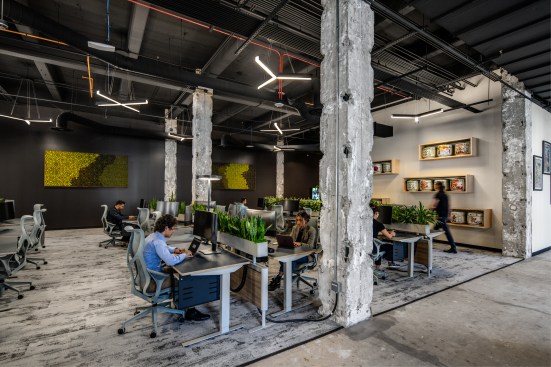
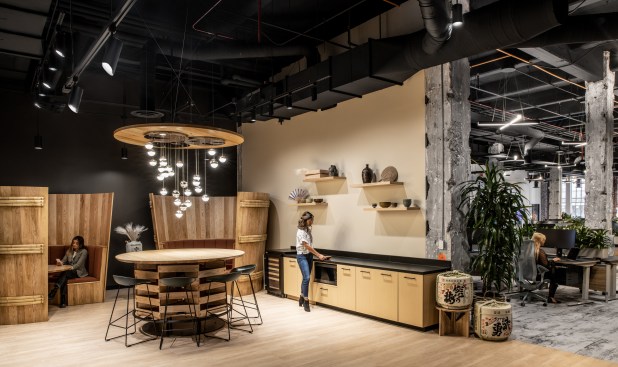
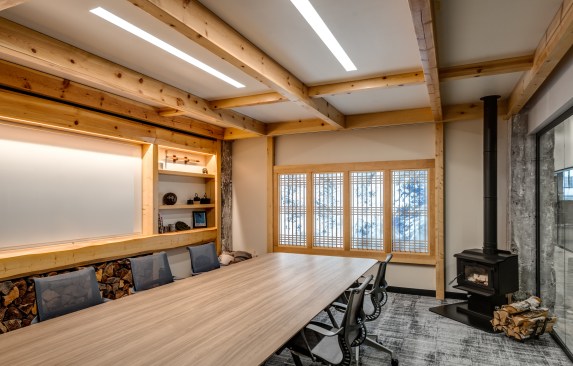
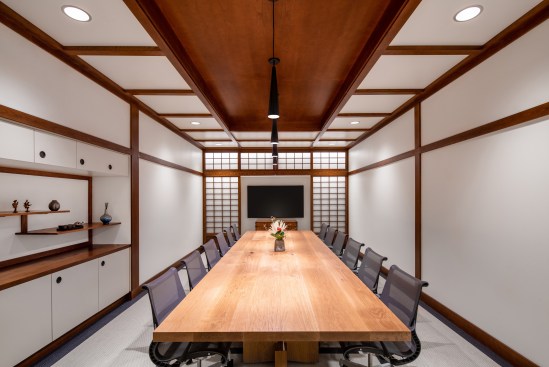
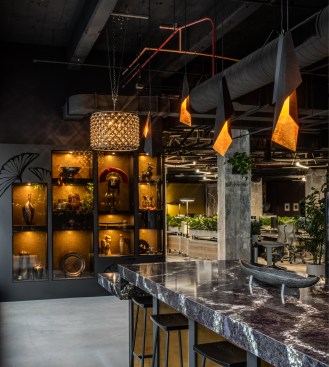
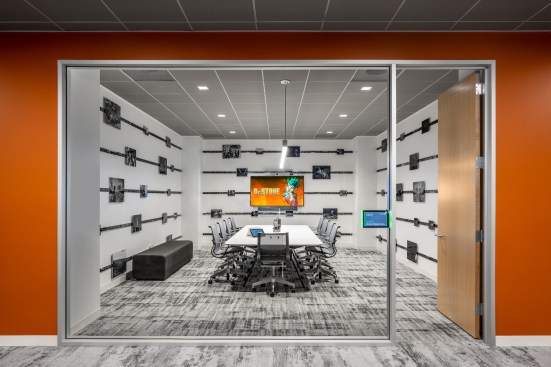
It was essential to us that every space throughout the building felt equally thoughtfully conceived, but still distinct from anywhere else; like a walk through a new city, the building reveals itself as one moves through it, but each new vista contributes to an understanding of a bigger and more coherent space. To guide the aesthetics of this project, we created a distinct mood/vision for each floor, each rooted in a different cultural aspect of Japanese life and used that to inform the themes of all the spaces, the color palettes, finishes, lighting schemes and plant design.
The Crunchyroll project embodies the idea that a company’s cultural identity can (and should) go far beyond simple color schemes and logos on the walls. By investing in the design of their offices, companies can also invest in the mental health and well-being of their employees. We believe companies should create workplaces that are utterly unique to their culture, and unmistakable as belonging to no other place in “corporate america.” It should be clear through the physical design of the space that the employees are valued and that their time in that office can only exist in that location. This approach is the antithesis to the “work from anywhere” movement; since people are now working in all kinds of remote capacities, a physical, built space should support being present and should bolster a coherent company culture.