


Project Description
The Bendigo Law Courts—a newly completed project in Bendigo, Australia—is setting the standard for civic works that remain sensitive to the communities they serve.
Designed by Australian firm Wardle, the project’s architect of record, the state-of-the-art building is a response to changing community needs, such as the desire for a modernized, sustainable site. The design also incorporates the culture of the Dja Dja Wurrung people, the traditional owners of the land, who provided architects with the opportunity to learn about the importance of cultural lore throughout the building’s design and construction process. “We recognize that justice environments and First Nations involvement is complex, and we developed a relationship with the stakeholders, the Dja Dja Wurrung,” Wardle partner and project director Meaghan Dwyer says.
The former Bendigo courts, the heritage-listed Pall Mall Courts, were no longer able to meet accessibility and safety standards. While the structure still stands, Court Services Victoria is currently working with the community to determine a new use for it. Meanwhile, the $152 million AUD development of the newly built courts, which opened in February 2023 after more than five years of construction, marks an important moment in people-centered justice services. In addition to providing a range of court services—including a specialty Koori court for Aboriginal peoples like the Dja Dja Wurrung—the Bendigo Law Courts are part of renewed civic development in the area, sponsored by the Victorian government, which aims to bolster the local economy. Other recent works include the GovHub, a centralized place for government services that underwent a $90 million renovation, and the TAFE campus, a technical college now with refurbished heritage buildings, a life skills lab, an Indigenous education center, and more after a $60 million revitalization.
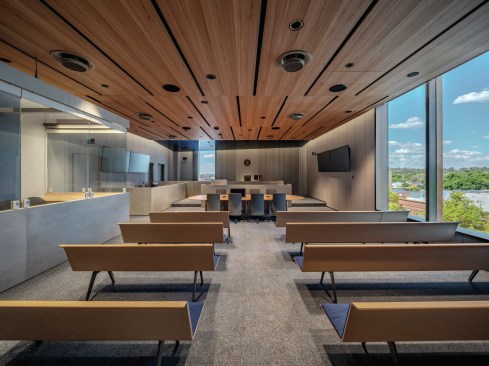
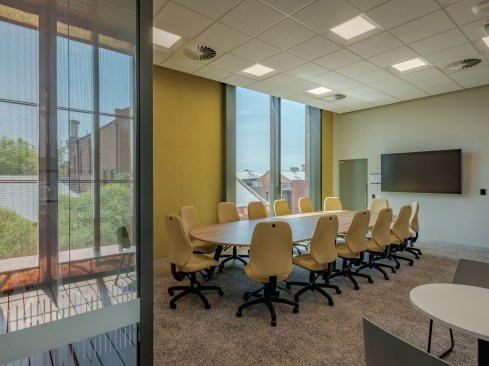
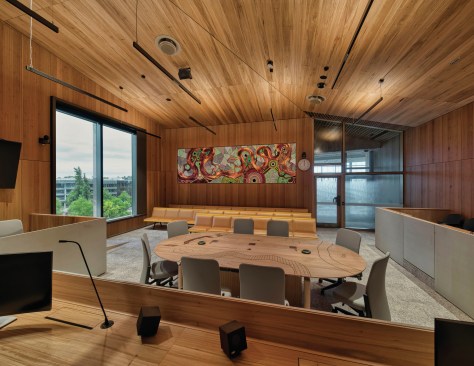
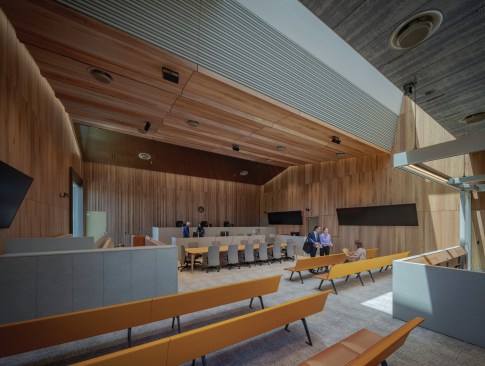
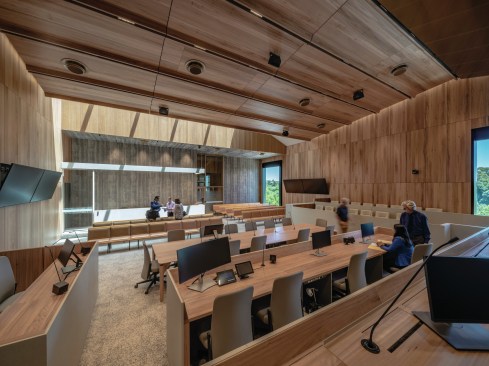
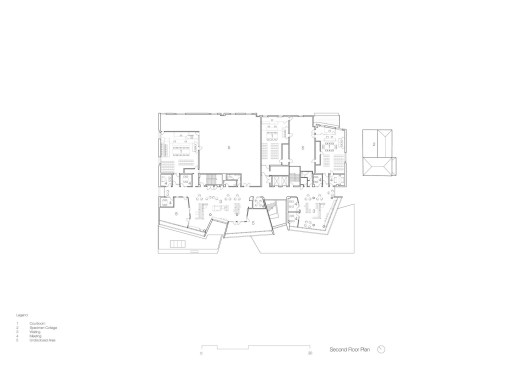
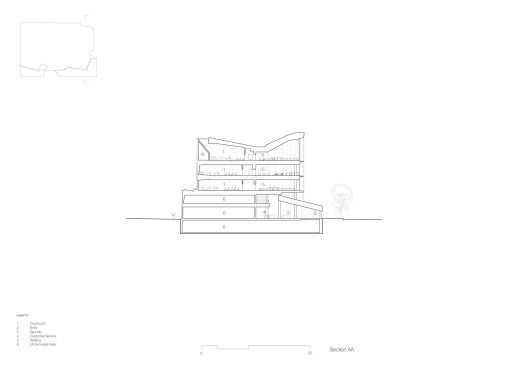
The five-level Bendigo Law Courts building features nine courtrooms, two hearing rooms, meditation suites, as well as remote-witness facilities, specialist courts, and key service agencies. It houses the Magistrates’ Court; the Children’s Court of Victoria; the Koori Court, available for the first time in the region; the Victoria Aboriginal Legal Service; and a specialist Family-Violence Court, designed with safe waiting areas and separate walkways for defendants and staff. Plus, the court will service the Victorian Civil and Administrative Tribune, the County Court of Victoria, the Federal Circuit Court, and the Supreme Court of Victoria on a circuit basis. “Over 200 stakeholder sessions were undertaken through the project phases by both client and design team,” Dwyer remarks.
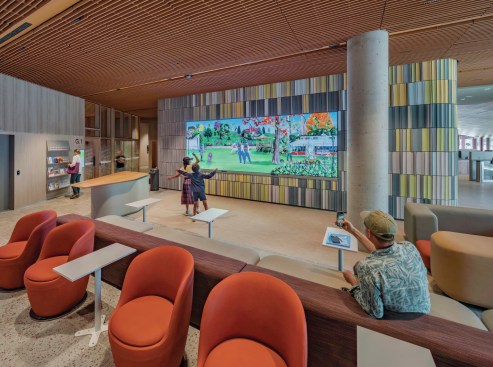
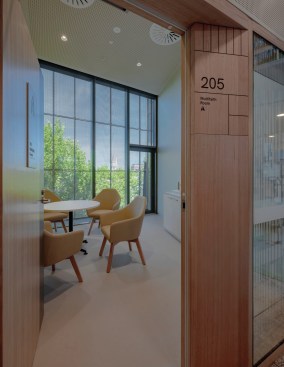
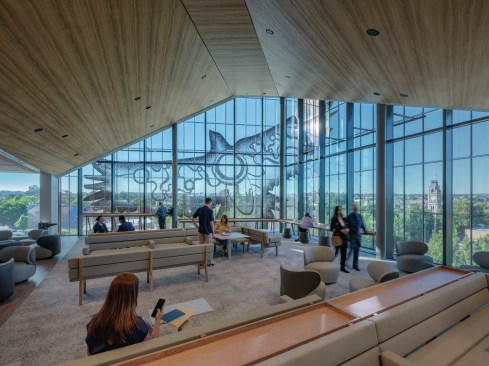
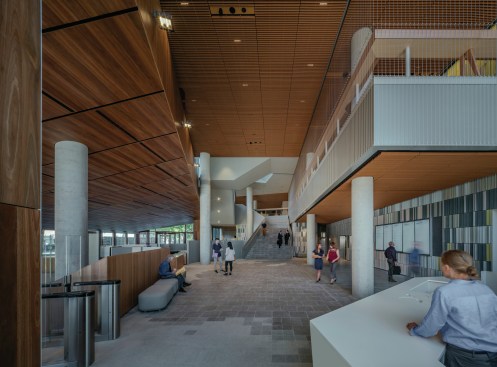
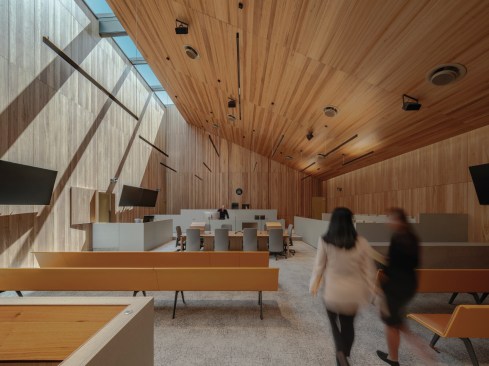
In addition to the court’s ability to house such facilities, Dwyer and other members of the Wardle team planned for a design that evokes a sense of tranquility while drawing connections to the area’s cultural heritage with a palette representing Indigenous vegetation such as kangaroo grass, yam daisy, bluebell, and ironbark. “We’ve recognized that attending court can be a stressful experience,” Dwyer says. The selection of soothing natural tones and textures, the framed scenic outlets, the secure terraces, the extensive use of interior timber, and the appropriately scaled spaces not only support daily court activities but are “intuitive and legible,” she adds.
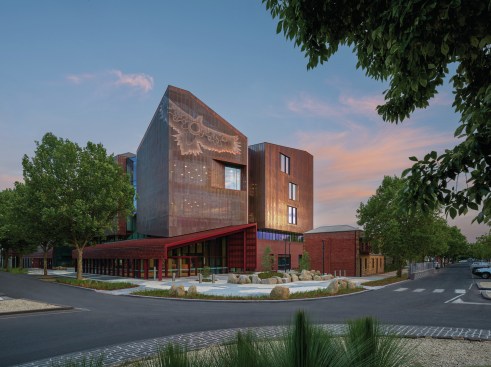
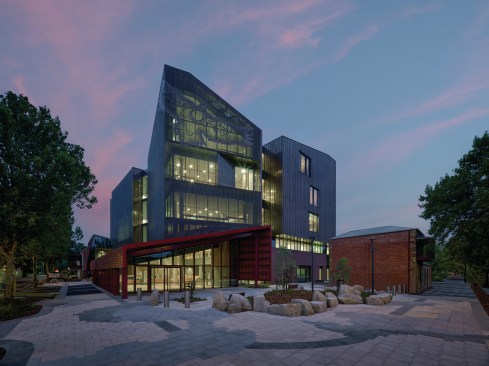
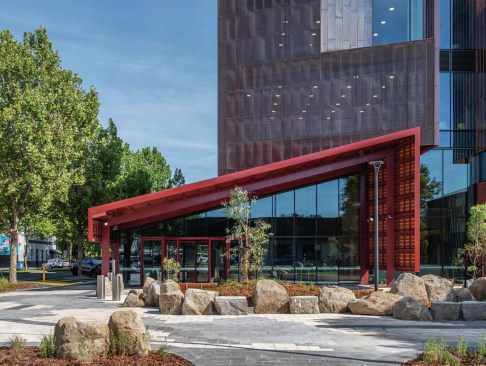
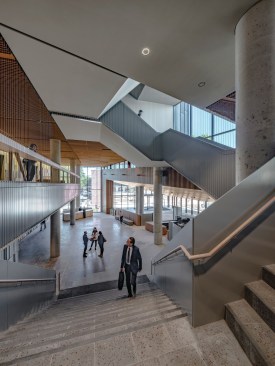
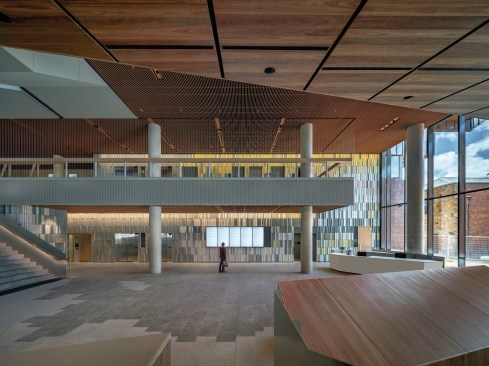
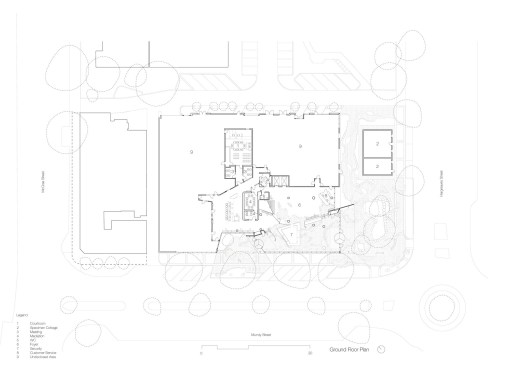
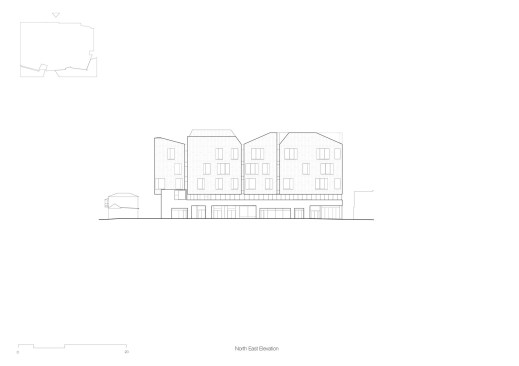
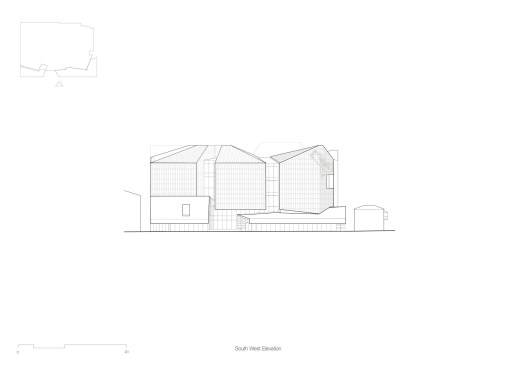
A clear entryway, plenty of natural light including light wells within court rooms, and digital kiosks showcasing court locations provide a modernized composition, while the floor plan is broken into two distinct strands. “This can be read from the exterior through the use of a perforated copper veil to the public waiting areas and a solid copper façade with punched windows where the courtrooms are located,” Dwyer explains. “Court buildings are complex in their spatial planning and requirement for the separation of users and user pathways.”
Furthermore, an expansive wedge-tailed eagle art piece, nearly 30-feet-high and 50-feet-wide, from Dja Dja Wurrung and Boon Wurrung (another Aboriginal group native to Melbourne, Australia) artist Racquel Kerr envelops the copper-clad façade. The creature, which represents the spirit Bunjil, acts as a protective figure to all who enter the building. Dja Dja Wurrung culture was also considered in the landscaping from Melbourne–based Aspect Studios, which worked closely with representatives from Djaara, the Dja Dja Wurrung Clans Aboriginal Corporation. The team built a front courtyard featuring native greenery and water features to symbolize a traditional smoking ceremony with weaving pavers bringing in good spirits and releasing bad spirits. “Engaging with the site’s built and cultural heritage, the building becomes part of and for the community,” Dwyer says.
While the building effectively provides court services, it’s also environmentally friendly with rooftop photovoltaics helping to ensure net-zero-energy status and a 6-star rating from Green Star Buildings, Australia’s leading rating tool for new construction. “We understand sustainability can be achieved through an operational and design perspective, and creating not only a safe and secure court building, but a sustainable one was one of our key design principles,” Dwyer concludes.
PROJECT CREDITS
Project: Bendigo Law Courts. Bendigo, Australia
Architect: Wardle, Sydney and Melbourne, Australia. Meaghan Dwyer (project director); John Wardle (design director); James Loder (design leader); Kah Fai Lee (project leader); Megan Darbyshire and Will Rogers (project architects); Sharon Crabb and Jeff Arnold (interior designers); Stefan Mee and Kristina Levenko (design architects); David Churcher and Michael McMahon (graduates of architecture); Barry Hayes (façade leader); Allan Burrows, Ariani Anwar, Patrick Bullen, Alan Ting, Nicola Bowman, Stephanie Pahnis, Maya Borjesson, and Anna Caish (architects); Adam Kolsrud (structural lead); Stuart Mann (documenter)
Mechanical Engineer: Introba
Structural Engineer: WSP
Electrical Engineer: Introba
Civil Engineer: WSP
General Contractor: Kane Nicholson (KNJV)
Landscape Architect: Aspect Studios
Façade Engineer: Meinhardt Bonacci
Planning: Urbis
Sustainability (ESD) consultancy: Introba
Building Surveyor: PLP
Accessibility Consultant: Morris Goding
Acoustic Consultant: Marshall Day
Heritage Architects: RBA
Signage and Wayfinding: Buro North
Traffic and Pedestrian Modelling: WSP
Threat analysis: Arup
Archaeological & Indigenous Consultant: Andrew Long & Associates
Peer review: Bower Architects
MATERIALS AND SOURCES
Acoustical System: Fabritrak System with Kvadrat Fabrics assembled by Jacaranda Industries
Bathroom Fixtures: Caroma
Carpet: Milliken-Ontera
Cabinets: Jacaranda Industries
Ceilings: Siniat; Instyle; Timberwood Panels / Fethers Celupal fabricated by Jacaranda Industries
Concrete: Caelli Constructions
Countertops: Corian; Pyrenees Quarries
Exterior Wall Systems: CASA Group; ARC Roofing and Cladding; Austral Bricks
Fabrics and Finishes: Kvadrat; Forbo; Woven Image; Instyle
Flooring: Horizon International; Forbo
Furniture: Stylecraft; K Five (Karl Andersson); Unifor (Vitra); Zenith; Planex; Schiavello; Living Edge
Glass: Viridian Glass
Gypsum: Siniat
Insulation: Knauf; Kingspan
Kitchen fixtures: Fisher & Paykel
Lighting: Various, including iGuzzini and Bluelab Design
Masonry and Stone: Krause Bricks; Pyrenees Quarries
Metal: CASA Group
Paints and Finishes: Dulux EnvirO2
Photovoltaics or other Renewables: Rooftop photovoltaics
Roofing: CASA Group; ARC Roofing and Cladding
Site and Landscape Products: Urbanstone
Structural System: Post-tensioned reinforced concrete slabs with a combination of in-situ and precast columns
Wallcoverings: Bendigo Pottery custom polychromatic ceramic tiles with Simon Lloyd (foyer feature wall); Timberwood Panels / Fethers Celupal fabricated by Jacaranda Industries
Windows and Doors: ABS Facades; Dormakaba hardware
This article has been updated.