
Project Description
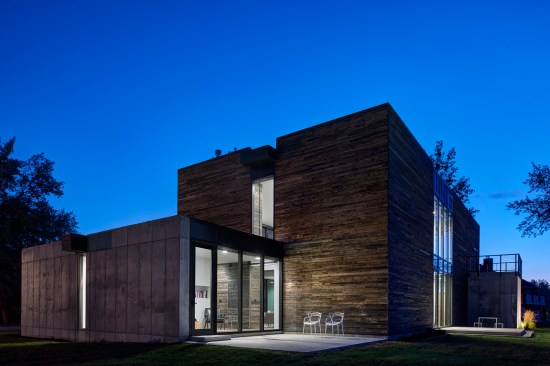
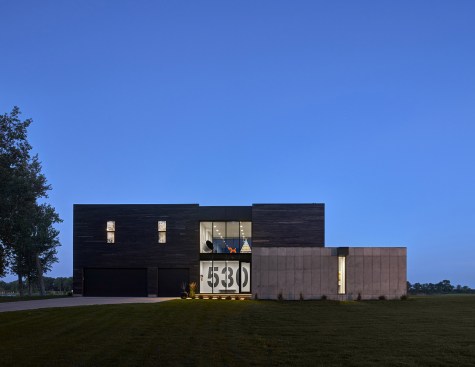
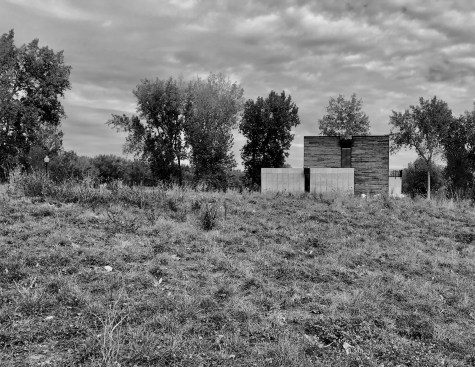
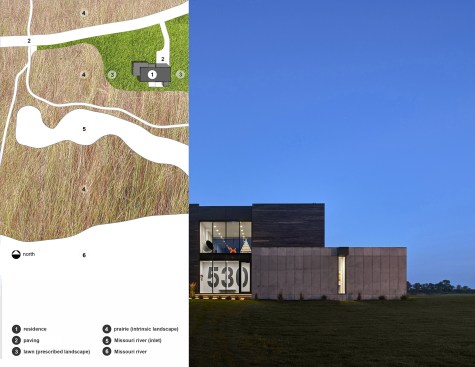
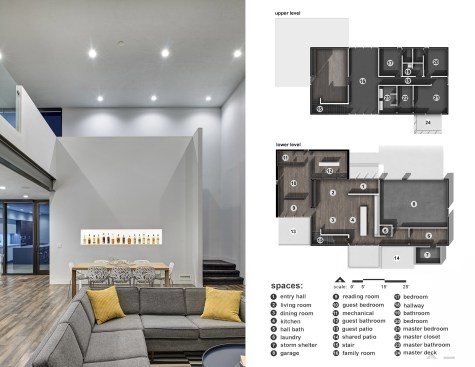
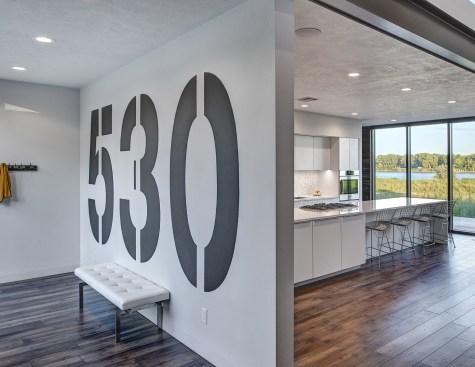
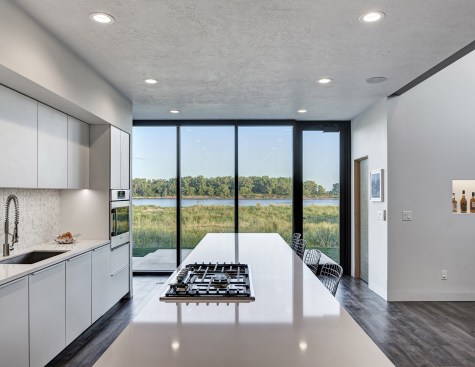
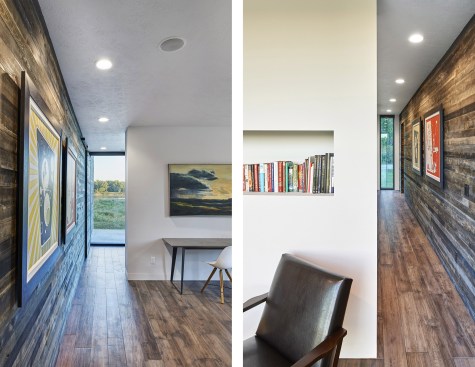
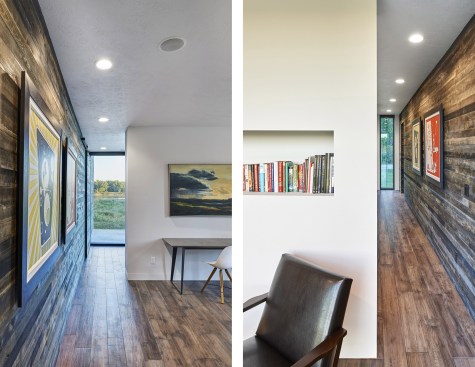
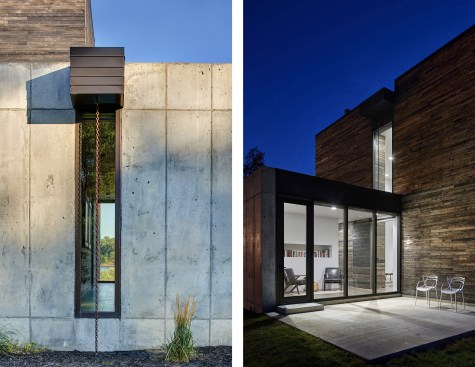
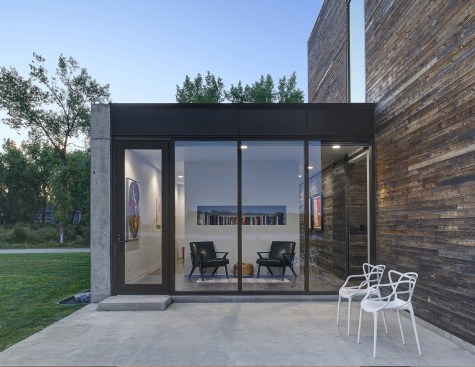
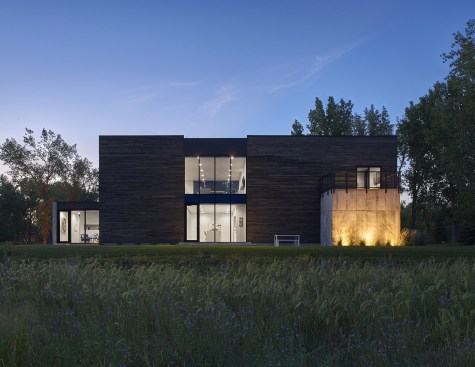
The home was designed to be welcoming to guests while maintaining privacy for the young family of four, while simultaneously connecting to and disconnecting from its riverfront site. The opposing programmatic needs resulted in a design parti of contrasts. Family vs. Guests Sectionally, the home provides for separate but connected user spaces. Family spaces are located at the upper level at the east, guest spaces are located at the lower level at the west, and shared spaces such as the kitchen and great room are in the center connecting family and guest spaces vertically. In plan the home’s few envelope undulations provide for visual privacy between family and guest spaces at the exterior. Transparent vs. Opaque At one level the home is about viewing the site, while in an interesting dichotomy, at dusk the viewing rooms become the viewed rooms from the site. A parti was developed determining which areas have large windows and which have smaller windows and which have none. There is a direct correlation between how public or private a space or activity is and how transparent or opaque the building skin is. Natural vs. Manicured In terms of the site, vegetation consists of sharply contrasting manicured lawn with revitalized prairie. This configuration allows for a connection to the natural environment while supporting lawn-based activities for the family. The skin of the home contrasts highly machined materials like aluminum-framed glass against less-but-still-machined materials like knotty-cedar. The home’s parti of contrasts serves to simultaneously connect to and escape from its context and user groups as desired.