

Project Description
FROM THE ARCHITECTS:
The Urumqi Garden of the 11th China International Horticultural Expo was Lab D+H's first built garden expo project. With the sudden boom of the garden expo in China recently, local gardens that represent individual cities tend to be stereotyped to miniature landscapes or traditional gardens of local landscapes. Keeping this in mind, Lab D+H participated in the competition at Urumqi Garden with a reflection perspective and won the 1st place. The garden was finished and opened to the public after a tight construction schedule.
The Garden
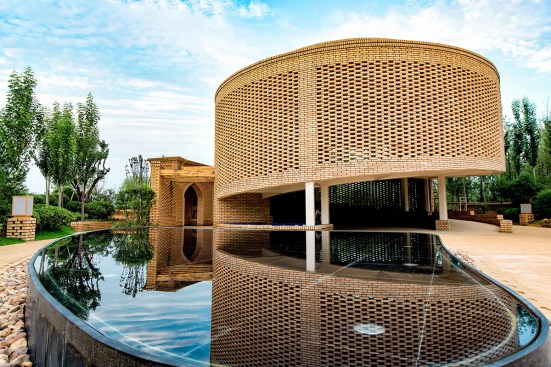
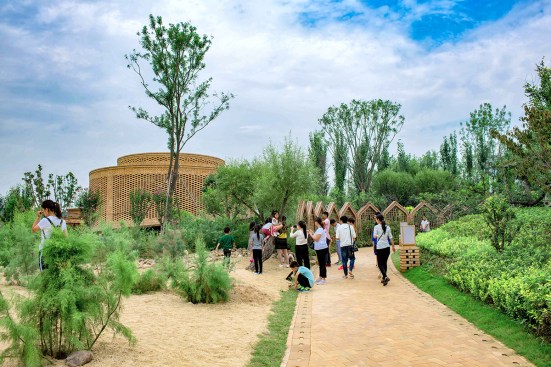
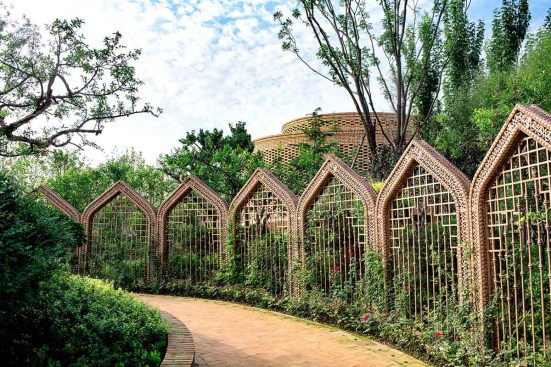
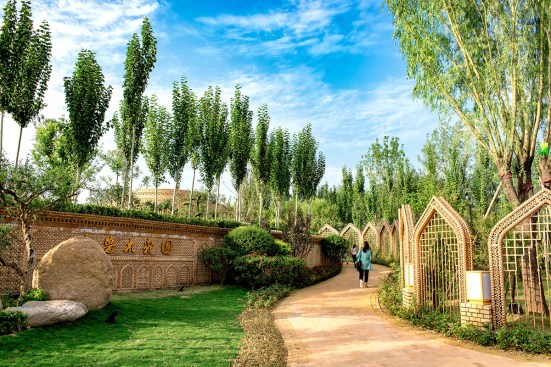
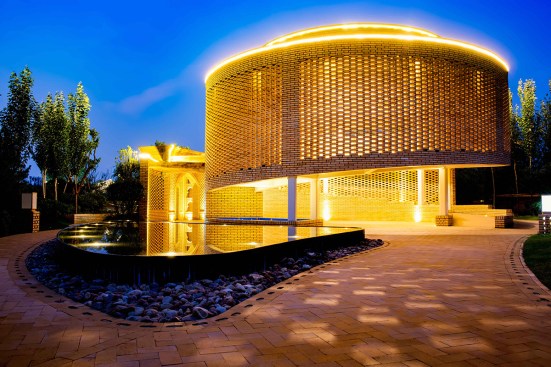
The design strategy aimed to bring back the core value of horticultural expo. We achieved this by implementing fundamental landscape approaches such as space making and planting design. Simultaneously, we also tried to express ethnic identity in a modern way. We designed a music-themed tour route which was inspired by the traditional Urumqi stringed instrument– rawap. The route was made up of a meandering "string" path, creating a rich spatial experience of rising and descending drama clubbed with both open and closed spaces. The entire route was based on the Urumqi maqam rhythm. The climax of the "string" path was a circular pavilion with a perforated brick pattern skin, that representing the core part– the sound hole of a rawap.
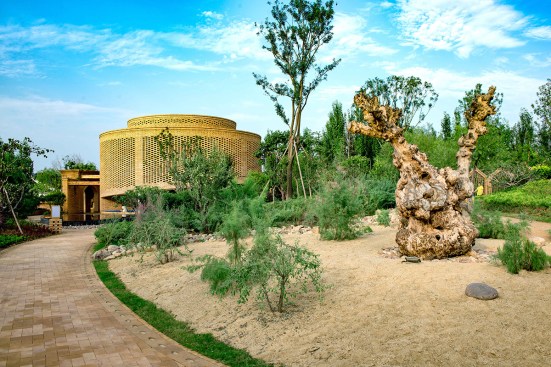
We carefully selected local plants that resembled Urumqi's plant species to represent Urumqi's natural and cultural landscape, this included recreating rose field, desert land, grape trellis and green oasis. Planted with Tamarisk, Angustifolia and other drought tolerated species, the small sand field -which was also a rain garden- recalled people's memory on the Gobi landscape of Urumqi.
The Pavilion
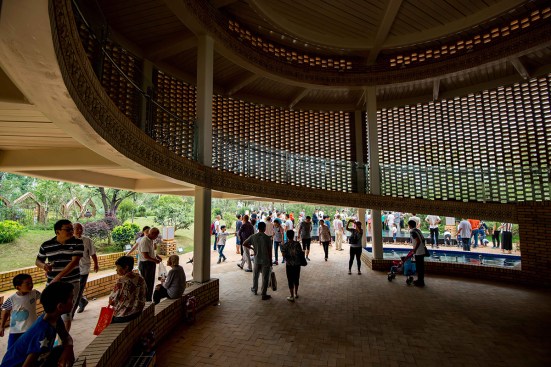
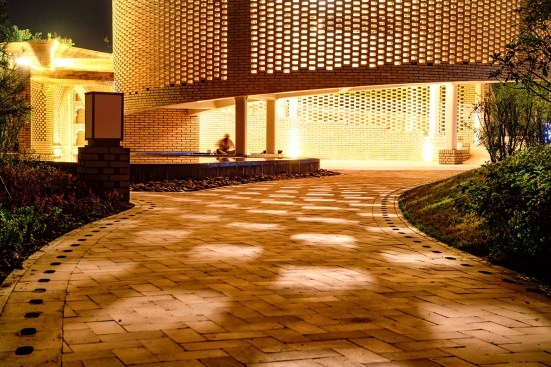
The Garden Pavilion is a semi-open and modern landscape building. The design expresses the concept that the architecture embraces the public space. The combination of the architectural space and each detail element reflects both of the modern architecture style and traditional architectural features of Urumqi. The entire circulation experience of the pavilion is an expression of the outdoor landscape expansion. For example, the rotating ramp brings the outdoor "string" garden into the interior area which blurs the boundary between inside and outside space. The modern corridor and the hidden pillar structures give more possibilities to the overhangs and opening of this brick pavilion.
Following the ramp, visitors will be able to see the central stage from different angles, where people usually gather and interact. Furthermore, the roof and facade of the building are inspired from the Urumqi residential type called "Ayiwang" and the brick form. Those traditional archetypes and the choice of simple materials make people feel the ever-changing architectural light and shadow. At the same time, it helps to touch their memories of the beautiful Urumqi, enjoying the beauty of the pavilion.