

Courtesy UCLA Department of Architecture & Urban Design
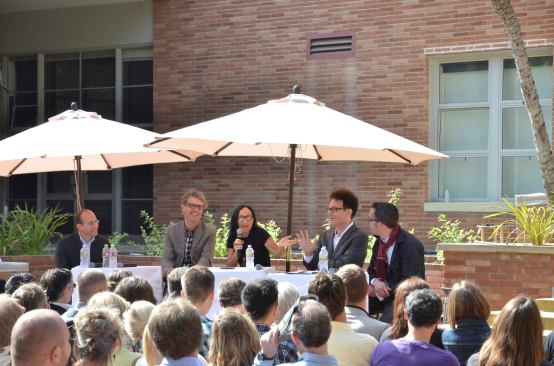
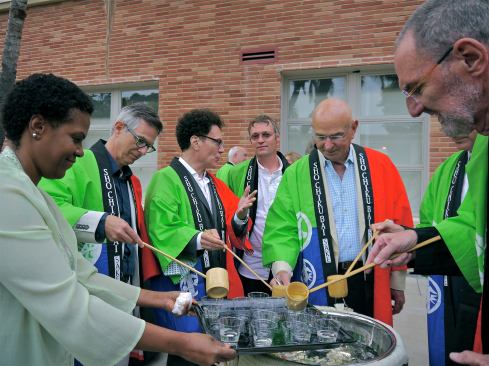
RUMBLE 2012 SYMPOSIUM hosted by Sylvia Lavin (center) with panel…
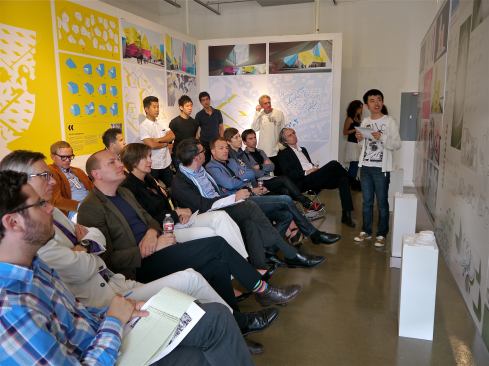
But that conversation also takes more theoretical forms. Many of Rumble’s exhibits even wink at the dismal economic realities that lie outside the academic bubble. As architecture students peer over the cliff, they’ve still carved out space to pursue projects with a philanthropic spirit that cannot be monetized. One final student project explores the potential “informal and unlawful urban developments” that could serve as “blueprints for future affordable housing strategies in a stagnant, recessive, and failing capitalist economy.” One workshop this year was dedicated to “investigating the aesthetics of the relief tent” in an effort to explore “the existential reality” of earthquakes on the Japanese archipelago.
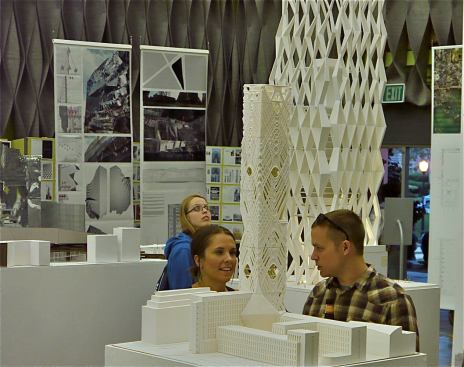
Other projects look like architecture flying off the precipice. There are no jobs, so why not spend an interlude rethinking the unsung disco ball? Or designing a “97-story tower in the form of a hollow cube”—one that functions as both a mixed-use public space to transform central Helsinki as well as a commentary on the collapsing distinction between art and commerce in Finnish culture (and the field of architecture, too)? “Universities are here to protect people’s intellectual curiosity,” says graduating M.Arch student Tim Callan, who designed the cube. But once you leave the academy, “if you don’t immediately turn that cultural production into economic value, it’s been worth nothing.” Callan will soon relocate to San Francisco, where he has no job prospects.
Architecture’s economic reality is bad for business, but it’s good for art, which feeds off points of crisis. The recession hasn’t transformed the academy just yet, and “that makes me happy,” says associate professor Jason Payne, who led students in designing the disco ball project. “It helps me remain confident that the spirit of design is still alive”—if only for a few years.
UCLA’s Department of Architecture and Urban Design by the numbers:
Undergraduates (2011-2012) | Graduates (2011-2012) |
| Degree Conferred: BA in Architecture | Degrees Conferred: M.Arch I (3 years), M.Arch II (1 year) M.A. & Ph.D. (varies) |
| Resident Tuition: $12,842.21 | Resident Tuition: $22,617.89 |
| Non-Resident Tuition: $35,720.21* | Non-Resident Tuition: $37,719.89* |
(*) U.S. Citizens who change their primary residency to California are eligible to receive the resident tuition rate.