PROJECT: Falkirk Wheel
LOCATION: Falkirk, Scotland
DATE: 2002
…
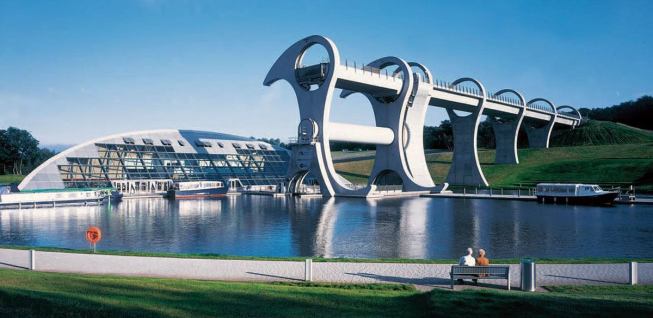
PROJECT: Falkirk Wheel
LOCATION: Falkirk, Scotland
DATE: 2002
DETAILS: Inspired in part by Legos, Tony Kettle’s design for the Falkirk Wheel, a rotating boat lift that links two canals, has also been compared to a Celtic two-headed axe. The Wheel has become one of Scotland’s most popular tourist attractions.
PROJECT: University Town Library, Shenzhen
LOCATION: Shenzhen, …
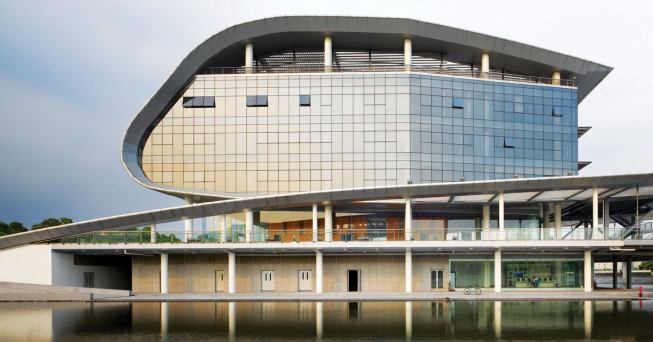
PROJECT: University Town Library, Shenzhen
LOCATION: Shenzhen, China
DATE: 2007
DETAILS: The winning design in an invited competition, RMJM’s Shenzhen library serves the graduate schools of four Chinese universities. Its long, gently sloping form echoes the surrounding hills.
PROJECT: Okhta Center (Gazprom tower)
LOCATION: St. Petersburg,…
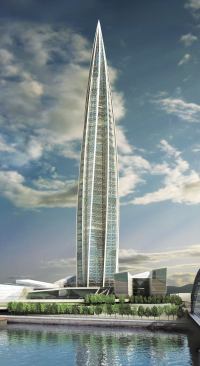
PROJECT: Okhta Center (Gazprom tower)
LOCATION: St. Petersburg, Russia
DATE: Expected 2016
DETAILS: This twisting, 1,300-foot-tall tower with a star-shaped floor plan will house the headquarters of Gazprom, the third-largest company in the world—if it survives fierce opposition to the project from inside Russia and abroad.
PROJECT: Scottish Parliament
LOCATION: Edinburgh, Scotland
DAT…
PROJECT: Scottish Parliament
LOCATION: Edinburgh, Scotland
DATE: 2004
DETAILS: Designed by Catalan architect Enric Miralles with RMJM acting as executive architect, the irregular volumes of the Scottish Parliament sit beside
Edinburgh’s Holyrood Palace in the city’s Old Town. Miralles, who died in 2000, hoped the complex would look as if it were “almost surging out of the rock.” The project won the Stirling Prize in 2005.
Of course, RMJM is not alone in its ambitions. “We’re seeing a lot of activity over the last four or five years in terms of strategic planning by firms, trying to position themselves differently,” says Kermit Baker, chief economist for the AIA. Much of the time, that means consolidation. “There are a lot of advantages to being a large national or international firm in terms of scope of services [and] access to capital.” Baker believes the industry is gravitating toward a “dual market,” with big firms getting even bigger and more global and small and midsized firms meeting local and regional needs. But Futureplace—that’s something different, he thinks. “I would say that’s crossing over a line … it’s beyond the scope of where traditionally architecture firms have gone.”
As Sir Fraser himself admits, though, you can’t change an industry overnight. A few hours after our lunch, Peter Morrison is back in the Piper Auditorium, this time on a panel with other architects and an owner’s rep. When the discussion turns to fees, Morrison—who uses the phrase “value-added” so often that it seems a kind of mantra—argues again that architects ought to be better rewarded for their efforts.
Another panelist, Joshua Prince-Ramus of REX, points out that, during fee negotiations, some clients will object, “‘You don’t pay interns anything, anyway’”—so well-versed are clients in the architectural culture of low pay and low expectations.
To which Morrison can only respond, with a slight lift of the shoulders, “It’s chicken and egg, isn’t it?”.