When the plan is a family retreat for a couple with six kids, du…
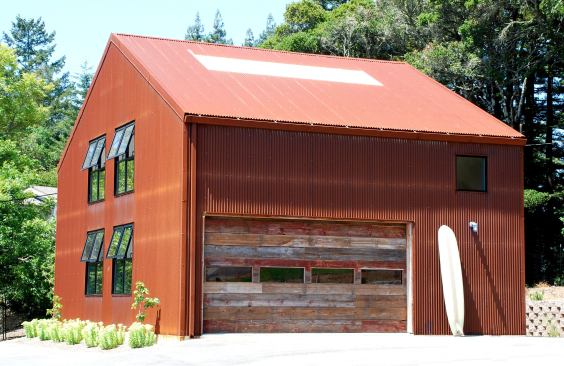
When the plan is a family retreat for a couple with six kids, durability is a must. To that end, this accessory building is outfitted with Corten steel for its roof and siding, but the family compound is kept bright and cheery by its fire engine red color. Project: Aptos Retreat, Aptos, Calif.; Builder: M B S Custom Builders, Scotts Valley, Calif.; Architect: CCS Architecture, San Francisco
Paula Watts
While much of the wood for this coastal Oregon home was reclaime…
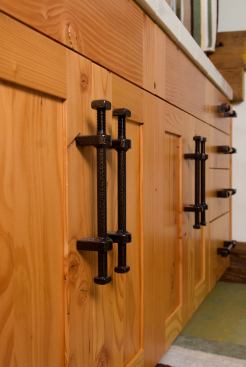
While much of the wood for this coastal Oregon home was reclaimed from a demolished 1938 warehouse, its builder’s upcycling efforts didn’t stop there. The old structure’s bolts and washers were also salvaged and transformed into towel racks, coat hooks, drawer pulls, and cabinet handles. Project: Hancock Residence, Neskowin, Ore.; Builders: Tom Springer Construction, Otter Rock, Ore.; Paul Jordan Custom Carpentry, Salem, Ore.; Architect: Nathan Good, Salem
Adam Steiner
Built for a chef in Austin, Texas, this home kitchen has the tou…
Built for a chef in Austin, Texas, this home kitchen has the tough-and-ready good looks of a commercial version thanks to some ultra-durable appointments, such as a large-winged faucet with an extendable nozzle, stainless steel countertops, a super-sized vent hood, and a restaurant-style refrigerator. Project: Knollwood Kitchen, Austin; Builder: BDH Construction, Inc., Austin; Architect: Cornerstone Group, Austin
Marty Peters
“A kit-of-parts strategy” is how architect David Miller desc…
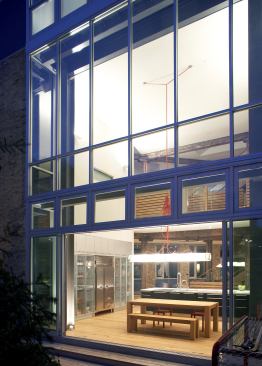
“A kit-of-parts strategy” is how architect David Miller describes the way he and architect Mark Peters set about restoring a 1920s flatiron building in Chicago into a home for a young couple and their growing boys. Off-the-shelf industrial windows provide contrast to the brick exterior and flood the interior with light, while ready-made fittings kept costs down. Project: Leavitt Residence, Chicago; Builder/Developer: Ranquist Development, Chicago; Architect: Miller|Hull Partnership, Seattle; Studio Dwell, Chicago
Brandon Webster Photography
Staying true to the loft aesthetic, architect Steven Spurlock’…
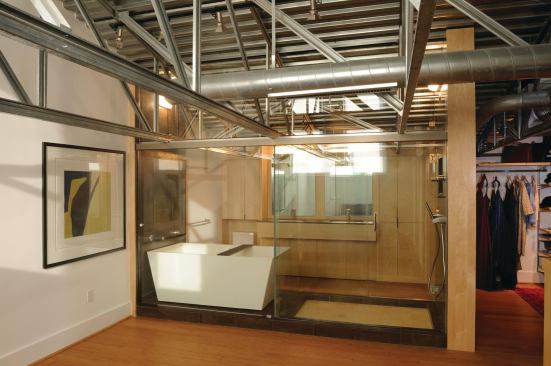
Staying true to the loft aesthetic, architect Steven Spurlock’s pared-down design allowed for only what was necessary, leaving a dramatic exposed roof structure, warmed by maple casework. Project: Loft Conversion, Washington, D.C.; Builder: CMG, Inc., Washington; Architect: Wnuk Spurlock Architecture, Washington
Raul J. Garcia
Teasing the barrier between residential and commercial space in …
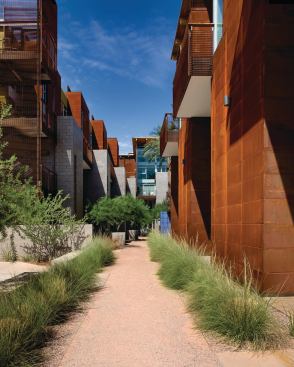
Teasing the barrier between residential and commercial space in an exclusive area, these condos reinvent the suburban form with walkable lofts fitted with retail on the ground floor. The live-work units are clad in Corten steel, and they sport industrial details such as exposed stairways and gridwork balconies. Project: Safari Drive Condos, Scottsdale, Ariz.; Builder: Okland Construction, Tempe, Ariz.; Architect: Miller Hull Partnership, Seattle
Claudio Santini
This sleek residential kitchen offers the sturdy utility of a co…
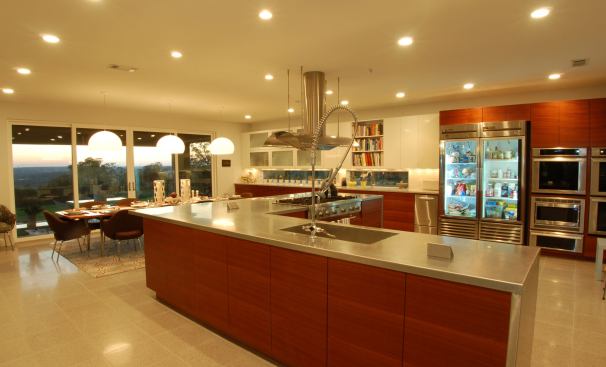
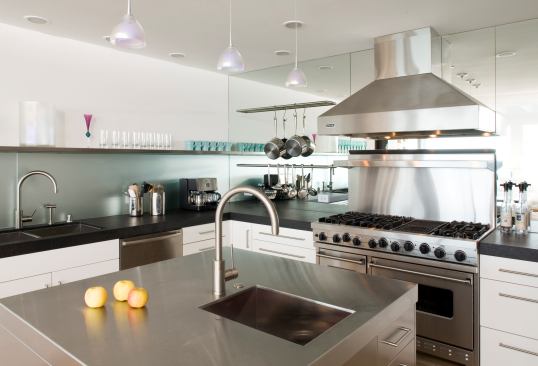
This sleek residential kitchen offers the sturdy utility of a commercial one thanks to a stainless steel island, an oversized range and hood, and exaggerated gooseneck faucets. Overhead lighting fixtures made to look like sodium lamps complete the industrial aesthetic. Project: Sausalito Residence, Sausalito, Calif.; Builder: Landmark Builders, Novato, Calif.; Architect: Mark English Architects, San Francisco
Marty Peters
Tucked into an urban neighborhood in Chicago, this home, built f…
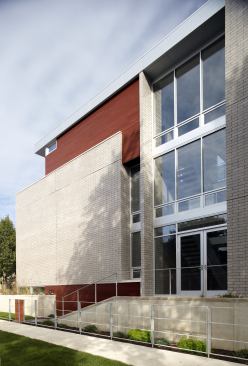
Tucked into an urban neighborhood in Chicago, this home, built for a young couple with two children, attributes its urban industrial identity with steel windows and exposed masonry. The design pushed shared spaces to the upper level, allowing them to take advantage of natural light. Project: 3701 South Parnell, Chicago; Architect/Builder/Interior Designer: Studio Dwell, Chicago
Debi Fox Photography
This 26-unit condo building offers a dramatic addition to Washin…
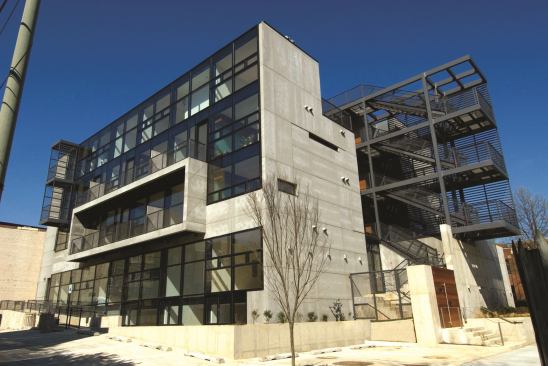
This 26-unit condo building offers a dramatic addition to Washington, D.C.’s U Street/Shaw neighborhood. The bare-bones design emphasizes the structure’s cantilevered steel beams, floor-to-ceiling windows, and façade of glass, steel, and cement. Project: The Lacey, Washington; Architect: Division1 Architects, Washington; Developer: Wilson Enterprises, Washington
Claudio Santini
Designed for a set of passionate home cooks, this kitchen offers…
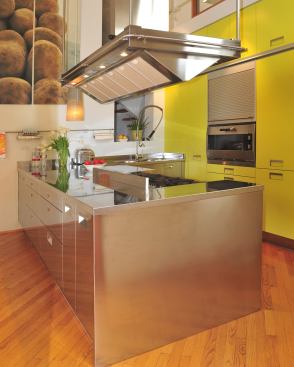
Designed for a set of passionate home cooks, this kitchen offers the flow and efficiency of a restaurant kitchen in a compact space, thanks to a stainless steel workspace that looks as if it’s built to withstand anything. Project: Wilson Patenaude Residence, Evanston, Ill.; Builder/Designer: Arclinea Chicago LLC, Chicago
There’s more to recommend industrial materials than just their brawny good looks. When used deftly, and when warmed up by softer materials like wood or a touch of color, the results are striking, fun, practical, and hardy.
Off-the-shelf pieces, such as windows and beams, can help keep costs down, and often materials can be left untreated, as with Corten steel, the material originally made by U.S. Steel for freight train boxcars. Inside, a building’s engineering can be left on display, offering a modern aesthetic and extending ceiling heights with exposed roof structures. And finishes, such as stainless steel countertops, can withstand heavy and frequent use—in fact, you could argue that heavy usage improves the look of industrial materials.
Senior editors Amy Albert and Claire Easley contributed reporting to this article.
Amy Albert is editor of Custom Home and a senior editor at Builder. She covers all aspects of design. Previously, she
was kitchen design editor at Bon Appetit;
before that, she was senior editor at Fine
Cooking, where she shot, edited, and wrote stories on kitchen design. Amy
studied art history with an emphasis on architecture and urban design at the
University of Pennsylvania. She lives in Los Angeles. Write her at aalbert@hanleywood.com, follow her on Twitter @CustomHomeMag and @amyatbuilder, or join her on Custom Home's Facebook page.