
Each year, AIA members attending the AIA Conference on Architecture have the opportunity to vote for candidates to help lead the Institute’s national office. Ahead of the June 6-8 event in Las Vegas this year, ARCHITECT asked each candidate running for elective office a set of questions about their qualifications, platform, and outlook on the profession.
In this article you will meet the candidates running for 2020 first vice president, who also holds the position of 2021 president-elect. Peter Exley, FAIA, is co-founder of Architecture Is Fun, in Chicago, and Bruce Sekanick, FAIA, is co-founder of Phillips Sekanick Architects, in Warren, Ohio.
Peter Exley
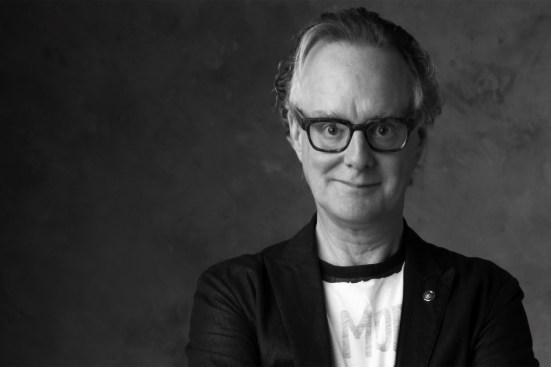
Peter Exley
Why do you want to hold a leadership position at AIA, and what key issues do you hope to address in this role?
I want to be the president of AIA to help us define what our profession looks like in a changing world, to propel AIA from our strategic professional position to one that is also seen as the leader in solving challenges faced by our communities, humanity, and planet. Part of being the leader of AIA is tackling new local, national, and global issues that arise; presenting the relevant voices of architects and forwarding solutions to these issues. AIA is capable and has the agility to handle the issues we face and the inevitable challenges ahead. As president, I will set the tone for what we do as a profession, leading 94,000 members to build a more resilient, more equitable, healthier world. To achieve this, I will help to define what the next 100 years of prosperity look like in that world and the essential role architects will play.
How have your experiences prepared you for this role?
I am a multidisciplinary, globally aware, and multifaceted candidate. It is my equilibrium to affirm and promote our profession. In my day-to-day work, I divide my time between running my firm, 2017 AIA Chicago Firm of the Year Architecture Is Fun, teaching and mentoring as adjunct professor at the School of the Art Institute of Chicago, and in service and leadership. Clients refer to me as a listener. Students and colleagues come to know me as a passionate advocate for architecture. While serving on the AIA Board, I have helped define the values that guide our profession; on the Strategic Council, I have been the leader who helped define “The Next Big Thing”; as chair of the Public Outreach committee I am the evangelist for #ilookup, Blueprint For Better, the AIA Film Challenge and a champion for our relationship with U.S. mayors. These are all tangible member benefits.
What are the greatest challenges facing architects today? How can AIA respond to them?
Equity and diversity in our profession are critical to innovative thinking and problem solving, and both are major challenges to our profession’s progress. By continuing to expand AIA’s investment in K-12 education STEM/STEAM initiatives, we inspire future generations of architects. By funding scholarships and some mighty advocacy for the National Design Services Act, we address the unsustainable cost of an architectural education that currently limits the diversity of those entering our pipeline. Those who we sustain will embrace disruption, define the future of architecture in 2030, and lead AIA soon after. These goals are intertwined with the resilient communities that are the core of our Blueprint For Better. This is about architects contributing to the challenges that face our cities. This isn’t about cheerleading or hoping for a TV show with an architect as a central character. This is about attracting the smartest, most diverse, and empathetic socially-minded people to architecture to help solve solve our housing crisis, address climate change, and build a future for humanity.
Bruce Sekanick
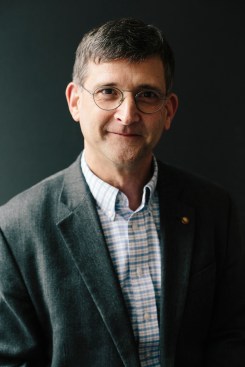
Bruce Sekanick
Why do you want to hold a leadership position at AIA, and what key issues do you hope to address in this role?
My involvement in AIA has made me a better architect, a stronger leader, and a more passionate advocate. The opportunities that I’ve been given and the knowledge I have gained remind me that I have a responsibility to continue to give back to the profession.
There are many issues to consider, but if elected, I will focus on those that advance members, serve our mission, and benefit society. First, we need to help promote the next generation of leaders, upon which our profession will rely. We need to continue to focus on prosperity and the value that AIA brings to firms. We must engage diverse viewpoints to advance awareness. And of course, we must focus on the values we have defined as our core beliefs. As president of AIA, I will use these guiding principles to drive a collaborative decision-making process that achieves successful outcomes.
How have your experiences prepared you for this role?
Experience plays an important part in how a person acts, reacts, and envisions the future. For 30 years, I have been part of AIA leadership, experiencing the challenges and opportunities we face as a profession firsthand. I have served my state and local components as both secretary and president. As a national board and council member and then Institute secretary, I gained an unparalleled understanding of AIA’s operations, initiatives, and governance structure. With significant experience in advocacy and as chair of ArchiPAC and the Strategic Planning Committees, I am privileged to know this organization from a perspective that few others have experienced. This knowledge and focus extend beyond the concerns of a single issue. Supplemented by firm ownership responsibilities and a wealth of community service leadership, I am critically aware of how experience, combined with a collaborative, understanding approach, can be the needed catalyst for successful outcomes.
What are the greatest challenges facing architects today? How can AIA respond to them?
From pressure to eliminate licensure to the way we educate students and deliver projects, architecture faces unparalleled change. Over time, we have produced well-designed, safe buildings, prompting complacency and calls for deregulation of the profession. We must strongly voice our concerns and challenge ill-conceived changes to licensure through awareness and advocacy.
The way we practice is equally being challenged. We need to innovate and refocus our services to address the reduced emphasis on architect-led design. Similarly, changes in technology and the educational process require us to overhaul and adapt the way we teach design. With our partners in education and licensure, we need to collaborate more to achieve shared goals. Finally, the future depends on those who have not yet entered the profession. To advance our goal of impactful design, we need to enjoin a diverse body of individuals who share our concern for the built environment.
Meet the AIA members running for the elected offices of treasurer and at-large director.
This article has been updated since its original publication.